Showing posts with label women. Show all posts

Friday, September 23, 2016

Somewhat feminist musings at the Musee d'Orsay


The Musee d'Orsay has been one of my favorite museums since I first saw it in 1991, on my first trip to Paris.

What's not to like about a museum that has entire sections/rooms devoted to Van Gogh, Monet, Manet and Degas? Housed in the former Gare d'Orsay train station, a Beaux-Arts structure completed in 1900, the building, with its massive, gold-embellished clocks and elegant arched glass ceiling, calls to mind the setting for The Invention of Hugo Cabret.


Every trip I've taken to Paris since has included a delightful trip to the Musee. But visiting the Musee alongside a teenage girl this summer was a different experience. Sure, she liked its evocation of Hugo, the Impressionist rooms, the Degas sculptures. But after walking through multiple rooms, she asked, "Where are the women artists?"

Each room had been filled with paintings and sculptures of luscious women, prim women, naked women. But we had seen one lonely artwork by a woman--Mary Cassett, among the Impressionists.

After that, the rest of our afternoon tour became a bitter hunt for female artists. We rushed from artwork to artwork, examining the placards for any hint of a female name, but we never found another woman's art there.*

If you google "female artists at the Musee d'Orsay," the hits on the first page include the museum's own pages for The Modern Woman. Drawings by Degas, Renoir, Toulouse-Lautrec and Other Masterpieces from the Musée d'Orsay and Splendour and Misery. Pictures of Prostitution, 1850-1910. In other words, women interpreted by men.

What were women doing while all these men had been sculpting, painting, creating? Tending to children? Devoting themselves to maintaining their own beauty? Posing for male artists? Or, perhaps, making art that would never be housed in the Musee d'Orsay.


------------------------------------------------------------------------------------
* I discovered after I returned home that the museum does house a few other female artists, including Berthe Morisot and Cecilia Beaux--but the number of artworks by women is pretty paltry compared to the hundreds by men. (I am counting 12 total among these three women). And to find them, I had to use Wikipedia and go through a list of major artists at the Musee. Otherwise, the Musee's website led me to paintings and art about women rather than by women.


All photographs by Beth Blevins. Copyright 2016.

The Seine seen from one of the clocks at the Musee d'Orsay.

Tuesday, August 11, 2015

Women Only


At first it was accidental. I began the year finishing Lila by Marilynne Robinson, then moved on to Mansfield Park (which, I a devoted Austen fan, had somehow never gotten around to), then to Poisonwood Bible.

Then I realized: "I've only been reading women writers this year!" After proclaiming this to my friends, I made an effort to keep it that way. Books by men on my "To-Read" list on Goodreads were pushed aside. No C.S. Lewis, no Colm Tóibín, no Khaled Hosseini.

This was less a feminist statement than an exercise to find and read female authors, particularly those I might not have otherwise looked for. I liked both the limits and the challenge of this task. But I have begun to feel a little confined by it.

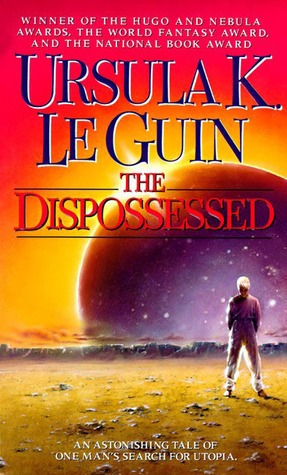
Is it really more women-empowering or woman-centric to (currently) be listening to The Dispossessed by Ursula K. LeGuin, which centers on a male physicist and is read by the voice actor Don Leslie than it would be to listen to Madame Bovary, which centers on poor Emma Bovary, and is read by the voice actress Juliet Stevenson?

I've always meant to re-read Madame Bovary (and read it someday in French), so I grabbed it when it was on sale on Audible.com the other day for $4.95.  Now I'm starting to feel bummed that I will have to wait until 2016 to listen to it if I keep this (informally made) woman-only vow.

It's been an interesting eight months of hearing women's voices. I'm not experiencing an absence of men. But I really would like to listen to Madame Bovary...


Tuesday, July 17, 2012

Life as art: Joan Papert Preiss


Years ago, via one of those serendipitous moments the universe occasionally hands you, I met a woman who influenced the rest of my life. I was sitting in a library in San Miguel de Allende, Mexico, reading that month’s issue of Ms. Magazine. A short letter to the Editor caught my eye: You write about child labor as though it is a thing of the past, the writer said, when farm labor currently uses children in the fields. Signed, Joan Papert Preiss, Triangle Friends of the UFW. She must have given her address (this is before things could be looked up on the Internet) because I wrote her and asked if she needed help. “Yes,” she replied, and a few months later I was on a bus to Durham, NC, ready to volunteer in her office, which happened to be in the guest bedroom of her home.

Joan, as I learned at her memorial service last Saturday, almost single-handedly brought farmworker activism (and attention to the plight of farmworkers) to North Carolina. And she did so with a playful, creative style. She became known as the lady with the tiaras, including a Mt. Olive pickle jar headpiece that she wore to picket lines during the Mt. Olive boycott. She made her own boycott lapel pins out of bake-able clay, and painted colorful signs and posters. She also was known for wearing a grape costume that, I think, consisted mostly of purple balloons during the UFW grape boycott.

She spoke fervently and persuasively about farm conditions to gatherings large and small, even though she admitted that she had once dreaded public speaking and still considered herself a shy person. Even in the face of circling policeman, angry store managers and apathetic shoppers, she continued on with an unmitigated enthusiasm. I have never known anyone who so exuded a persistent sense of purpose. After raising three sons, she committed herself to the cause of farmworker rights. But she also found time to cook gourmet meals, keep up an herb garden, hold girlfriend get-togethers, go sailing, host sleepovers and playdates for her grandchildren, volunteer at the local hospital, keep a materials/news file (now archived at Duke Library), and seriously compete at badminton. And she found time to have fun with me when I was working with her. On one of my last days there, before I left to go back to school, we decided spontaneously to have a “milkshake orgy”—and so set about making shots of cranberry milkshakes, followed by pumpkin, peanut butter, etc., in her kitchen. Too full, we went for a walk in Duke Forest, chatting and laughing together.

She offered me a blueprint for an active and happy life. More importantly, she offered a level of acceptance and confidence in my abilities that I’d never experienced before, at least from someone older than me. What a gift knowing someone like that.

I often told her that I should write an article for Ms. about how we’d met, which would segue into an article about her amazing life. Some of what I would have said is in this blog post now.

In another bit of serendipity, a bookend to the first, I was updating my list of cell phone contacts recently and I saw her phone number, realizing I hadn’t heard from her in a long while; the handmade holiday cards had stopped coming a few years ago. With a sense of dread, I googled her name and found her obituary. Without that bit of discovery I would have missed her memorial service and a chance to say good-bye. We sang “Union Maid” and “De Colores” and other songs, were reminded of how much she had meant to so many, and then dispersed out into the hot afternoon.

Wednesday, July 6, 2011

Just saying ‘No’

A couple of years ago I read an article about Karen Zacarías, a local playwright and mother of three, who confessed that she was only able to write (and be a good mom) because she had quit being a volunteer. The article struck a chord with me because I was at the start of my tenure as a high school PTSA vice president. Much of my free time was being spent in meetings, running events, and creating web site content—all adding up to more than 300 unpaid hours in 12 months.

[Maybe you’re wondering how it’s possible a school organization could suck up so much time. It's mostly because, in my experience, there are few parents left who will volunteer for high school PTAs. Their cute elementary students have become sullen teenagers, or they're burned out from past volunteering, or they don't feel as connected to a big school. The result was that, in a high school of 2,000 students, and potentially 4,000 parents, there were maybe seven or eight people who ran the PTSA and did most of its committee work.]

It took me a good part of this school year to catch up on all the things I had put aside the year before. I found unanswered correspondence, piles of papers that hadn’t gotten filed, even sheets that hadn’t gotten washed for a year, hidden away in the laundry bin. And I erased more than 1,000 email messages I had written as a PTSA VP.

This year I set out to just say ‘No’ if anyone asked me to help out. And, other than managing to do a few things for E-girl’s GS troop and serving as a room parent and occasional volunteer at her school, I’ve mostly accomplished this. But it wasn't without some degree of guilt. The year before, when I went to PTSA meetings I'd rather have skipped or worked to near-exhaustion, it was because I knew that if I didn't do it, one of the other seven or eight people would have had to shoulder even more work; the naysayer I am now would have pissed us all off.

There’s something callous and selfish about not offering help when it is needed and yet, if I said yes every time someone has asked me to volunteer in recent months, I wouldn’t have been able to write a novel last fall. As it is now, too often I feel like I am feeding the creative person inside me crumbs of time. When 20 minutes is all you feel you can guiltlessly spare in a day (or week), you get a blog post, not an essay or story. Perhaps if I can see my need for self expression as another child that needs to be nurtured, I can ease the guilt a little.


Postscript: In preparation for this, I googled "women writers volunteers" and mostly got articles about female writers serving as mentors to younger writers. But this blog post from Feministe popped up, which I thought was apt: Over-booked moms opt out of volunteering.

Friday, February 25, 2011

Women, rock?


Alternative music radio station WTMD-FM recently sponsored a pledge-drive, week-long marathon of The Top 500 Desert Island Songs of All Time. (Listeners were asked to submit the five songs they'd want on a desert island, and the radio station compiled them into a play list).

I was surprised that, in the Top Ten, there's not a single woman (unless you count The Talking Heads' Tina Weymouth, who may or may not be singing background vocals).

In the top 50, the only female solo is Etta James doing "At Last." In the top 100, there are only four female soloists/women-fronted bands: James, Brandi Carlile, Adele, and Joni Mitchell—singing "A Case of You" which is one of my least favorite JM songs. (There's also a John Prine/Bonnie Raitt duet of "Angel From Montgomery").

I can understand why there is no Lady Gaga, but how can there be no Aretha Franklin in these 500 songs? (Even Madonna made it in at no. 404, with "Live to Tell").

With the station's past theme marathons, like the 897 Greatest Albums of All Time and 897 Greatest Artists Countdown ), you expect the old standbys—Beatles, Rolling Stones, The Who, Bob Dylan, Pink Floyd—to be in the top 20. But wouldn't you miss female voices on a desert island?

When I see lists like this, I get a little depressed. It seems like women have been singing their hearts out all these years, but no one is listening.

Thursday, February 17, 2011

Tripping over the ottoman into a male fantasy world


Suddenly my daughter, E-girl, can't get enough of "The Dick Van Dyke Show." She begs to watch an episode of it whenever she has any free time (it's easily accessible on Netflix Instant watch).

While I applaud its sharp writing and witty dialogue, there's one character that makes me a little uneasy: Laura Petrie, Rob Petrie's subservient, sometimes anxious wife.

It's hard for me to imagine/remember a culture where smart women were destined to wait on men hand and foot: making breakfast just for them, accommodating uninvited guests with a smile, serving dinner in a spotless kitchen without the presence of children—all while wearing high heels, false eyelashes and tight capri pants. I suppose the high heels and glamor were a screen writer's fantasy, but that makes me dislike this part of the show even more, that it perpetuated an unachievable standard for the average woman.

The Mary Tyler Moore character I'd rather she watch and emulate is the older, wiser and independent Mary Richards (on the "MTM Show"), who works at a TV station among interesting colleagues and dates whom she likes.

And yet, I realized as I started to write this, I am more like Laura Petrie than Mary Richards. I had the apartment and lived alone as a newspaper reporter and I hated it, perhaps because I didn't work among interesting colleagues but in a windowless bureau office by myself, in a town where I knew no one. I craved companionship more than anything else then.

Now I am married. I work at home, by myself most days, not polishing furniture but polishing copy as a freelance editor. I usually have dinner on the table by the time my husband comes home, though he's never found me at the stove in high heels and makeup. The house is unapologetically chaotic most nights.

Perhaps I am a combination of both women. Except that I'm not sure that either of them ever spent the day in sweat pants.

Tuesday, July 20, 2010

The dark bookends of my reporting career

When I started work at the Winston-Salem Journal in the summer of 1985, a dark cloud hung over me, especially as I walked to work from the public parking garage that first day of work. It was an unease that was with me until I was safely inside the building.

The previous year, on her way to work, newly hired copy editor Deborah Sykes was murdered just a few blocks from where I was walking. (Sykes had just been hired by the Journal's then-afternoon paper, The Sentinel).

Although the circumstances were slightly different—I was going into work at 9 a.m., a busier time than her early a.m. entrance—I felt her ghost with me every morning and every evening as I walked to my car, even after I got to park in the closer-by company parking lot.

A few weeks later, I moved up to Boone to work at the paper's Northwest Bureau. I relaxed there, unworried about keeping late hours since my office was on King St., the town's main drag. I could park my car right in front at night and walk to it straight from my building.

But just weeks after I left Boone for graduate school in Chapel Hill, a young female reporter at the local Watauga Democrat was found murdered near the Blue Ridge Parkway.

Her first name was Jenny. She was young, sweet, dark-haired, still fairly fresh from college. The newspaper accounts at the time said she'd been on her way to work early in the morning, probably accosted in downtown Boone and driven out to the Parkway where she was murdered.

"That could have been me"—a whispered epiphany. Since then, whenever I've left work in the dark, I've enlisted co-workers or building guards to walk out with me, especially when the streets are quiet and empty. I don't feel paranoid, but cautious—a caution composed equally of regret and sadness and fear.

Is it the price women pay when we walk alone? If not death, then the persistent threat of death, no matter how undeterred or indifferent we pretend to be. It is the price two newspaper women in one state paid in the space of two years. Since men outnumbered women at newspapers at the time, imagine the statistics.

Maybe the worst thing about these murders was that they were expected, in a horrible, subconscious way—they were out when no one else was out, they were women, they were alone. Yet in that time period, as far as I know, no male reporter in North Carolina (or anywhere in the United States, as far as I know) was murdered or assaulted.

I put on a brave face, walking out of the Winston-Salem Journal and into the dark. I was one of the guys when I was in there, typing away, drinking coffee, slinging words around. But out there, in the silence, I was different from them, vulnerable in a way they probably couldn't understand, a vulnerability I probably would have denied, even to myself.

Wednesday, October 7, 2009

Do we need to know who they sleep with, and what writers are really like?

A few weeks into my first English literature class in college, I raised my hand one day and naively asked the professor if D.H. Lawrence had been bisexual.

I was totally inexperienced at the time, so who was doing what and how they were doing it was of near-constant concern to me. I also thought that maybe I was the only person in the class who knew this interesting fact about D.H. Lawrence, which I had uncovered in one of my late-night wanderings in the college library. (This was also in North Carolina, at a time when no one at the college was “out.”)

Perhaps the professor had heard this question in previous classes from other equally naive young women, or perhaps I had interrupted a particularly important lecture that day (or, perhaps, he was a closeted gay man, which I would never have thought to imagine). He slammed down his notes.

“OK, Ms. Blevins, let’s just get this out of the way right now. Stand up please.”

He took up his copy of the Norton Anthology and started to thumb through it. “Lord Byron—a homosexual. Oscar Wilde—oh yes, he was homosexual. Walt Whitman—probably a bisexual.”

I started to creep back in my chair, but the professor said, “But we’re not done here. Gertrude Stein—lesbian. Ernest Hemingway—he liked women. Tennessee Williams—definitely and positively a homosexual.”

Red-faced I continued to stand while my classmates gazed at me in amusement. Until that moment, I think I had asked reasonably smart questions and perhaps they were happy to see me cut down to size; I was no longer in contention to be a teacher’s favorite.

“Is that enough? Have I satisfied your curiosity?” he said after he continued through to the end. “Now,” he said, motioning me to sit down, “has this served any real purpose other than to waste class time today?”

“Well...” I started to say that maybe it is important to know a little about the personal lives of writers just so you’ll know why they wrote what they wrote and the way they wrote it, but I stopped myself. “No sir.”

“Good,” he said. “Now let’s get back to what’s really important.”

I’ve been thinking about that embarrassing moment recently as I continue to plough through the Collected Short Stories of John Cheever. How can what’s going on in your life not affect your fiction, or the topics of your fiction?

The more you read a particular writer, the more you can often detect a theme of interest or a subject that’s gone back to again and again, however faint the repetition. With some writers, it’s easy to detect—Jane Austen never married and you can sense that ache for love and partnership in her books, especially in “Persuasion.” Kurt Vonnegut lived through the bombing of Dresden as a POW, and there’s always a sense of the absurdity and horror of life in all his books.

But I wonder about the writers whose personal lives I don’t know that much about. Alice Munro returns to the theme of infidelity over and over in her short stories and I wonder why. Should I wonder why? Will it give me any greater perception of what she is trying to convey if I find out more about why her first marriage broke up? Or does she write about infidelity (versus Austen writing about finding a good marriage) because it’s something contemporary married women have as a possibility now, whether pursued or not?

More troubling for me is the knowledge, revealed after his death, that John Cheever was a bisexual. Is that part of the reason why so many of the married men in his short stories are unhappy and feel trapped? And what about the female character in “Torch Song” who sucks the life out of men? Is that what Cheever subconsciously thought that women do to men in real life, or was it a fictional device in this one story?

I am raising my hand here, already thinking that I should put it right down and stick my nose back in my book.

Thursday, July 30, 2009

The writer's eternal question

It's the eternal question: do I pay bills, or write a blog post? Leave the dishes in the sink, or write a journal entry? Do laundry, or start a short story?

Sometimes, I choose to ignore all the petty little things that compose a household, and then someone informs me (usually the very morning they need it, like this morning) that they don't have clean socks or clean underwear. Or someone walks into my dusty house and I can almost hear their silent tsk-tsking.

I imagine this is why there were so few female writers in the past, at least among the lower classes, because they had no one to wash their laundry or clean their dishes. Writing used to be a luxury for women; maybe it still is.

I made a joke out of this in a very small magazine, in a special issue called The Lost Poetry of Women (and other people). [The issue was published 15 years ago, so obviously this has been a recurring theme in my life].

In one piece in that issue, Mrs. Gautama Buddha complained,

Buddha
I hear you are growing fat. What else happens to a man
who sits around doing nothing all day?

In another piece, "The Annotated Shopping Lists of J.R. Smith," the housewife Jane Reed Smith's shopping lists from the 1950s were mined for the poetry she scribbled in the margins, such as:


I just know that, sometimes, the dishes be damned, I need to write, or I start to feel an underlying grumpiness that's almost like a bad taste in my mouth. If the days become weeks, I almost feel that I'm going crazy. I've been like this since I was a teenager, when I was stirred to write bad poetry and narcissistic journal entries in the quiet of my room late at night.

I finally recognize and acknowledge that I've got to express myself in written words on a regular basis–talking is never enough. Other forms of creativity can tide me over for a few days, but I always feel an urge to get back to writing, like a need to get back home, to the natural home for my thoughts.

Tuesday, June 23, 2009

Another one bites the dust

An alternative title for this post might be “And then there was one” because I am shutting down my other, remaining blog, Quotes About Creative Women—at least for the summer.

I started QACW because I wanted a place to hold all the quirky and moving quotes I’d read over the years, from Barbara Kingsolver talking about leaving Kentucky because she was flat-chested to Joni Mitchell talking about her grandmothers. I thought that the blog would be another way to connect with friends, whom I surely thought would want to add quotes of their own, or share their favorite women’s quotes; to sweeten the deal, I promised to link to the web pages of contributors—but, alas, I only got one submission.

I also wanted to experiment with using a blog as a database—most of the women (and the few men) I quoted are listed alphabetically using a subject term that maybe I created myself: “writers—Doe-Jane,” which Blogger indexes alphabetically (if you use commas, as in most standard cataloging, Blogger separates each word as a distinct subject term). Hey, I have an MLS, so I might as well put it to use. I found that I didn’t want to index just by last name when I posted quotes by both Alice Walker and her daughter.

But the main reason I started that other blog (along with what was once my cooking/food blog) was to make money. Yes, ha-ha, I’ve discovered that blogs don’t make money. You’re supposed to get a penny every time someone clicks on a Google ad link in your blog, and then you get a check when you reach your first $10. As you can guess, I never reached it. I also added Amazon-links to the books I quoted (not just to make money, but to promote the wonderful books I was discovering), but I made no sales. [Just for the record, I’ve never tried to make money on Writing Home, so I still have some integrity left.] 

It was fun, at least at first, to go out and find new quotes after my initial batch of quotes was posted. I used Google Books and searched for “women and creativity” and any similar terms I could think of. This led me to authors and books I never would have discovered otherwise, which I purchased or borrowed through interlibrary loan at my local library. Through this effort I first read Yvonne Vera, Susan Minot, and Judith Ortez Cofer, among others.

So, I have no regrets that I started QACW, and I hope someday (maybe in the near future) to start adding new quotes to it again, though it will probably not be on a regular basis since I don’t have easy access to a big library, nor time enough to graze lazily through it.

Tuesday, December 16, 2008

Is Google book search a good or bad thing for writers?

Last week I created a "Special Features" section on this blog and helpfully included a "Writers' Tools" link, only to realize I'd written exactly one post indexed that way. So, I'm gathering up info I've meant to share—and to put somewhere that's multi-accessible for my own purposes—and will attempt to post regularly on writers' tools until the section gets plumped up.

I would call my relationship with Google Book Search (GBS) a hesitant love affair, at best. And yet, since I've started using it to find potential entries for my quotes about creative women blog, I haven't been able to "quit" it—and can't imagine quitting it anytime soon. To put it briefly:

• I love that I can search in almost any book ever published for whatever search terms I throw into it. Through a search for "women and creativity," "women and writing," and variations of those terms, I found the books, Word: On Being a [Woman] Writer and Sleeping with One Eye Open, which I never would have found in my local library (or known to find through an Amazon book search). In fact, Sleeping with One Eye Open inspired a post for this blog and a fan letter to one of its editors, Judith Ortiz Cofer, who wrote me back.

GBS offers full and limited previews of some books, snippets of others. With even just "limited preview," I've been able to read through sections of books and decide whether I want to further pursue an author, which for me these days means, mostly, obtaining the book via interlibrary loan from my local library. I am tapping into the richness of a universal library for free.

I also can't think of any other tool currently available to writers that allows them the potential to search for phrases and terms that have already been published in books. Maybe you think you've come up with a fantastic sentence in a short story, but worry that it's something from memory and not newly inspired. First, you'd want to search it on Google, which will pick up phrases on blogs and web pages, then search for it on GBS.

Here's an example: I mentioned googling the phrase "inner Julia Child" in my post about writing in a vacuum-less world. I tried the phrase in GBS and the results showed it was also mentioned in the book, The Fun Book for Couples ("Discover your inner Julia Child with a series of in-home cooking lessons a deux") and the July 2005 issue of Cincinnati Magazine.*

Writers can also use GBS for background research, edification and vanity searches. For example, I have learned more about feminist writers from searching for creative women quotes than I could have in any other way except maybe taking a college course; and, I plugged my name into GBS just now and found that it remembers the little magazine I published, the grant guide I edited, the poem I published in Kalliope.

• But I hate the idea that people will be using GBS instead of going to a bookstore and browsing (and buying) books. I worry that Amazon and GBS are killing the neighborhood bookstore and even the chain bookstores, and that public libraries will be diminished when people can search for what they want from their home computers.

I'm annoyed at the idea that given the possibility of searching through almost everything that has ever been written, I will be less likely to attempt to write something new, and maybe some writers will even give up writing when confronted with everything at once that has already been said.

And I am especially incensed to imagine a time when writers stop getting paid for almost anything they write and that we all, in essence, become bloggers. If no one is buying books (except libraries) and everyone else is reading books/text via GBS, the publishing industry may grind to a halt. Of course, on the bright side, Google supposedly is paying publishers for what they put in their database, so this may be the new model of publishing in the near future.

--------------
* NEWS FLASH: GOOGLE BOOK SEARCH HAS JUST ADDED A LIMITED NUMBER OF MAGAZINES TO THEIR SEARCH RESULTS...ONLY A FEW MAGAZINES SEEM AVAILABLE RIGHT NOW, WITH LIMITED PUB DATES.


For the full agreement and information on what Google Books accesses and will access in the future, see the page on Google Book Search Settlement Agreement.

Monday, November 10, 2008

Finding a room of one's own

In Sleeping with One Eye Open: Women Writers and the Art of Survival (which I’ve been mining for my blog of quotes about female artists), Judith Ortez Cofer talks about the evening writing class she led with a group of working class Latinas. The women's first assignment was to create their own version of “A Room of One’s Own” in their crowded houses and lives. The women say it is impossible—they have no time or space. Yet they all manage to return to the next week’s class with reports of having cleared tables and corners of their homes to make space for their writing—except for one woman, a single mother, whose children in their cramped apartment had gotten into every space she tried to set aside for herself. So she made a portable “room” via a small notebook, which fit into the back pocket of her jeans.

I think this is a universal difficulty for female writers (or maybe all writers), no matter what race or class. I, too, have carried around a portable room of my own with a series of small notebooks I’ve kept in my pocketbook over the years, in which I’ve jotted down ideas and dreams when I’ve had a few moments of time. In fact, most of the introduction to the Interview with Kim Kupperman for this blog was written in a dining booth at Chuckie Cheese, on a long-promised pilgrimage with my daughter this summer.

When I worked nearly full-time and had a toddler son, the room of my own was the subway ride I took each morning from Maryland to D.C.—if I was lucky enough to get a seat. In a series of spiral notebooks I carried with me, I scribbled ideas for the little magazine I published at the time or, sometimes, the first few paragraphs of short stories, many of which never fully materialized.

Now that my children are back in school, I sometimes have whole mornings free when I could be writing fiction or blog posts. Yet many mornings pass just as this morning has—after exercising and eating breakfast, answering three phone calls, starting two loads of laundry, loading the dishwasher, and writing several necessary and unnecessary emails, it's 12:30 and I've written nothing expressive until this minute...but I'm hungry and craving lunch, and need to start another load of laundry.

So, a room of one's own is not just physical space but time or, rather, well-defined/set-aside time. Taking time away from the everyday demands of life to write can be guilt-inducing for women—or, at least, for this woman, especially writing that is done for the pure joy of setting down words to see what thoughts will come out, like this moment, without worry about market or publication.

Maybe it's not just a gender thing, but a class thing. After I had my first baby, a female relative so much as said that I should give up the nonsense of publishing a little magazine. The magazine wasn't making money, obviously, and was taking time away from free moments when I could have been mopping the floor or washing the dishes. From her perspective, it was unproductive (not producing money or otherwise contributing to the household) and therefore a waste of time.

This class-ism, if that's what it is, plays out in multiple and subtle ways. Give me a deadline, or assign me a topic, and I'm good to go; I am "working," not just piddling around. Offer me money to write about something or edit what someone else has written, and that project goes to the top of the list, even if it's not due right away or it means that I won't finish something I've already been writing on my own.

Whether I want to be or not, I may always be working class; when I write I am working against an ingrained notion that writing is idle time. Maybe that is why I find "serious" writing so exhausting. All those drafts and rewrites, "for what?" a little voice inside asks. "To perhaps appear in a literary journal not many read? And for no money? Why waste the time?" To continue on, the creative voice must also be an arguing voice; often, I'm afraid, creativity gets lost in the argument.

I need to build a room where such thoughts are made small, where there is no guilt in dawdling with words. My room, I realize, must first be constructed in my own head before I can find it anywhere else in the world.

Friday, September 19, 2008

Writer Profile: Kim Dana Kupperman


(An occasional series, in which I'll talk with writers I know—or want to know—about the craft of writing.)

Kim and I met when she and I were both applying to be the Women’s (Womyn’s) Editor at City on a Hill, the college newsweekly at UC-Santa Cruz. (The former women’s editor, Kerry Anna Cobra, I think was departing to join a coven in San Francisco). We ended up sharing the position as co-editors, for a time, coming up with such features as “The Joy of Bundling.” Our section for the April Fool’s issue featured fashion makeovers: from punk to conservative, dyke to earth mother.

Needless to say, we were not universally liked in the university’s and town’s feminist communities. Some wrote the paper complaining of our frivolity in light of such pressing issues as clitorectomy in Africa and the ongoing, chronic subjugation of women in all parts of the world. But we both agreed, without needing to talk about it much, that feminism needed to lighten up sometimes and not always take itself so seriously.

Kim went on to live in Los Angeles, France, NYC (her hometown) and Maine. She taught English by phone to French people, taught English as a Foreign Language, French, and creative writing stateside, worked as a journalist and as a writer and community educator for nonprofit organizations before earning her MFA in creative writing (nonfiction) from the University of Southern Maine’s Stonecoast program. She is the founder of Welcome Table Press, a nonprofit independent publisher whose mission is to publish and celebrate the essay, in all its forms. For her day job, she works as managing editor of The Gettysburg Review.

Through the years and our various addresses, we’ve always managed to keep in touch, sometimes reconnecting after a silence of several years. That’s 25 years of correspondence, longer than I have kept up with most people, though in recent years, admittedly, most of it has been by e-mail. I miss our pages-long, handwritten and typed missives, where we used to plan out our futures and analyze our presents. Hard to imagine anymore putting so much intent into something that only one person will read, gone forever into that sealed envelope. When I write a letter now, on my laptop, I can just as easily send it to a thousand as I can send it to one, and I can archive it in a variety of ways, where it might sit silent but searchable for many years.

Kim has published extensively in the last several years. Her essays have appeared in Agni online, Brevity, Hotel Amerika, River Teeth, and elsewhere. Her essay “Relief” (Hotel Amerika, Spring 2005) was chosen for the anthology Best American Essays, 2006. For more, see Kim Dana Kupperman.


WH: Why do you write? And, why did you choose writing instead of some other form of creativity?

About ten years ago, someone told me that writers weren’t listened to as children. While I’m sure this assessment is not universal to all writers, for me it made sense. One of my mother’s favorite admonishments was “children should be seen and not heard,” and while my parents certainly paid attention to me and did listen to me in many ways, in many other ways they didn’t. I’m sure everyone could claim their parents didn’t listen to them in some fashion. The point is that writing is all about finding a voice, not necessarily the one with which you speak to your family, loved ones, friends, co-workers, or acquaintances, but a voice that expresses what is really happening in the interior self. That’s the first part of my answer: I started writing to satisfy the need to speak out and up, to raise my voice with the authority I didn’t necessarily have as a child.

The second part of the answer is that crafting language into art seemed to fit me as a form of creativity (I’m thinking of Rumi’s delightful line, “Wine gets drunk on us, not the other way around”). I did dabble with visual and performing arts as a young person, but writing complemented my sensibility in deeper ways. I have half brothers, but because they had a different mother and were quite a bit older, in essence I grew up as an only child. My mother, when I lived with her, left me alone to the point of neglect. And so I learned to amuse myself, seeking refuge in my imagination, which was a territory of unending possibility and joy. It was also a place where I resolved my fears and this is very much akin to what writing is all about, especially writing personal essays that seek to examine the unexamined life.

The third part of the answer is that I am both a storyteller and a very visual/aural person. Writing allows me to use all those capacities. Plus, when I was in my twenties, I thought it important to learn everything associated with writing, even the act of writing. I became a calligrapher. I tried my hand at translation, journalism, grant writing, and, as you know, I was a great fan of the epistolary tradition. For many years, my best writing happened in letters I wrote. Later, I learned to make books, which satisfies my desire to fashion things with my hands. I still like making books. I like it so much that I founded a press that will incorporate letterpress printing and traditional book arts into many of its projects.

WH: What was the first piece of writing you ever had published?

An article called “Journey out of Silence,” about women artists and the indecent lack of exposure for women who paint or sculpt. It was published in 1980, in Matrix, A Women’s Newsmagazine, a monthly tabloid produced by a collective in Santa Cruz. It was a very exciting experience to publish that article, especially because it combined my love of visual arts with my proficiency as a young writer (not to mention the hope it gave me to be able to voice my opinion in a public forum about inequity in the arts). I even made the collage that was published on the cover.

WH: What are you working on now?

A second collection of essays. I’m hesitant to say what it’s about because I don’t want to jinx the project.

WH: What are you reading now?

Truth in Nonfiction, essays edited by David Lazar; The Unequal Hours, essays by Linda Underhill; Walking the Wrack Line. On Tidal Shifts and What Remains, essays by Barbara Hurd. I also read the New Yorker and the Sun. I just recently finished reading the entire February 2008 issue of the Sun, which has some remarkable essays in it, most notably the one by Derrick Jensen on zoos (he compares zoos to pornography, a brilliant and all-too-true notion).

WH: Are you exclusively writing nonfiction or do you work in other genres as well?

I have been writing nonfiction pretty exclusively for the past four years, but I’ve also written quite a bit of (bad) poetry and some fiction (one piece was published some years ago). I’ve been working on a project for some time that uses all three genres.

WH: What does a managing editor at a literary journal do?

The primary and most pressing task consists of shepherding the journal through production. This involves readying manuscripts for the typesetter; copyediting, proofreading, and communicating and/or negotiating with authors about edits; coordinating and communicating with the designer, typesetter and printer; ensuring that graphics (we run an eight-page art feature and ads from other journals or presses) meet our print-quality specifications; and basically making sure everyone involved in the process meets deadlines in the production schedule (which I also set in advance of each publishing cycle). Other responsibilities include supervising student interns, writing grant proposals and managing grant contracts, processing contributor and vendor payments, overseeing the annual budget, managing single-issue distribution, dealing with distributors, and attending conferences and book fairs. I used to also be in charge of marketing, but because of my responsibilities as coordinator of our summer writing conference, I no longer coordinate marketing activities. Managing editors at other journals have assorted other responsibilities, including setting editorial policy and selecting work. I’m lucky as I get to work with authors once they’re accepted (i.e., I never reject anyone!)

As coordinator of the Review’s summer conference for writers, I make sure everything that needs to be in place—i.e., advertising, publicity, contracts, scheduling, housing, transportation, catering, etc.—is in place. I make sure people will have the information they need to get from one event to another; it’s a details job. Once faculty and students arrive, I spend a great deal of time solving problems and making sure everyone feels welcome and satisfied. It’s a customer-service job more than anything. When the conference ends, I supervise the compilation of evaluations.

WH: What do you hope to write (or accomplish) in the next five years?

I hope to get my first collection of essays published, a scary proposition considering how essay-phobic the publishing world is (the other reason I founded Welcome Table Press was to address the need for a publisher to focus on the essay). I’m working now to get the press up and running, and to bring the idea of the essay to the fore in terms of contemporary letters. And I want to finish more reading! Always more reading, including rereading. In prose, Woolf, Sontag, Pamuk, Didion, Baldwin, Jeff Porter, bell hooks, Winona LaDuke, June Jordan, and that’s just for starters; the list is endless actually. In poetry, everything!

--Interviewed (and introduction written) by Beth Blevins.

Tuesday, August 26, 2008

Blogger as index and time machine

Today I created a new blog to house quotes on women and creativity. It's not a blog, per se, but I wanted to use the label feature of Blogger to index the quotes. (The label widget lists subject labels alphabetically or by frequency). This way, I can sort-of alphabetize the writers I'm quoting with a label like: writers-Alice Walker. (I haven't found a way to put last name first since Blogger uses commas to separate individual labels).

I'm not sure how many more quotes I will add myself, but hope that people will submit them to me. Each person who submits something will get an acknowledgement, along with a link to their web page or to a biographical paragraph I'll house somewhere on the web, if they have no particular web page.

I say that I created this blog today, yet the posts date back to July. The Post Options feature of Blogger has allowed me to turn back time. According to the blog's Archive, in July, I was not busy editing, or taking children to the swimming pool, but was finding fresh quotes for the blog. Cool. I wish I could do this with other aspects of my life--it's almost as good as having a clone.

The blog is called "Quotes About Creative Women" and can be found at: http://qacw.blogspot.com/. Please feel free to submit any quotes you happen upon or remember reading fondly in the past. Humor is especially needed since the past reality of creative women tends to be a little depressing.

Send quotes to me c/o thebethblevins -at - gmail.com. Please put "Creative women" in the subject heading or it may get filtered out.