Monday, October 1, 2012

The saddest songs ever (Melancholy music redux)


In the midst of my seasonal melancholy a couple of years ago, I wrote a few blog posts about the music I use to heighten my misery, which concluded with a short list of sad songs.

Now Adam Brent Houghtaling has taken the list many steps further, cataloging the saddest songs of all time in his book This Will End in Tears: The Miserabilist Guide to Music (Samuel Barber's "Adagio for Strings" is number one on his list of top 100 sad songs, which is why the video is embedded above). Houghtaling said he began writing the book after he realized that the soundtrack of his life was composed of artists with a defining attribute, of "having an uncommon understanding of the varying shades of sorrow."

As the days grow shorter and darker, my soundtrack gets a little gloomier each day, until it reaches a delicious dismalness just before the Winter Solstice. So, of course, I am putting Houghtaling's book on my Christmas Wish List.

Thursday, September 13, 2012

A moment of serendipity in the laundromat


Due to our ongoing septic problems, I've been going to the laundromat a lot this summer. I like watching families doing their laundry together and women looking after each other's children and, especially, visiting the adjacent Mexican food truck. It is a far less lonely pursuit than running up and down the stairs to my laundry room, where I've stood alone many evenings folding warm laundry straight from the dryer.

The other benefit is that the laundromat offers me one of the few occasions these days to just sit and guiltlessly read. Unless I've gone out to the food truck for cilantro- and radish-filled tacos, I must sit and wait 43 minutes until the final spin. It was with this aim that I went to the laundromat yesterday morning after rushing to drop E-girl off at school. To my dismay, I found I was without either a book to read or a pad of paper to write on. The three flatscreen TVs on the laundromat walls were all tuned to Spanish-speaking stations, with captions also in Spanish; no free newspapers were scattered on tables there, as they had been on weekend afternoons. It was going to be a wasted hour, with nothing to do, and no one else to watch. But then, fumbling through my purse, I found the two most recent copies of One Story magazine. So the next half-hour was spent reading His Other Fathers—the words like a snack for a ravenous child.

Yes, I could have had a Kindle with me and, therefore, potential access to hundreds of books. But I am still resisting the lure of the eReader partly because I think I would miss those occasional serendipitous moments where you read whatever you have on hand.  My resistance is also because having an array of books always at my fingertips might give me that anxious feeling I used to get in bookstores: all those books calling out to me at once. Given too many choices, like when I receive a stack of books for Christmas or have a pile of New Yorkers to read, I often don't read at all, going outside to garden or walk—or I'll read what is quick and easily accessible, like that day's newspapers. I feel the weight of words, and (now, more and more) the limits of time pressing against me.

Friday, August 24, 2012

A crappy summer

My summer has been crappy—literally. Our septic tank backed up into our basement at the beginning of the summer. Then did it twice more, even after it was pumped out three times. Since then I've spent most of my free time with plumbers, backhoe people, septic pump guys, home renovators and tree cutters, trying to resolve the problem and correct the consequences. (It will supposedly get resolved next week, when huge trenches are dug in the front yard). Unbelievably, though we live in a metropolitan county, public sewer hookups are not available in our neighborhood.

All this to explain why I haven't written a blog post—or anything for fun—in weeks. Owning a home seems to suck up what would be free time if we lived in an apartment (with only a tiny lawn or a community garden plot to attend to). Creativity feels like a luxury right now.

It has been an alien experience, going this long without any means of creative expression, and yet I realize some people who are too busy with work or other obligations must live like this all the time. Maybe they sing in the shower or keep up long-distance correspondences... or maybe they have no need for self-expression? Maybe, for them, walking and conversing and doing is enough? I really don't know, this is so alien to me.

I've still got an itch to say something. Phrases form in my head and, though I haven't had the time to write them down, I know they are still there, needing me to free them and let them run across the page.

Thursday, August 23, 2012

Instagramatic


This post mostly serves as a buffer between my last post in July, about my friend Joan Preiss, and what was was written as my next post more than a month later (on Aug. 24) about my crappy summer—because as E-girl just pointed out, it looked like I was talking about Joan on the same page as my complaints about our sewage spill, which seemed disrespectful. So, this post was written on the 24th also, but pre-dated Aug. 23rd. 

I haven't had time to write this summer, but I did find moments to take photos on my phone, whenever I was waiting somewhere or en-route to somewhere else. The photo at the top was taken when I was waiting for my friend, Orit, to show up at our CSA (community-supported agriculture) pickup. These were the vegetables I had just taken out of the box to divide between us. I took the pic and loaded it up on Instagram in the few moments before she got there. And then I rushed back home to get something else done. But there's that moment, recorded.

Perhaps technology is offering people more opportunities for quick moments of expression. But it's such a time-suck otherwise, especially with the allure of social media and video gaming, that it seems a two-edged sword (I tried to think of a less cliche way of saying this, but am rushed to finish this post in the few minutes I have free...).


I took this photo at the top of the ferris wheel at the county fair last weekend—altered and loaded on Instagram before our car swung back to the bottom.

I'm not sure who is looking at all the pictures loaded onto Instagram and Facebook—both could be infinite cyber-galleries. Is it art if no one really looks at it? Does it matter? For me, Instagram has just become a visual diary of where I've been, sometimes. I don't load up a picture every day because much of what I've done recently is too mundane.


I took this picture of a lake I had tried to paint in a watercolor moments before. The photo looks so much better than the painting, which grew muddy as I added too much color (the secret with watercolor is in what you don't do). But trying to paint the yellow parts of the green leaves and grass, where the sun was shining, made me see everything more vividly as I took the picture. What fun to take the time to play for an afternoon, with a child's watercolor set, sitting in the shade at a park with E-girl and my friend, Mary.


Perhaps photography is like watercolors, in that part of the art is knowing what to leave out or show. The last photo I'll load up here, above, was taken at a diner during one of the first weeks of summer. Is it art if everyone who walks into the diner sees the same scene—and could take the same picture with their phones? I don't know. It's one of those questions I'd like to ponder for awhile, perhaps for the rest of my life...


Tuesday, July 17, 2012

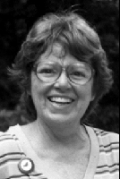
Life as art: Joan Papert Preiss


Years ago, via one of those serendipitous moments the universe occasionally hands you, I met a woman who influenced the rest of my life. I was sitting in a library in San Miguel de Allende, Mexico, reading that month’s issue of Ms. Magazine. A short letter to the Editor caught my eye: You write about child labor as though it is a thing of the past, the writer said, when farm labor currently uses children in the fields. Signed, Joan Papert Preiss, Triangle Friends of the UFW. She must have given her address (this is before things could be looked up on the Internet) because I wrote her and asked if she needed help. “Yes,” she replied, and a few months later I was on a bus to Durham, NC, ready to volunteer in her office, which happened to be in the guest bedroom of her home.

Joan, as I learned at her memorial service last Saturday, almost single-handedly brought farmworker activism (and attention to the plight of farmworkers) to North Carolina. And she did so with a playful, creative style. She became known as the lady with the tiaras, including a Mt. Olive pickle jar headpiece that she wore to picket lines during the Mt. Olive boycott. She made her own boycott lapel pins out of bake-able clay, and painted colorful signs and posters. She also was known for wearing a grape costume that, I think, consisted mostly of purple balloons during the UFW grape boycott.

She spoke fervently and persuasively about farm conditions to gatherings large and small, even though she admitted that she had once dreaded public speaking and still considered herself a shy person. Even in the face of circling policeman, angry store managers and apathetic shoppers, she continued on with an unmitigated enthusiasm. I have never known anyone who so exuded a persistent sense of purpose. After raising three sons, she committed herself to the cause of farmworker rights. But she also found time to cook gourmet meals, keep up an herb garden, hold girlfriend get-togethers, go sailing, host sleepovers and playdates for her grandchildren, volunteer at the local hospital, keep a materials/news file (now archived at Duke Library), and seriously compete at badminton. And she found time to have fun with me when I was working with her. On one of my last days there, before I left to go back to school, we decided spontaneously to have a “milkshake orgy”—and so set about making shots of cranberry milkshakes, followed by pumpkin, peanut butter, etc., in her kitchen. Too full, we went for a walk in Duke Forest, chatting and laughing together.

She offered me a blueprint for an active and happy life. More importantly, she offered a level of acceptance and confidence in my abilities that I’d never experienced before, at least from someone older than me. What a gift knowing someone like that.

I often told her that I should write an article for Ms. about how we’d met, which would segue into an article about her amazing life. Some of what I would have said is in this blog post now.

In another bit of serendipity, a bookend to the first, I was updating my list of cell phone contacts recently and I saw her phone number, realizing I hadn’t heard from her in a long while; the handmade holiday cards had stopped coming a few years ago. With a sense of dread, I googled her name and found her obituary. Without that bit of discovery I would have missed her memorial service and a chance to say good-bye. We sang “Union Maid” and “De Colores” and other songs, were reminded of how much she had meant to so many, and then dispersed out into the hot afternoon.

Wednesday, July 11, 2012

Stuck somewhere between childhood and "Twilight"


Recently E-girl wanted to cash in her Barnes and Noble gift cards and buy a copy of The Hobbit since none of the local libraries have a copy of it on their shelves. (We'd already listened to it on CD in the car last year, read by the excellent voice actor, Rob Ingles).

BN.com has lots of ways of finding books for recommended ages and reading levels. First she looked at the lists of books recommended for ages 9-12, but found that she/we had either read them already  (the Percy Jackson series, Wonderstruck, A Wrinkle in Time, etc.) or they seemed too easy. So I suggested she plug in her Lexile score, using their Lexile Reading Level Wizard, to see what books match it. The results were not promising: Ethan Frome, Hiroshima, Animal Farm, The Jungle, A Farewell to Arms, To Kill a Mockingbird. All great books but not a good fit for a kid who still likes happy endings. (The Lexile score obviously represents mere vocabulary comprehension rather than level of emotional connection or life experience).

So we looked at books recommended for 12 and up. And here is the depressing part. Once you leave childhood (and Wimpy Kid, The Magic Thief, Percy Jackson, etc.) behind, according to BN.com's helpful recommendations, you're in the land of Pretty Little Liars and Hunger Games and Twilight—a place of malice and implied (or not) sexuality, where the good girl/guy doesn't always win.

My kid, so far, has not been eager to rush into young adulthood. She has resisted any interest in The Hunger Games, despite the urging of several classmates, because she knows she wouldn't enjoy it, at least not yet. But where does that leave her? Winnie the Pooh is a distant country already and even Beverly Cleary is slipping behind her.

Frustrated, she was about to give up the search for another book (and the $25 minimum for free shipping) when she happily discovered that BN.com carries DVDs. So now a copy of The Hobbit and the first season of "I Love Lucy" (which is one of her favorite TV shows) is on its way to our home.

Classic TV can be a refuge, particularly for those destined for unknown, and unfolding, lands. So, too, at least for a time, I think we'll turn back to the classic books of adolescence, written in a less cynical time, where characters didn't shop for expensive brand-name clothes or try to kill each other. Better start looking for my copy of My Side of the Mountain...

Friday, July 6, 2012

The happiness of perpetual creativity

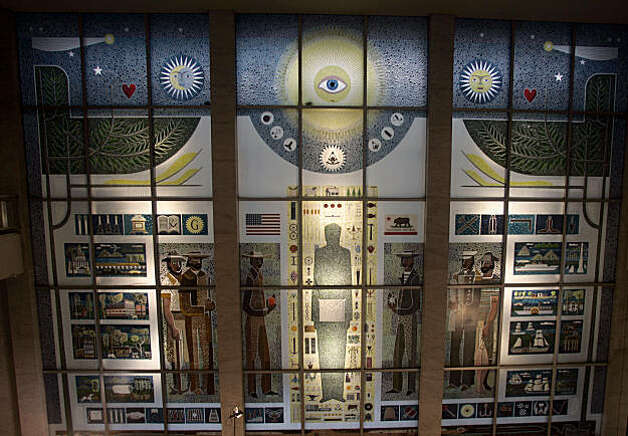
The endomosaic window that Norman created for the SF Masonic Memorial Temple

I saw a great documentary about Emile Norman (whom I'd never heard of before) a couple of weeks ago on PBS. It was inspiring to see him still making art at age 91; his creativity permeated everything he did. The film showed him in the wee hours of the morning happily jigsawing small pieces of wood for sculptures and mosaics in his gorgeous home in Big Sur that he had built with his partner, Brooks Clement.

Norman had a lot of things in his life that could have made him angry—his family rejected his artistry and his homosexuality, and he lived in a time in which he could have been persecuted just for being gay. Yet he found a way to be productive and prosperous, in his own version of paradise.

What I found most inspiring was his joyfulness, the ongoing, obvious pleasure his creativity gave him. As he said in the movie, "I love to experiment, see if this works, that works... It's fun!" Later he added, "I'm here, I have a gift, and it's my duty to use it. I'm so happy when I'm working. The most important thing in my life is when I'm sculpting and doing artwork. That's my reason for being here." And, as he predicted, "If I stop doing work, call 9-1-1 and tell them to come and get me."

There are so few people I know in real life (or who are depicted on TV) who are joyfully creative—except maybe young children. I don't know how we lose that playfulness or where those creative impulses go—shopping and acquiring, worry, doubt? People like Emile Norman help pull us out of the stale, static rooms of our lives.

Saturday, June 23, 2012

Not reading the news

Despite having been a news reporter, I rarely read the news. My biggest excuse is that I usually look at the newspaper while I'm eating, so it's easier to read items that are on one page—advice columnists, funnies, tabloid weekly sections—than news articles that start somewhere and continue elsewhere, requiring constant rearrangements of paper. While reading "Dear Amy," I can sip my tea and eat my toast without worrying about getting newspaper ink on my food, or papers scattered all over the table.

But the bigger reason is that I don't know how to respond to bad news. After reading about citizens murdered in Syria I feel sad and angry. After repeated readings, I start to feel helpless; I don't know what to do with that information.

I can't seem to keep all the daily and ongoing acts of evil in my mind at once. I'd rather read about choosing hellebores varieties for the garden (in the weekly Home section), or how two recently married people met and courted (in the Sunday Style section). I can do something positive with that  information—the couple might work its way into my fiction, the hellebores might work its way into my garden. But that picture of a stricken child, whose parent was just shot—what am I supposed to do with that? Simply file it away in my mind? My brain is not an unfeeling hard drive.

All I really need to know about evil and horror is a photograph I saw years ago of a German soldier about to shoot a mother and child. The mother is futilely trying to use her body to shield her child. The viewer knows the pair died seconds after the picture was taken. I know that such cruelty has happened since then millions of times over, in small and big ways, but there is essentially nothing worse than what happened in that moment.

I want to be an informed citizen, but if I read the news all the time I would probably reach a state of despondency. I'm not sure I would leave my bed or, at least, my house and garden. I might reach for chocolate, romance novels and Hallmark Channel movies for comfort. So I glance at the front page, on my way to other, happier sections. While I'm reading about new movies, I'm aware that those stricken faces are still there on the other pages even if I'm not looking directly at them.

Tuesday, June 5, 2012

The absent blogger


My recent absence from this blog coincides with the new "look" that Blogger rolled out for Blogger Dashboard (its blog editor) a few weeks ago. Now I must type my posts into a tiny box on a blank screen (click on pic above to see it better). It feels like I am floating in space, and my words are barely hanging in the ether (which, I suppose, they are). It doesn't seem as compelling an exercise any more. No matter how many words I write, I cannot fill all the blank, uninterested space surrounding the box.

I suppose I can write an essay elsewhere and simply upload it here, but no matter how quickly I accomplish that, I'll still have to confront this white screen. There is something terrifying about such blankness. It is like shouting into the infinite, and hoping some of my words will stick.

It is a visual representation, then, of what writing or any type of creativity really is. Each is, in its own small or big way, is a prayer or courageous wish.

Thursday, May 17, 2012

The garden of my mind


I haven't written a blog post for at least a couple of weeks—in fact I haven't written anything at all. I have been gardening.

Landscaping a once-bare slope took nearly two weeks, primarily because I didn't buy new plants for it, but cannibalized the rest of my yard. (That meant pulling and divvying out 50+ liriope plants, among other things).

This has become a spring-time ritual for me. I rush to get plants in between the last frost date, around mid-April, and the first mosquito, sometime in late May to early June—when the weather in Maryland also sometimes gets too hot for new perennials to survive (without an abundance of watering). Fortunately, I have been blessed with many clear, 70 degree days, making it a pleasure to be outside.

When I am outside putting plants in, trying to figure out where the next plant will go, I am not thinking about anything else. Unlike most of the other days of my life, I don't think in words, or crave to write anything down. I see plants, and roots, even as I am going to sleep at night. It is the closest to Zen-mind I have gotten. There is no ego there. "I garden," not "I am a gardener." (At its most fervent, even recognition of the specific verb/action disappears).

However, like all tragi-comedies and/or serious garden stories (Adam and Eve being among the first), this one has an unhappy ending. My blissful days in the garden were curtailed when I accidentally pulled a hairy root unlike the others. Eventually poison ivy blisters appeared all over my right wrist. Days later, I am inside doctoring it, typing at the computer, looking at all the lovely greenness outside, still unable to put a glove upon it and go back to the dirt; my need to garden is now slowly receding.

Photo: A close-up shot of a Lenten Rose flower, which is growing in the driveway circle I landscaped last spring.