In Issue 55 of Writers Ask, Bret Anthony Johnston suggests making characters more likable by giving them at least one annoying habit ("We can't identify, not completely, with perfect characters, so as readers we resist and retreat from protagonists with flawless skin..."). OK, got it—I found this a fun and uninhibited task. My characters began tapping their feet nervously, clearing their throats, or clutching their steering wheels in heavy traffic until their knuckles turned white.
To make them more fully realized and interesting, Johnston also suggests answering a series of questions about each character you're creating. His list of questions included: "What does your character most want?" (some people have said that the answer to this question is the basis itself of a short story), and "What does your character most regret?" But the question I found easiest to answer was this: "What is in your character's wallet/purse?" Unfortunately, every character I have created since reading this has now carries an unusual purse or has an overstuffed wallet—a trait I rarely pay much attention to in real life. It became the first thing I wanted to describe about them when I got around to putting them down on paper.
I'm sure Johnston meant these few questions as a launching point, to inspire writers to pay more attention to detail, and to avoid writing about themselves. To simplify this exercise, you could make a list of intended/planned characters and assign each an outstanding characteristic. Or create some kind of rotating list of questions to answer about your fictional characters (which I will attempt in another post).
The problem for me with all these exercises is that most of my fictional characters don't begin as a visual presence but a voice. They start talking to me as invisible companions that accompany me during the day—like an ongoing internal seance. Perhaps I should try to see what they look like as they speak to me, or ask them what they really want, or what's in their wallets. Yet I'm afraid if I question them, at least while they're still trying to introduce themselves to me, they might vanish. It's probably better for me to write down the conversations (as much as I can remember them), then go back and embellish and add descriptions and stated desires after they've had a sufficient chance to confess their souls.
Showing posts with label fiction. Show all posts
Showing posts with label fiction. Show all posts
Tuesday, January 15, 2013

Thursday, November 29, 2012
Story maps

A while back, I started a Pinterest page on Writers Tools and Tips (that I've hardly added anything to lately...). To feed that page (and to have a permanent place to park this information), I'm uploading the Story Map I've started using when writing short stories. (You don't have to use it before you start the story, but it can help you at any time during the writing to clarify who is saying what, and how else a character might be described). I have created it and honed its elements based on fiction writing classes I've taken and books I've read over the years.
The image above is there for mostly for graphic purposes (and so I can link to it on that Pinterest page). Here it is as text, below, if you'd like to import it into word processing, and adapt for your own uses.
[Note: If you copy and paste this into Microsoft Word, and want to retain the table, choose the "Keep Source Formatting" option. You can still type into it. If you are bothered by the pinkish background that imports from this blog, though, you can paste the text and table separately—choose "Keep Source Formatting" for the table only, then under "Table Properties" choose "Shading"--no fill.]
STORY MAP
WORKING TITLE:
SETTING(S)
·
Year(s):
·
Season(s):
·
Place(s):
CHARACTERS
Name
|
Approx. Age
|
Physical description
|
PROBLEM:
CONFLICTS:
EVENT 1:
EVENT 2:
EVENT 3:
EVENT 4:
SOLUTION:
Sunday, November 25, 2012
Writing a novel, piece by piece
 |
| This is a Scrivener Corkboard being used to its full power—mine has few elements on it. |
Apparently I am a NaNoWriMo Rebel—one of the hundreds who don't follow the typical rules set forth by NaNoWriMo. I am a Rebel simply by not aspiring to write 50,000 words during the month of November. But I'm also a Rebel since I'm not really writing a novel but a set of inter-related stories, many of which are no more than a few vignettes and descriptions right now, which I am collecting in separate electronic folders.
It has been liberating to write like this. I am not trying to create a long, linear narrative and can choose to write a little bit in each story without having to connect any new writing directly to what has already been written—I can write about a past occurrence without bothering to present it as a flashback, or can write about a future event without worrying about having first to describe what has happened between times.
I have only been able to write this way because I am using Scrivener, a software package that promises to help writers "create order out of chaos" (though, right now, I'm embracing the chaos more than the order). Scrivener describes itself as "a powerful content-generation tool for writers that allows you to concentrate on composing and structuring long and difficult documents." So far I've only been using it in an elementary way, to move text around on its "Corkboard"and keep track of the word count for the entire manuscript, which is composed of seven half-finished stories. You can download it for free and give it a try (and then pay later if you decide it works for you).
I have yet to tap Scrivener's full power since I am too impatient to sit through all of its tutorials—but I intend to after NaNoWriMo 2012 is over (and I have reached my personal, 25,000-word count goal).
Tuesday, November 13, 2012
NaNoWriMo again

I am attempting NaNoWriMo again this year and, like last year, I am hopelessly behind. As of the beginning of Day 13, I stand at 7,659 words—when my expected total should be 21,671.
I attribute my slowness, in part, to the hurricane at the beginning of the month, which took out the power for a couple of days and flooded our basement. Since then I have been busy, some days, until late evenings, with paid work and other responsibilities (like cleaning up the basement). Rather than be agitated about not meeting the daily deadlines, I have made my peace with it. I'm still aiming to write a book (a series of related short stories), but I'm probably not going to have it all done by Nov. 30th.
I just wish there was a slower NaNoWriMo—a two-month (or even three-month) book marathon for busy people (and parents) who still want to reach the goal but just can't get there as fast as those who are freer and unfettered.
Tuesday, October 9, 2012
The plot thins
For all my good ideas over the years, I have failed to produce more than a handful of short stories, only two or three of them published (in addition to a couple of novels that need heavy revising). Instead, I have dozens of notebooks filled with descriptions of experience and emotion, which I have sometimes turned into essays, but rarely into any kind of cohesive story.
It wasn't until after I attended a lecture by Pam Smallcomb last year, on how to write children's picture books, that I began to realize I don't know how to write a good plot—or any plot, really. Plot is so essential to fiction, I don't know how I missed its absence.
I like poetic prose and deep insight, which is why I tend to read literary fiction rather than genre fiction. But those books rarely keep me up at night—unlike the Harry Potter books, whose pages I continued to turn long after my bedtime, until I had read the whole series. It was those little hooks along the way that kept me interested, which I've mostly ignored in my own fiction.
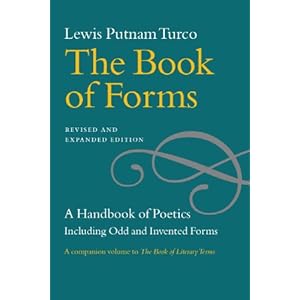 I never felt this way about poetry, perhaps because writing good poetry—especially form poetry—is a learning experience. I didn't assume that I knew what I was doing just because I could put down words and make rhymes. I understood that there is cadence and form, and building toward some kind of epiphany, all within a few lines. A massive, humbling undertaking if done well. And so I felt no embarrassment in consulting guides like The Book of Forms: A Handbook of Poetics as I wrote poems.
But plot? I didn't think I needed to study it. Wasn't the telling of the story the same thing as plot?
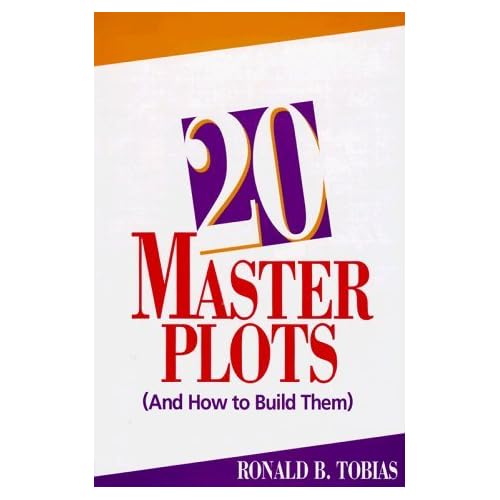
Now I am reading, as Pam suggested in her lecture, 20 Master Plots (And How to Build Them). They include variations on the two essential plots that have been described over the years: a stranger comes to town, a journey is taken. But I'm finding it helpful to break down books I know and love into their mechanical parts, using this book as guide. Next, I will apply it to my own fiction; it's hard to admit that I am still a beginner at all this, but I'm never going to be a better writer unless I acknowledge my current limitations.
Sunday, April 22, 2012
The never-ending short story
I have been writing a short story for a couple of months now, off and on (more off than on, to be perfectly honest). I know how it will end—descriptions for the epiphany scene have already been written. But the when it will end is starting to look more distant. That's because the protagonist in the story is a teenage girl who doesn't want to stop talking. Given that it's a first-person narration, that makes it difficult.
The girl, Chloe, is as unlike me as she could be, so it's not like it's just me chatting about what's on my mind. She has a lot to say. For a while, around the time I created my Word Count chart, I tried to hem her in, to put her thoughts into a fictional structure. But she resisted—not rebelling exactly, just an unfazed persistence of thought.
I am just letting her talk for now, putting her thoughts about various experiences in separate sections of Scrivener, hoping some cohesive whole can be made of it later with judicious cutting and arrangement, though I imagine it will feel somewhat like putting together a jigsaw puzzle (with missing pieces) before I am done.
The girl, Chloe, is as unlike me as she could be, so it's not like it's just me chatting about what's on my mind. She has a lot to say. For a while, around the time I created my Word Count chart, I tried to hem her in, to put her thoughts into a fictional structure. But she resisted—not rebelling exactly, just an unfazed persistence of thought.
I am just letting her talk for now, putting her thoughts about various experiences in separate sections of Scrivener, hoping some cohesive whole can be made of it later with judicious cutting and arrangement, though I imagine it will feel somewhat like putting together a jigsaw puzzle (with missing pieces) before I am done.
Monday, October 31, 2011
A realistic NaNoWriMo goal?
Late last night, in a fit of exhausted inspiration, I signed up for NaNoWriMo, even though I questioned recently whether I should attempt it again.
This year I am being realistic—that is, not very ambitious, since it doesn't look like I'm going to be able to carve out enough time this week to start it off well.
The working title of my forthcoming work: (NaNoWriMo insists that you provide a novel title in order to register): Whatever I Can Think of to Write in Any Given Moment.
The genre: Memoir/Stream of consciousness (a genre I may have made up since I had to write it in under the category of "Other").
I'm aiming for 10,000 words this year, one-fifth of the official NaNoWriMo goal, or around 350 words a day (not the 1,667 words that the contest suggests). I've decided to write about the people and moments I've wanted to recall over the years, to remember them more vividly, to recreate and then ameliorate the past. This may only last through the first five days before I go on to something else I've always meant to do.
So I say am trying to be realistic, but I confess there's some tiny glimmer of hope inside me that Whatever I Can Think of to Write in Any Given Moment eventually will be considered a ground-breaking, creative masterpiece marking a new and unforeseen category of memoir-ish fiction.
This year I am being realistic—that is, not very ambitious, since it doesn't look like I'm going to be able to carve out enough time this week to start it off well.
The working title of my forthcoming work: (NaNoWriMo insists that you provide a novel title in order to register): Whatever I Can Think of to Write in Any Given Moment.
The genre: Memoir/Stream of consciousness (a genre I may have made up since I had to write it in under the category of "Other").
I'm aiming for 10,000 words this year, one-fifth of the official NaNoWriMo goal, or around 350 words a day (not the 1,667 words that the contest suggests). I've decided to write about the people and moments I've wanted to recall over the years, to remember them more vividly, to recreate and then ameliorate the past. This may only last through the first five days before I go on to something else I've always meant to do.
So I say am trying to be realistic, but I confess there's some tiny glimmer of hope inside me that Whatever I Can Think of to Write in Any Given Moment eventually will be considered a ground-breaking, creative masterpiece marking a new and unforeseen category of memoir-ish fiction.
Wednesday, October 12, 2011
NaNoWriMo or NaNoWriNo?
A friend asked recently if I intended to do NaNoWriMo this year. I said I wasn't sure. Since that time, my potential answer has swung daily between "How could I?" to "How could I not?". That's because I'm in the midst of revising the middle-grade novel I wrote for NaNoWriMo last November.
Without the pressure to write a novel in a month, I probably wouldn't have written this particular novel—so I'm thankful to NaNoWriMo for that. But writing that fast, without any time for revision or reflection along the way, also means that some of the resulting text is extraneous, to put it politely.
I had to try to meet my 1,800 word goal every day, so I often wrote about whatever popped into my head. New characters would appear and speak their minds, whether they needed to be in this particular book or not. One description (not five or six) about how much my heroine loved to read would have been sufficient.
The hard part now is figuring out what is worth keeping. I've realized that good prose doesn't necessarily mean good fiction—hence, many well-written sentences need to be deleted. I've spent as much time now hacking through my second draft as I did writing that first draft last year.
If I attempt NaNoWriMo again, I've decided the best option will be to try to write interconnecting-stories-as-a-novel. That way, I can choose the best stories to keep, hacking away without the worry of any visible scar tissue between chapters or even paragraphs.
Without the pressure to write a novel in a month, I probably wouldn't have written this particular novel—so I'm thankful to NaNoWriMo for that. But writing that fast, without any time for revision or reflection along the way, also means that some of the resulting text is extraneous, to put it politely.
I had to try to meet my 1,800 word goal every day, so I often wrote about whatever popped into my head. New characters would appear and speak their minds, whether they needed to be in this particular book or not. One description (not five or six) about how much my heroine loved to read would have been sufficient.
The hard part now is figuring out what is worth keeping. I've realized that good prose doesn't necessarily mean good fiction—hence, many well-written sentences need to be deleted. I've spent as much time now hacking through my second draft as I did writing that first draft last year.
If I attempt NaNoWriMo again, I've decided the best option will be to try to write interconnecting-stories-as-a-novel. That way, I can choose the best stories to keep, hacking away without the worry of any visible scar tissue between chapters or even paragraphs.
Tuesday, May 17, 2011
Molly Bloom sings
As I confessed in a post a while ago, I've never made it entirely through James Joyce's Ulysses. After a few futile attempts to get past the first section, I gave up—but that didn't stop me from reading Molly Bloom's famous soliloquy at the end, a passage that has become a cultural reference (Molly Bloom is the name of at least one bar and one band, and the speech has been widely quoted/recited, including in a Rodney Dangerfield movie).
An NPR segment last week on Kate Bush has me delving back into Ulysses-world, or really, Molly/Kate-world. Bush recorded a song in the late eighties, "The Sensual World" that paraphrased the famous passage (the Joyce estate wouldn't give her permission to do the text verbatim). She has now re-recorded it on her new album, Director's Cut as "Flower of the Mountain" with the original text intact.
I found Bush's video for the original version online and keep listening to/watching it over and over (see below). I can't say why I find it so appealing—it's not got a beat that I can dance to and, even after repeated listening, I still can't sing along with it. Maybe what's gratifying is seeing her attempt at making a literary passage come to life; it's also nice to see a female singer who isn't groveling for approval, but making a video that is a kind of performance art.
To hear the new version, see the NPR segment's track list. (It's not available for purchase until May 31st).
An NPR segment last week on Kate Bush has me delving back into Ulysses-world, or really, Molly/Kate-world. Bush recorded a song in the late eighties, "The Sensual World" that paraphrased the famous passage (the Joyce estate wouldn't give her permission to do the text verbatim). She has now re-recorded it on her new album, Director's Cut as "Flower of the Mountain" with the original text intact.
I found Bush's video for the original version online and keep listening to/watching it over and over (see below). I can't say why I find it so appealing—it's not got a beat that I can dance to and, even after repeated listening, I still can't sing along with it. Maybe what's gratifying is seeing her attempt at making a literary passage come to life; it's also nice to see a female singer who isn't groveling for approval, but making a video that is a kind of performance art.
To hear the new version, see the NPR segment's track list. (It's not available for purchase until May 31st).
Sunday, April 17, 2011
Two recent electronic pieces on The Great Gatsby

A Studio 360 podcast I listened to a few weeks ago (originally broadcast last November) perked up my interest in Gatsby again: American Icons: The Great Gatsby. An hour well spent.
This morning, CBS Sunday Morning did a segment, The end of an era for the "Gatsby house", about the demolition this weekend of the house on Long Island that inspired Fitzgerald's story. The segment offers just the right splash of clips from the Gatsby movie (thankfully no glimpse of Daisy/Mia Farrow), a little narration from the book, and archival photos of the house in its former glory.
Tuesday, February 15, 2011
Web sites that list writers' contests, markets and grants
Instead of having to search for individual web sites for contests, here are some sites that compile them for you:
• Poets and Writers Submission Calendar - a month by month calendar that lists contests, fellowships and awards
• Poets and Writers' Writing Contests, Grants and Awards database - includes details about creative writing contests—including poetry contests, short story competitions, essay contests, awards for novels, and more—published in Poets and Writers Magazine. The magazine promises: "We carefully review the practices and policies of each contest before including it. Ours is the most trusted resource for legitimate writing contests available anywhere."
• It's worth noting separately that the Poets and Writers' database lets you search by genre. For instance, here is the link for listings of Upcoming Fiction Contests.
• Less useful is the writersmarket.com's Contest and Awards listing, which offers 70+ screens of alphabetically listed contests, seemingly without any selective process. (This is the free version; perhaps a subscription to WM offers search capabilities?). [Note: if this isn't a permalink, you can link to it from the WM Paid Services page. According to the site, Paid Services puzzlingly includes services for writers "for which they do not get paid"; I think they mean services for which they must pay.]
• Poets and Writers Submission Calendar - a month by month calendar that lists contests, fellowships and awards
• Poets and Writers' Writing Contests, Grants and Awards database - includes details about creative writing contests—including poetry contests, short story competitions, essay contests, awards for novels, and more—published in Poets and Writers Magazine. The magazine promises: "We carefully review the practices and policies of each contest before including it. Ours is the most trusted resource for legitimate writing contests available anywhere."
• It's worth noting separately that the Poets and Writers' database lets you search by genre. For instance, here is the link for listings of Upcoming Fiction Contests.
• Less useful is the writersmarket.com's Contest and Awards listing, which offers 70+ screens of alphabetically listed contests, seemingly without any selective process. (This is the free version; perhaps a subscription to WM offers search capabilities?). [Note: if this isn't a permalink, you can link to it from the WM Paid Services page. According to the site, Paid Services puzzlingly includes services for writers "for which they do not get paid"; I think they mean services for which they must pay.]
Friday, December 10, 2010
Suggested gifts for writers, or those who love good writing
Anyone who really knows me understands that I am not the biggest fan of the Christmas season. I dislike the annual frenzied, consumer-driven ritual it has become, and the constant, media-inflicted we-must-save-the-American-economy guilt.
However, if you love Christmas and/or feel the need to buy gifts, you might as well support good writing, and publications that deserve to continue. [Note: These are not paid promotions...] Here are a few of the things I am giving to others and to myself:

I Just Lately Started Buying Wings is by Writing Home friend, Kim Dana Kupperman.
"In this collection of essays, Kupperman looks at major life events—divorce, death, falling in love—with a candor and wisdom that gently places the reader into scenes from her life. We experience her mother's crazed neglect, her father's distance, a new lover's exquisite beauty. ...Kupperman proves that she has found her own wings, and is soaring." [from my Amazon.com review]
For more on this book, see the NYT book review and NYT Paper Cuts interview with Kim.
 A wonderful surprise arrives in my mailbox every three weeks in the form of one story magazine, which provides just what it says—one short story—in a pocketbook-sized issue. While other short story markets continue to dry up, OS keeps plugging away, publishing more than 140 short stories since 2002. I have to admit that it's the size that prompted me to subscribe to it—it's just a little bigger than the early issues of my own (defunct) a very small magazine. But it's the stories that keep me reading and wanting more.
 Amazingly, The Sun magazine has been continuously publishing intelligent writing since the mid-1970s and, in recent years, without the support of advertisements. What began for publisher Sy Syfransky as a venture put together in a friend's garage and hawked from his backpack on the streets of Chapel Hill, N.C., is now a respected prize-generating enterprise; stories and essays from The Sun are regularly picked for Pushcart, Best American..., and other publishing awards.
The long interview, at the front of the magazine, is almost always provocative and interesting; "Readers Write," at the back of the magazine, offers lyrical glimpses into readers' lives; and the fiction and essays in the center of the magazine showcase some of the best writing around. My only criticism of The Sun is that is can veer toward the dark and depressing a little too often. But not to read it is to miss out on things that feel important and necessary.
The Sun is currently struggling, it seems, to stay afloat, requesting contributions and suggesting that subscribers give friends gift subscriptions. So, if you subscribe to The Sun (as a present to yourself), consider also giving gift subscriptions to people you know who cherish good writing.
However, if you love Christmas and/or feel the need to buy gifts, you might as well support good writing, and publications that deserve to continue. [Note: These are not paid promotions...] Here are a few of the things I am giving to others and to myself:
I Just Lately Started Buying Wings is by Writing Home friend, Kim Dana Kupperman.
"In this collection of essays, Kupperman looks at major life events—divorce, death, falling in love—with a candor and wisdom that gently places the reader into scenes from her life. We experience her mother's crazed neglect, her father's distance, a new lover's exquisite beauty. ...Kupperman proves that she has found her own wings, and is soaring." [from my Amazon.com review]
For more on this book, see the NYT book review and NYT Paper Cuts interview with Kim.

The long interview, at the front of the magazine, is almost always provocative and interesting; "Readers Write," at the back of the magazine, offers lyrical glimpses into readers' lives; and the fiction and essays in the center of the magazine showcase some of the best writing around. My only criticism of The Sun is that is can veer toward the dark and depressing a little too often. But not to read it is to miss out on things that feel important and necessary.
The Sun is currently struggling, it seems, to stay afloat, requesting contributions and suggesting that subscribers give friends gift subscriptions. So, if you subscribe to The Sun (as a present to yourself), consider also giving gift subscriptions to people you know who cherish good writing.
Wednesday, December 1, 2010
Yes I did!

I'm not sure that anyone can write a deeply nuanced and eloquent novel in a month—mine certainly isn't. But I didn't expect it to be. And that lack of expectation really gave me a wonderful freedom to write.
The other great thing about NaNoWriMo is that I could actually talk about it with people. I charted my progress on my profile page there (see chart from it, above), and put occasional updates on my Facebook page. It made my fiction writing visible, for once; I felt a part of a (temporary) community. And it made me write, no excuses. Dirty dishes, unmade bed, work deadlines—so what? I had 1,665 words to write each day and until they were done, I put other things aside. But, as you can see from the chart, I struggled to always find the time to write. Sometimes regular life was unavoidable.
In my novel, I wrote from the perspective of a 12-year-old girl, something I probably never would have otherwise attempted. It was the first thing that popped into my head on November 1st and I had to see it through, no time for redos or rewrites or more than minimal editing. I couldn't lose time to rethinking the plot or the characters. They were mine for 30 days.
Writing for the YA audience also required a more resolved and happier ending than the usual melancholy ending I fall into when writing for adults. I found the happy ending wasn't that difficult when it was inherent or organic to the story, so I hope I can write happier endings in the future even when I'm not writing for children.
Tuesday, November 23, 2010
An impromptu strategy session in the children's library
How cool is this—I visited a local public library this morning and mentioned my YA novel-in-process to the children's librarian. She got so interested in the project that she pulled another children's specialist from the back room and we sat around talking about it for a good 15-20 minutes.
I am at the point in my book where my heroine is going to seriously start "booking"—a verb I've made up for visiting scenes in books via a magic bookmark—through four books, and I hadn't finalized my list of books as of this morning. As I told the librarians, if I had a year to research this, I could take the time to read all the books (again) that I want her to visit.
She is booking through books that Ellen, another, older girl is supposedly lost in. My heroine, Sarah, and Mrs. Reid, the librarian who gave her the magic bookmark (and Ellen's mom), are trying to find a commonality among the four books. That's where I was stuck. I didn't want them just to be books that I knew about, but time is of the essence since I am writing the book for NaNoWriMo, and only have seven days left to finish it.
We finally determined that my original choices weren't so bad; the obvious commonality they share is water (though I also know that's not the reason that Ellen chose them).
I also asked if either of them knew of a book with the same kind of themes, characters, plot, etc., as mine. I have been worried about this since I have been so writing quickly and wondered if some of my ideas might be coming from something I'd already read. Fortunately, they hadn't.
How wonderful to have a fictional work taken so seriously—and what serious fun.
I am at the point in my book where my heroine is going to seriously start "booking"—a verb I've made up for visiting scenes in books via a magic bookmark—through four books, and I hadn't finalized my list of books as of this morning. As I told the librarians, if I had a year to research this, I could take the time to read all the books (again) that I want her to visit.
She is booking through books that Ellen, another, older girl is supposedly lost in. My heroine, Sarah, and Mrs. Reid, the librarian who gave her the magic bookmark (and Ellen's mom), are trying to find a commonality among the four books. That's where I was stuck. I didn't want them just to be books that I knew about, but time is of the essence since I am writing the book for NaNoWriMo, and only have seven days left to finish it.
We finally determined that my original choices weren't so bad; the obvious commonality they share is water (though I also know that's not the reason that Ellen chose them).
I also asked if either of them knew of a book with the same kind of themes, characters, plot, etc., as mine. I have been worried about this since I have been so writing quickly and wondered if some of my ideas might be coming from something I'd already read. Fortunately, they hadn't.
How wonderful to have a fictional work taken so seriously—and what serious fun.
Sunday, November 21, 2010
NaNoWriMo Day 21
Today, on my 21st day into National Novel Writing Month, I am 28,499 words in—which might sound impressive until I hit the Stats bar on my NaNoWriMo Profile Page: I am 6,501 words behind. My suggested cumulative word count for the beginning of the day was 35,000 words.
It's not from lack of interest or idea on my part; life has gotten in the way. My kid's two full days and two half-days off from school this month, hubby out of town for consecutive weeks, and a half-day visit to the ER with E-girl for a broken arm, has meant that I haven't been able to sit alone and write at the computer for the two or three hours I need every day. Desperate, I have taken to writing paragraphs as multiple text messages on my cell phone or scribbling into a tiny notebook whenever I am sitting waiting anywhere or watching kids at play.
I have guiltily set E-girl in front of the TV on the schools days off, but I just can't put her there for more than an hour and a half. She needs fresh air and friends and interaction.
So I really want to write this book—all this time away from it has made me desperate to put it down, which is a wonderful thing, if you think about it. Without the pressure to finish it within a certain time frame, it might still just be another one of my good ideas I've never made time for. The less I am able to write it, the more urgent it has become for me.
It's not from lack of interest or idea on my part; life has gotten in the way. My kid's two full days and two half-days off from school this month, hubby out of town for consecutive weeks, and a half-day visit to the ER with E-girl for a broken arm, has meant that I haven't been able to sit alone and write at the computer for the two or three hours I need every day. Desperate, I have taken to writing paragraphs as multiple text messages on my cell phone or scribbling into a tiny notebook whenever I am sitting waiting anywhere or watching kids at play.
I have guiltily set E-girl in front of the TV on the schools days off, but I just can't put her there for more than an hour and a half. She needs fresh air and friends and interaction.
So I really want to write this book—all this time away from it has made me desperate to put it down, which is a wonderful thing, if you think about it. Without the pressure to finish it within a certain time frame, it might still just be another one of my good ideas I've never made time for. The less I am able to write it, the more urgent it has become for me.
Saturday, November 13, 2010
"Oh hi!" and other awkward ways to get your characters into a room
A chance encounter with the cult classic, "The Room," reminded me how hard it is to get fiction characters smoothly transitioned into a scene.
"The Room" is celebrated in various compilations and snippets all over YouTube for its poor acting, editing, and writing. In the 30-second edit above, someone has taken some of the most awkward entrance dialog from the movie. [This will probably be taken down from YouTube soon, so if it's blank, that's why.] I'm not sure that I'm not guilty of some of this in my current project, a hastily written novel for NaNoWriMo.
Another scene from "The Room" that is also available on YouTube (inserted below) should be Exhibit A for writers wanting to know which scenes to cut from their fiction. The scene—which zips by in 19 seconds!—lacks meaningful dialog and description, doesn't seem to move the story along, and doesn't give each character a distinctive voice.
Friday, November 5, 2010
Things I've learned from NaNoWriMo, five days in
As promised in a previous post, I'm participating in National Novel Writing Month. Here are some things I realized in the last few days because of it:
• Writing under a timeline/deadline pushes words out of me. I am writing words I would never have put down on paper, in a genre (young adult fiction) I had never much contemplated before.
• When you're writing this fast there is no time for poetic description or nuance. The storyline is the thing, the pursuit of reaching the next page.
• Writing for a purpose, for a pursuit with a recognizable name, has brought my writing more out in the open. I am a participant in NaNovWriMo—I said so here and on my Facebook page. I rarely mention my writing in process.
• Since I must write at least 1,664 words a day, I can sit at my desk guilt-free, not worrying about the dishes in the sink, the pile of laundry in the corner. Otherwise, given my limited free time, it just won't get written.
• In an effort to reach my 50,000 word count, I'm already contemplating the longest possible way to describe and name things.
• I prefer writing short stories. I'm 19 (single-space) pages in already—a short story, done. And 25 luxurious days to edit it.
• Writing under a timeline/deadline pushes words out of me. I am writing words I would never have put down on paper, in a genre (young adult fiction) I had never much contemplated before.
• When you're writing this fast there is no time for poetic description or nuance. The storyline is the thing, the pursuit of reaching the next page.
• Writing for a purpose, for a pursuit with a recognizable name, has brought my writing more out in the open. I am a participant in NaNovWriMo—I said so here and on my Facebook page. I rarely mention my writing in process.
• Since I must write at least 1,664 words a day, I can sit at my desk guilt-free, not worrying about the dishes in the sink, the pile of laundry in the corner. Otherwise, given my limited free time, it just won't get written.
• In an effort to reach my 50,000 word count, I'm already contemplating the longest possible way to describe and name things.
• I prefer writing short stories. I'm 19 (single-space) pages in already—a short story, done. And 25 luxurious days to edit it.
Sunday, October 31, 2010
What should I write about when there is so much to say?
As I said in my last post, I signed up for NaNoWriMo a few days ago, with the goal of sitting down on November 1st and writing a novel from scratch. It all sounded very spontaneous and exciting—I was going to start writing whatever popped in my head and see if I could carry on with it for 49,300 more words.
But then, after I signed up, I checked their web site more attentively. They suggest I have an outline in hand.
Gulp. I am writing this post on Thursday, setting it to publish on Sunday, because I imagine I'm going to be spending Sunday night scratching out potential plotlines.
J.K. Rowling said that Harry Potter came to her in a vision and she knew she had to write it down. I don't think such inspiration works well under pressure, or within a three-day deadline. I've been touching my forehead with my fingertips the last couple of days, trying to coax out ideas, but it is starting to feel like a clean slate in there.
It's overwhelming to realize that I could write about anything. So right now I am in panic mode, trying to think of new ways of doing something that is already tried and true (giving me a new empathy for film producers!). Here's what I've come up with so far:
• As people are gathered in a fallout shelter in London, they each tell a tale from their lives to get through the night. 12 tales, based on Grimm's Fairy Tales, sort of a Canterbury Tales in the 20th Century. [After I imagined this, I realized it was inspired by the film "Atonement" and recently listening to a lecture in my car called "Masterpieces of the Imaginative Mind." Why 12? I figure I'd write each chapter would be 15 pages, giving me the necessary total.]
• A female Holden Caulfield makes her way through a suburban Maryland high school year. But what does her voice sound like (too easy to fall into Valley Girl speak—not sure there is a recognizable Maryland teenager sound...)? What is her quest?
• 10 stories about Santa Cruz, each story a different character's story. Last story, they all come together.
The older I get, the more I realize how hard it is to be fresh and new and not derivative. There's an overwhelming amount of life experience to try to compact into 200 pages. At the same time, there's that need to drive the story along with challenges for the main characters, while scattering mysteries or unanswered questions every few pages that will keep the reader turning the page—to manage that is the difference between writing fiction and typing. I think I will be doing a lot of the latter, as I make my way through the necessary word count.
But then, after I signed up, I checked their web site more attentively. They suggest I have an outline in hand.
Outlines and plot notes are very much encouraged, and can be started months ahead of the actual novel-writing adventure. Previously written prose, though, is punishable by death.
Gulp. I am writing this post on Thursday, setting it to publish on Sunday, because I imagine I'm going to be spending Sunday night scratching out potential plotlines.
J.K. Rowling said that Harry Potter came to her in a vision and she knew she had to write it down. I don't think such inspiration works well under pressure, or within a three-day deadline. I've been touching my forehead with my fingertips the last couple of days, trying to coax out ideas, but it is starting to feel like a clean slate in there.
It's overwhelming to realize that I could write about anything. So right now I am in panic mode, trying to think of new ways of doing something that is already tried and true (giving me a new empathy for film producers!). Here's what I've come up with so far:
• As people are gathered in a fallout shelter in London, they each tell a tale from their lives to get through the night. 12 tales, based on Grimm's Fairy Tales, sort of a Canterbury Tales in the 20th Century. [After I imagined this, I realized it was inspired by the film "Atonement" and recently listening to a lecture in my car called "Masterpieces of the Imaginative Mind." Why 12? I figure I'd write each chapter would be 15 pages, giving me the necessary total.]
• A female Holden Caulfield makes her way through a suburban Maryland high school year. But what does her voice sound like (too easy to fall into Valley Girl speak—not sure there is a recognizable Maryland teenager sound...)? What is her quest?
• 10 stories about Santa Cruz, each story a different character's story. Last story, they all come together.
The older I get, the more I realize how hard it is to be fresh and new and not derivative. There's an overwhelming amount of life experience to try to compact into 200 pages. At the same time, there's that need to drive the story along with challenges for the main characters, while scattering mysteries or unanswered questions every few pages that will keep the reader turning the page—to manage that is the difference between writing fiction and typing. I think I will be doing a lot of the latter, as I make my way through the necessary word count.
Thursday, October 28, 2010
Another monkey typing at the keyboard

Like hundreds of aspiring novelists before me, I, too, have signed up for NaNoWriMo. What, you might ask, is NaNoWriMo? According to their web site:
National Novel Writing Month is a fun, seat-of-your-pants approach to novel writing. Participants begin writing November 1. The goal is to write a 175-page (50,000-word) novel by midnight, November 30.
Valuing enthusiasm and perseverance over painstaking craft, NaNoWriMo is a novel-writing program for everyone who has thought fleetingly about writing a novel but has been scared away by the time and effort involved.
Because of the limited writing window, the ONLY thing that matters in NaNoWriMo is output. It's all about quantity, not quality. The kamikaze approach forces you to lower your expectations, take risks, and write on the fly.
If a thousand monkeys can produce a Shakespeare play by typing at keyboards for infinity, surely hundreds of humans typing 50,000 words in a month's time can produce one good novel. The problem is that each of us may only be able to come up with one of the pages (or sentences) from that great work. Much of the rest of it will surely be crap.
I type, on average, 700 words per page, so I figure that I'll need to write 3.5 pages a day to meet the 50,000-word goal. But judging from past experience, I'm probably going to be holed up in my room in a desperate writing frenzy on November 28th. The evidence? My 63-page undergraduate thesis on the Aeneid produced in a week (on a manual Remington typewriter, no less); likewise, my 50-page Master's thesis, typed over five days and nights in a computer lab. A month, then, seems like a luxury of time, or at least it will the first three weeks.
Is it physically possible to type 45,000 words in a day?
The alternative is to be left behind on the 5,000-word slope, telling myself that it didn't really matter anyway, while others with more passion or persistence make their way to the 50,000-word summit.
Tuesday, August 3, 2010
What a writer does
During recent bouts of insomnia, I've been reading through Alice Munro's Selected Stories. Unfortunately, the stories don't put me to sleep.
I'm always surprised when I mention Munro to people and they admit that they've never heard of her, despite her repeated publications in the New Yorker and her short story collections. (But I hadn't hear of her myself until John Morris, during a workshop at the Writers Center years ago, told us to read Munro to learn the craft of short story writing.)
Perhaps it was because I was reading at 2 a.m., but the description of what a writer does/is, near the end of the story, "Material," seemed so profound that I sat up in my recliner. In the story, the first-person narrator is looking back on her previous marriage to a writer/professor. He has taken a character they both knew during their marriage and turned her into a short story, an act, the narrator says, where the woman has been:
(I would excerpt more from the passage, but I worry about Fair Use/copyright restrictions, and I don't want to give away too much of the story's end).
The wonderful irony of the story is that the narrator has turned the writer/ex-husband into material for her own story, transforming him into art as well.
Munro is a master of succinct, eloquent description, of writing about people you think you already know. "Material" includes an opening passage about writers/professors that, though published in 1973, still seems true today:
How wonderful that Munro, whether she had been one of those women in her first marriage (she divorced the year before this story was published) or had been feeling jealous of male writers—or whatever experience really spurred this story, she was able to convert those feelings into Art.
I'm always surprised when I mention Munro to people and they admit that they've never heard of her, despite her repeated publications in the New Yorker and her short story collections. (But I hadn't hear of her myself until John Morris, during a workshop at the Writers Center years ago, told us to read Munro to learn the craft of short story writing.)
Perhaps it was because I was reading at 2 a.m., but the description of what a writer does/is, near the end of the story, "Material," seemed so profound that I sat up in my recliner. In the story, the first-person narrator is looking back on her previous marriage to a writer/professor. He has taken a character they both knew during their marriage and turned her into a short story, an act, the narrator says, where the woman has been:
...lifted out of life and held in light, suspended in the marvelous, clear jelly that Hugo has spent all his life learning how to make. It is an act of magic... of a special, unsparing, unsentimental love. ...(She) is a lucky person... to have this done to her, though she doesn't know what has been done and wouldn't care for it, probably, if she did know. She has passed into Art. It doesn't happen to everybody.
(I would excerpt more from the passage, but I worry about Fair Use/copyright restrictions, and I don't want to give away too much of the story's end).
The wonderful irony of the story is that the narrator has turned the writer/ex-husband into material for her own story, transforming him into art as well.
Munro is a master of succinct, eloquent description, of writing about people you think you already know. "Material" includes an opening passage about writers/professors that, though published in 1973, still seems true today:
Girls, and women too, fall in love with such men; they imagine there is power in them.
(The wives of these men aren't in the audience where the men are reading, they)... are buying groceries or cleaning up messes... They have to remember to get the snow tires on and go to the bank... because their husbands are such brilliant, such talented incapable men, who must be looked after for the sake of the words that will come from them.
How wonderful that Munro, whether she had been one of those women in her first marriage (she divorced the year before this story was published) or had been feeling jealous of male writers—or whatever experience really spurred this story, she was able to convert those feelings into Art.
Subscribe to:
Posts (Atom)

 Posts
Posts


