Showing posts with label libraries. Show all posts

Monday, September 28, 2020

In which I concede that e-books are sort-of OK...

Several years ago on this blog I presented an argument against e-books, vowing that I would never use them. But during this pandemic, e-books (and audiobooks) have been a godsend.


That's because the local library is still closed to the public. To borrow a physical book, I have to order the book online, then wait for the librarians to find it on the shelf (at whichever library it is available) and notify me. I then must make an appointment to pick it up within whatever timeframe they have available, sometimes days away. The library leaves the borrowed book(s) on a table in the alcove, in a paper bag with my name on it. 


When I borrowed a book this summer on how to learn Korean the whole process took a couple of weeks. And it turned out to be the wrong book. Without being able to browse it on the shelf (or see previews of it online), I hadn't realized that the book used a Romanized Korean alphabet, when the whole point was that I wanted learn to read Korean.


Last week when I wanted to borrow The Dutch House by Ann Patchett, I merely had to go to my phone, open the Libby library app and request to borrow it, and download the audiobook to the app, which took maybe ten minutes. I was given 21 days to read it. After a few days, when I wasn't feeling Tom Hanks's narration, I checked Libby again and found an e-book copy available and was able to download it in under five minutes to my iPad, so I could read it with the Kindle app. (I sat up last night, well past midnight, to finish it). I sent back both versions of the now-finished book this morning via the app, and now it's available to the next readers on the list.


So I don't think e-books are evil anymore. They serve a purpose. But I don't want paper books to be entirely replaced with them. When my iPad battery runs down, poof, the book disappears. Meanwhile, all the paper books I own sit placidly on the shelves.

Wednesday, April 6, 2016

Farewell to being a public librarian


Years ago, after attempting other occupations I thought were compatible with a writing life, I decided to become a librarian. That way, I thought, I could be around books and help people find information. It would combine the best parts of my previous two jobs, of bookstore manager (being around books) and newspaper reporter (finding information), leaving out the parts I disliked, like near-poverty bookstore wages, and a reporter's irregular hours and intrusive sleuthing.

Two articles strewn across my dining room table this morning prompted me to write about this. The first, It's Still Cleary's World [paper edition title], a celebration of Beverly Cleary's 100th birthday, mentions that Cleary became a children's librarian at her mother's prompting because, even though she wanted to be a writer, her mother insisted, "You must have some other way of earning a living."

This is what I envisioned when I went to Chapel Hill to earn a library degree. The vision was grounded in the reality of having worked as a volunteer in the children's department at the Coeur d'Alene Public Library, when I lived next door to it in the early 1980s. After simply walking in and asking if there was anything I could do to help, I was soon reading to children at after-school story hour, and helping organize the Halloween Haunted House. This could be a fun way to earn a living, I supposed, as well as to serve a role in the community.

But working in a public library these days is much more like the second article on my table: Page Turner [print edition title], in which a D.C. Public Library children's librarian must try to use "verbal judo" de-escalation techniques to deal with the belligerent. The article reports that patrons threatening the librarians is not an abnormality, with some of those threats turning violent. Another, related article in that issue describes the main branch of the DCPL as a "de facto drop-in homeless shelter."

When I sought work as a public librarian, I thought I was signing up to read to children, help students with projects, dig up information for inquiring minds. But on my first day at my county's busiest branch, the one closest to a Metro station, I was yelled at by three homeless people in four hours (as a substitute, I hadn't been trained in any de-escalation techniques, so I just stood there while they berated me). In addition, there and at other branches, I endured the glares of impatient adults when I handled long lines at the reference desk by myself while also answering all incoming library calls.

Once upon a time, being a librarian was one of the lovely jobs. There were two or three people on a reference desk, so that if you didn't have the answer, you could confer with your co-workers and so that there would be someone on the desk, to greet people and to answer the phone, if you had to go back to the stacks to find a book or walk into the computer room to reboot someone's computer. There was time on the desk to browse Library Journal and other magazines that helped you recommend new books or find useful web sites. You grew to know the regulars and were greeted in kind. After a not-very stressful shift, you could go home with enough energy to write and do other creative tasks.

Maybe it's still like this somewhere, in other parts of the country. But, though I live in one of the wealthiest counties in the U.S., it only occasionally comes close to this, and then only in the smaller branches, during the less busy time slots. When budget cuts were imposed in the last decade, the public library was hit hard. Staff hours were slashed, new books remained unordered. In came additional, cheaper substitute librarians, who move from library to library without gaining much institutional knowledge.

Nevertheless, I probably would have continued working in the public library system, despite these misgivings, if the decision hadn't been made for me. My position was terminated recently due to my taking extended medical leave; thus, my ambition to apply for a part-time position, when I was strong and healthy, was dashed. Appropriately, the news was delivered in a form letter requesting I turn in my badge, no questions asked about my health or well-being.

So, what do I do now, and where do I seek work? I'm not eager to go back to editing, sitting at home by myself for hours in front of the computer, working on other people's words (to then at the computer to write my own stuff is physically stagnating). I need to be out, among people, to walk, talk, be recognized. Are there any lovely (not stressful, fulfilling, happy) jobs left?


Friday, October 18, 2013

How to find the "best" children's books

During a lull at the library yesterday, I began to browse around for "best of" book lists for children, middle-schoolers and teens. I know that such lists neglect many great books, and if you stringently sticks to a list, you might not find the best book for a particular child at a particular time.  However, for me, this is a good starting point/reference tool! 

Preschool and kindergarten
• Caldecott Medal and Honor Books, 1938 - Present
Full list (includes Honor books, book descriptions; divided by decades)
Printable list (Medal books list in reverse chronological order)

• 100 Books to Read Before Kindergarten  (Louisville Free Public Library)
Printable list


Elementary School/Early Middle School

• Newbery Medal and Honor Books, 1922-Present 
Full list (includes Honor books, links to book descriptions; divided by decades)
Printable list (Medal books list in reverse chronological order)

• (NPR) 100 Must-Reads For Kids 9-14 (chosen by NPR readers)
Full list/descriptions (includes book covers; divided by genre)
Printable list

• Parent and Child/Scholastic 100 Greatest Books for Kids
Interactive bookshelf (Appears on virtual bookshelf; lets you divide by genre, age group)
Printable list (shows recommended reading age group under titles)


12+*

• 100 Best-Ever Teen Novels (books chosen by NPR listeners)
Full list/descriptions (includes book covers; divided by genre)
Printable list


* Note: I'll do "Young Adult" books in a separate entry, to better divide them by genre and to include more contemporary YA novels.


Friday, October 4, 2013

"Can you recommend a really good children's book?"


"Can you recommend a really good children's book?"

I hear this at least once a shift when I am working as a substitute reference librarian. An anxious parent wants to excite their kindergartner about reading. Or a parent of a bored eight year old wants to nudge them back into the habit of reading.

How do I determine what a really good children's book is? Or which book, among all the hundreds of books in the library, is the absolute best at this moment for their kid?

I try to remember what I read to my own children when they were young. Arthur? Dr. Seuss? Amelia Bedelia? I am often irritated with myself that I can only remember and recommend old standbys, especially for the younger set.

So many books, so little time, given that I must make a decision by the time I walk to the stacks, whether I will arrive in the A-author section or the Ws, or somewhere in-between. If asked to suggest a book when I'm on the floor (and away from the computer), I rely mostly on my own experience. Has your third/fourth-grader read Holes or The Magic Thief yet? (Books we read aloud or listened to in the car.)

Of course I can google "if you like _______ you might like ______," which I often do before I go back to the stacks (or I can look at recommended book lists on library web sites or Barnes and Noble's Recommended Kids' Books lists.) But what if the request is simply "a really good book." How do you really search for something like that? I am entrusted to make this judgement simply because I sit at a reference desk; sometimes I feel like King Solomon, expected to pronounce my judgement—this book should be taken home, not all these others.

One thing I love about being a librarian, even if only on a part-time basis, is that  I must literally think on my feet, solving constantly changing problems and requests posed by adults and children. And, sure, a lot of it is familiarity with the Dewey Decimal system and simply where things are in the library. But there's also that chance to inspire someone or find him or her the information she or he needed at just the right time. That's a lot more fun than just sitting at a computer all the time.


Thursday, September 12, 2013

My life on the screen

I've had a migraine headache for the past 24 hours (my first full-blown migraine ever). It goes away for a time and then seems to get re-sparked if I happen to look at the edge of a bright light, or I bend down or I look too long at a computer screen. (I am typing this now without looking up).

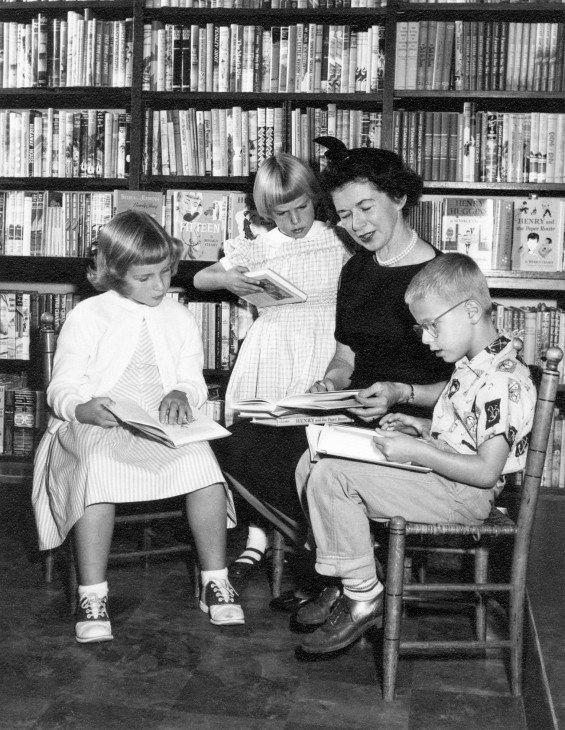
This has made me ponder what life would be like if I never used a computer again. Perhaps I could go back to paper/pen and typewriter for my own personal writing. But I've realized that so much of the rest of my working and social life now depends upon access to a computer screen. I edit publications that are housed only on the Internet; some of the articles I write and/or edit never even make it to paper—there remain forever virtual. And I have also been working occasionally as a substitute reference librarian—spending the majority of my time not walking amid hundreds of shelves of books, as the image suggests (or, please, shushing people), but in front of a computer screen, looking up the whereabouts of book titles and information.

Without access to a computer, I wouldn't be able to earn a wage, at least not in the way I have for the last 20 years. If this headache doesn't go away, I wonder what work remains that is untethered to a computer. I suppose I could weed plants, babysit children or clean houses—things I did in college for money or bartering deals. But I can't think of any well-paying intellectual work that doesn't involve my looking into what right now is this liquid-crystal source of pain.

How strange that so much of my life is confined to this 20-inch display—or that I think I have access to the world when I am really just sitting in my chair, moving my fingers along a small rectangular piece of plastic.

Thursday, April 7, 2011

The disposible librarian


Unfortunately, my work experience and graduate degree are in two professions that seem to be disappearing.

Everyone knows about newspapers making their slow exit and, thus also, newspaper careers. But librarians? You'd think with such an information overload there would be more need than ever for librarians—to find and explain, weed out the unnecessary, and catalog the rest. Apparently not.

I saw the writing on the stacks, years ago, when (what was then) the U.S. General Accounting Office began to pull professional library staff out of the Technical Library where I worked. It became merely a room full of books and CD-ROM terminals, which, in retrospect, doesn't seem all that horrifying since most GAO researchers have advanced degrees and know their way around a library.

Children don't have the advantage of college training when they head to a library. It helps to have someone there who can suggest books they never would find on their own. Yet in my Maryland county right now—one of the wealthiest in the nation—public library hours have been slashed and the children's desks sit empty.

At least, I thought, school libraries are safe. But next year's school budget proposes to slash school media specialist positions to half-time. Librarians won't have time to interact with classes, they'll be there just to keep the library together. Arizona and California, among other states, have already slashed school librarian positions.

Writers, take note! These changes mean that in the future children and parents are going to be on their own when they walk into a library to select a book. The kids will probably grab the books with the flashiest covers, or whatever their friends are reading. The parents will probably grab children's books by the authors they recognize, or those with awards noted on their covers. Books that could have been transformative or comforting are going to remain on the shelves, unknown and ignored—or not ordered at all.

One of the reasons I am a writer is because I loved books so much as a child. They were always accessible to me. I could walk to the branch library on lazy summer mornings, and check out books from the school library during the school year.

That branch library closed more than 20 years ago. Now there is only one library for the entire county, to which most children must be driven. Still, I presumed, the school library offered children easy access to books, at least during the school year. Soon that safe harbor may disappear—if it hasn't already.

My fear is that when counties have more money again, the need for librarians—what it is like to have someone guide you through both stacks and cyberspace—will be forgotten.

(The photograph is the inside of my hometown library, Moravian Falls Public Library, summer of 1977, before it closed)

Tuesday, November 23, 2010

An impromptu strategy session in the children's library

How cool is this—I visited a local public library this morning and mentioned my YA novel-in-process to the children's librarian. She got so interested in the project that she pulled another children's specialist from the back room and we sat around talking about it for a good 15-20 minutes.

I am at the point in my book where my heroine is going to seriously start "booking"—a verb I've made up for visiting scenes in books via a magic bookmark—through four books, and I hadn't finalized my list of books as of this morning. As I told the librarians, if I had a year to research this, I could take the time to read all the books (again) that I want her to visit.

She is booking through books that Ellen, another, older girl is supposedly lost in. My heroine, Sarah, and Mrs. Reid, the librarian who gave her the magic bookmark (and Ellen's mom), are trying to find a commonality among the four books. That's where I was stuck. I didn't want them just to be books that I knew about, but time is of the essence since I am writing the book for NaNoWriMo, and only have seven days left to finish it.

We finally determined that my original choices weren't so bad; the obvious commonality they share is water (though I also know that's not the reason that Ellen chose them).

I also asked if either of them knew of a book with the same kind of themes, characters, plot, etc., as mine. I have been worried about this since I have been so writing quickly and wondered if some of my ideas might be coming from something I'd already read. Fortunately, they hadn't.

How wonderful to have a fictional work taken so seriously—and what serious fun.