Showing posts with label plot. Show all posts

Thursday, February 13, 2020

What Korean TV dramas are teaching me about plot


My discovery of Korean TV dramas has coincided with my working through the book, Story Genius (SG) by Lisa Cron, which is about how to craft a good story.

Specifically, I am currently in the throes of a Netflix creation called “Crash Landing on You” (CLOY), which is still being released. The last two episodes (15 and 16) will be released on Saturday and Sunday—and I will be watching them, possibly in the morning of each day.

I can’t remember the last time I was so caught up in a TV show, except maybe Twin Peaks, which my spouse and I (pre-DVR days) would rush from wherever we were to watch at home in real time. But that was back in the days when there was no social media engagement—so our interest was shared among ourselves and our acquaintances only.

This is the first TV show I have watched that is dropping in real time (instead of its entire season being instantly binge-able), so I have been waiting each weekend with tens of thousands of others for the next episodes to drop. Although the show hasn’t gotten much press in American media (no reviews from TV critics of the New York Times, Washington Post, etc.) it is a fan favorite on Rotten Tomatoes, receiving a 96% audience score and 9.1 stars from viewers on IMDB. When a clip of it is posted on YouTube or when Hyun-Bin (one of the main actors) posts something about it on his Instagram feed, dozens of people comment about how much they are enjoying it—and a common thread among these comments (written in multiple languages) is something like: “Happy ending—please!!” Viewers are really engaged in the story. A few have (jokingly) threatened the writers if it ends sadly. So I am not the only one caught up in it.

It’s fun to enter this fictional world and anticipate the next thing that could happen, especially since almost every episode ends with a cliffhanger (and also to think there are so many people experiencing this euphoric anticipation along with me). But why, according to the tenets set forth in Story Genius, has this been such compelling viewing for me? I know it’s not the best thing I’ve ever watched and I am sometimes frustrated at the lack of action, when the actors just stand there and make moony eyes at each other while the camera pans around them. (Although there is often poetry in what they say to each other in such times--see example dialog at the bottom of this post *).

Since I am still learning what “story” is (apparently what I’ve written a lot of in the past is beautiful exposition), I thought CLOY would be useful as an exercise for me to apply some of Cron’s examples/questions about the elements of story to it. (I can’t apply her earlier questions about why I should care about the story, or what prompted it since I didn’t write it).

SG: What is the problem she/they can’t avoid?

• Yoon-Seri has crash-landed in North Korea—so the first and main question is: how will she get out? And how will Captain Ri help her get out? So simple, yet so compelling (despite the absurdity). She must get out—it is dangerous for her there. But they fall in love, so the secondary question is: how can they/will they reunite?

SG: What is the point?

I’m not sure about this question. Maybe: Love gives meaning to life? Or, if given the chance, people can rise to the occasion and be heroic (they both risk their lives for each other)? But in an online interview, Cron also said: “what most people are writing about is human connection, the cost of human connection. What does it cost me to connect.

This might be a better question for CLOY. Seri is a woman who has little close human connection—never accepted by her mother, hated by her brothers. Capt. Ri has shut himself down emotionally after the death of his brother. They learn to love and rely upon each other—but the cost is heartbreak, and the absence of a future together.

SG: What did the protagonist enter the story already wanting?

• Is the answer as simple as “to be loved and known”--? Not just romantic love but to find community with people, even those who are as different from you as they could possibly be.

SG: What is the protagonist’s internal change? How does the external dilemma/plot change her worldview?

Seri learns to love, to trust, to be giving—this is mirrored also by Capt. Ri’s internal change as well. But how heartbreaking—and the thing that drives the later episodes forward—that the thing that has changed her the most and given her the most happiness is the one thing she can’t have.

-------------------------------
* Who wouldn’t love a man who can say something like this to comfort a weeping woman?

“Next year, the year after that, and even the one after that will all be good. Because I’ll be thinking about you. I’ll be grateful that you were born into this world. I’ll be grateful that the person I love is still breathing. That’s why your birthday will always be a good day.”

Tuesday, October 9, 2012

The plot thins


For all my good ideas over the years, I have failed to produce more than a handful of short stories, only two or three of them published (in addition to a couple of novels that need heavy revising). Instead, I have dozens of notebooks filled with descriptions of experience and emotion, which I have sometimes turned into essays, but rarely into any kind of cohesive story.

It wasn't until after I attended a lecture by Pam Smallcomb last year, on how to write children's picture books, that I began to realize I don't know how to write a good plot—or any plot, really. Plot is so essential to fiction, I don't know how I missed its absence.

I like poetic prose and deep insight, which is why I tend to read literary fiction rather than genre fiction. But those books rarely keep me up at night—unlike the Harry Potter books, whose pages I continued to turn long after my bedtime, until I had read the whole series. It was those little hooks along the way that kept me interested, which I've mostly ignored in my own fiction.

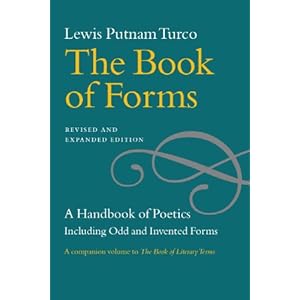
I never felt this way about poetry, perhaps because writing good poetry—especially form poetry—is a learning experience. I didn't assume that I knew what I was doing just because I could put down words and make rhymes. I understood that there is cadence and form, and building toward some kind of epiphany, all within a few lines. A massive, humbling undertaking if done well. And so I felt no embarrassment in consulting guides like The Book of Forms: A Handbook of Poetics as I wrote poems.

But plot? I didn't think I needed to study it. Wasn't the telling of the story the same thing as plot?

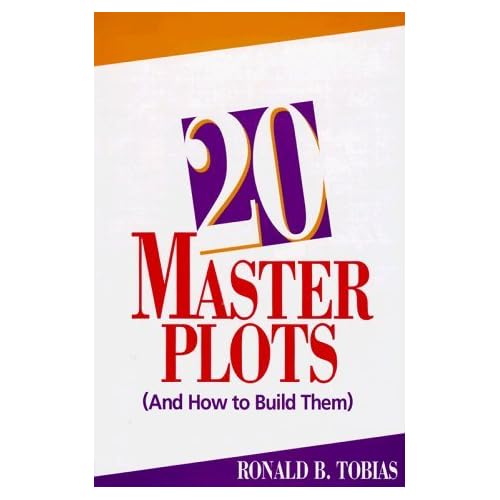
Now I am reading, as Pam suggested in her lecture, 20 Master Plots (And How to Build Them). They include variations on the two essential plots that have been described over the years: a stranger comes to town, a journey is taken. But I'm finding it helpful to break down books I know and love into their mechanical parts, using this book as guide. Next, I will apply it to my own fiction; it's hard to admit that I am still a beginner at all this, but I'm never going to be a better writer unless I acknowledge my current limitations.

Sunday, October 31, 2010

What should I write about when there is so much to say?

As I said in my last post, I signed up for NaNoWriMo a few days ago, with the goal of sitting down on November 1st and writing a novel from scratch. It all sounded very spontaneous and exciting—I was going to start writing whatever popped in my head and see if I could carry on with it for 49,300 more words.

But then, after I signed up, I checked their web site more attentively. They suggest I have an outline in hand.

Outlines and plot notes are very much encouraged, and can be started months ahead of the actual novel-writing adventure. Previously written prose, though, is punishable by death.

Gulp. I am writing this post on Thursday, setting it to publish on Sunday, because I imagine I'm going to be spending Sunday night scratching out potential plotlines.

J.K. Rowling said that Harry Potter came to her in a vision and she knew she had to write it down. I don't think such inspiration works well under pressure, or within a three-day deadline. I've been touching my forehead with my fingertips the last couple of days, trying to coax out ideas, but it is starting to feel like a clean slate in there.

It's overwhelming to realize that I could write about anything. So right now I am in panic mode, trying to think of new ways of doing something that is already tried and true (giving me a new empathy for film producers!).  Here's what I've come up with so far:


• As people are gathered in a fallout shelter in London, they each tell a tale from their lives to get through the night. 12 tales, based on Grimm's Fairy Tales, sort of a Canterbury Tales in the 20th Century. [After I imagined this, I realized it was inspired by the film "Atonement" and recently listening to a lecture in my car called "Masterpieces of the Imaginative Mind." Why 12? I figure I'd write each chapter would be 15 pages, giving me the necessary total.]

• A female Holden Caulfield makes her way through a suburban Maryland high school year. But what does her voice sound like (too easy to fall into Valley Girl speak—not sure there is a recognizable Maryland teenager sound...)? What is her quest?

• 10 stories about Santa Cruz, each story a different character's story. Last story, they all come together.


The older I get, the more I realize how hard it is to be fresh and new and not derivative. There's an overwhelming amount of life experience to try to compact into 200 pages. At the same time, there's that need to drive the story along with challenges for the main characters, while scattering mysteries or unanswered questions every few pages that will keep the reader turning the page—to manage that is the difference between writing fiction and typing. I think I will be doing a lot of the latter, as I make my way through the necessary word count.