Tuesday, December 18, 2012

Creativity not violence


I spent much of the weekend grieving about the Sandy Hook ES shootings. Then a skit on Saturday Night Live, an adult parody of "You're a Good Man, Charlie Brown," pushed a little of my sadness into a meditation on why some angry and/or crazy males turn to guns, while others turn to art.

Biographies of Charles Schultz paint him as a man who "specialised in making art out of angst," who "grudgingly held on to every indignity and insult he ever received and used them later on to fuel his strip"—including experiences beyond his awkward childhood. This transformation of bitterness into the long-running "Peanuts" comic strip (and all related TV shows and licensed products) made Schultz a rich and famous man, exacting the best possible revenge on the childhood peers who ignored him.

Such angst has played out again and again in other lives and bedrooms. It has fueled heavy metal and moody goth songs, crude cartoons and abstract paintings. The lucky boys find guitars or paints or pens or cameras or street dancing. They may not be good enough to make a living at it, but it gives them an outlet, it lets them use their anger (and their vibrancy) for something that, if not beautiful or the highest art, at least causes no damage to anyone else.

What I see a lot of now, though, are groups of teenagers (or, worse, single teenagers) playing video games where they spend hours shooting aliens and "enemies." Hours and hours not out in the sunlight, not laughing or being goofy, not making something with their hands—with only a single purpose to garner as many "kills" as possible.

I am not calling for a ban on video games (what's the use of that?). But I would like to see some kind of cultural shift where young men are encouraged to be creative and expressive, especially in groups. Right now, teenage boys who are not gifted at sports have almost no other group activity they can engage in outside of school other than video games. Organizations like Guitars Not Guns aim to "encourage children and teens to use their creativity to foster personal development and to help divert them from self-destructive influences." But their intention is on at-risk youth, not alienated white suburban teenagers.

I propose this as something that can be discussed outside of the current debate about gun control. I am not sure any of this would have prevented the Sandy Hook shooter (I won't use his name) from doing what he did. How much more heroic and life-affirming had he instead just scrawled bad poetry in composition books or strummed amateurish rock songs. I wish somehow I could praise him, and others like him, for doing that instead. And, yes, I understand that he was mentally ill. But mental illness has not kept some artists from creating beautiful things. The autistic knitter created interesting and gorgeous yarn creations. Her handiwork is housed in a museum, not a morgue.

Thursday, November 29, 2012

Story maps


A while back, I started a Pinterest page on Writers Tools and Tips (that I've hardly added anything to lately...). To feed that page (and to have a permanent place to park this information), I'm uploading  the Story Map I've started using when writing short stories. (You don't have to use it before you start the story, but it can help you at any time during the writing to clarify who is saying what, and how else a character might be described). I have created it and honed its elements based on fiction writing classes I've taken and books I've read over the years.

The image above is there for mostly for graphic purposes (and so I can link to it on that Pinterest page). Here it is as text, below, if you'd like to import it into word processing, and adapt for your own uses.

[Note: If you copy and paste this into Microsoft Word, and want to retain the table, choose the "Keep Source Formatting" option. You can still type into it. If you are bothered by the pinkish background that imports from this blog, though, you can paste the text and table separately—choose "Keep Source Formatting" for the table only, then under "Table Properties" choose "Shading"--no fill.]


STORY MAP


WORKING TITLE:


SETTING(S)
·      Year(s):         
·      Season(s):
·      Place(s):


CHARACTERS

Name
Approx. Age
Physical description


PROBLEM:


CONFLICTS:


EVENT 1:

EVENT 2:

EVENT 3:

EVENT 4:


SOLUTION:

Sunday, November 25, 2012

Writing a novel, piece by piece


This is a Scrivener Corkboard being used to its full power—mine has few elements on it.

Apparently I am a NaNoWriMo Rebel—one of the hundreds who don't follow the typical rules set forth by NaNoWriMo. I am a Rebel simply by not aspiring to write 50,000 words during the month of November. But I'm also a Rebel since I'm not really writing a novel but a set of inter-related stories, many of which are no more than a few vignettes and descriptions right now, which I am collecting in separate electronic folders.

It has been liberating to write like this. I am not trying to create a long, linear narrative and can choose to write a little bit in each story without having to connect any new writing directly to what has already been written—I can write about a past occurrence without bothering to present it as a flashback, or can write about a future event without worrying about having first to describe what has happened between times.

I have only been able to write this way because I am using Scrivener, a software package that promises to help writers "create order out of chaos" (though, right now, I'm embracing the chaos more than the order). Scrivener describes itself as "a powerful content-generation tool for writers that allows you to concentrate on composing and structuring long and difficult documents." So far I've only been using it  in an elementary way, to move text  around on its "Corkboard"and keep track of the word count for the entire manuscript, which is composed of seven half-finished stories. You can download it for free and give it a try (and then pay later if you decide it works for you).

I have yet to tap Scrivener's full power since I am too impatient to sit through all of its tutorials—but I intend to after NaNoWriMo 2012 is over (and I have reached my personal, 25,000-word count goal).

Tuesday, November 13, 2012

NaNoWriMo again


I am attempting NaNoWriMo again this year and, like last year, I am hopelessly behind. As of the beginning of Day 13, I stand at 7,659 words—when my expected total should be 21,671.

I attribute my slowness, in part, to the hurricane at the beginning of the month, which took out the power for a couple of days and flooded our basement. Since then I have been busy, some days, until late evenings, with paid work and other responsibilities (like cleaning up the basement). Rather than be agitated about not meeting the daily deadlines, I have made my peace with it. I'm still aiming to write a book (a series of related short stories), but I'm probably not going to have it all done by Nov. 30th.

I compare this to an older person who runs a marathon, knowing that they are not going to finish in under three hours, or even under 4.5, per the average time. I am walk-running a six-hour marathon instead, happy to keep trucking along at a 15-minute mile. At my current rate, according to my helpful NaNoWriMo Stats page, I am not expected to finish until January 23rd.

I just wish there was a slower NaNoWriMo—a two-month (or even three-month) book marathon for busy people (and parents) who still want to reach the goal but just can't get there as fast as those who are freer and unfettered.


Thursday, November 1, 2012

Women Who Rock (their clothes)


Speaking of rock music, I went to see the Women Who Rock exhibit at the National Museum of Women in the Arts in D.C. last week. It was a fun exhibit and I loved the costumes, but that was the problem. Most of the female musicians were represented by what they had worn—that's fine for someone like Madonna (above) or Lady Gaga or Cher, for whom costume drama and sets are as much of their art as their music. But  it was puzzling to see a singer like Marianne Faithful represented by a glam outfit that she wore God knows when (also in her glass box were two prominently displayed faxes Keith Richards had sent her; apparently he scribbles in the same decipherable way that he speaks). I would have liked to have seen pictures of the dewy-eyed Marianne Faithful alongside pics of her more haggard, cigarette-throated elder self, or even better, a looping video showing her transformation over the years, which would surely be a better representation of her life.

Would a "Men Who Rock" exhibit have any kind of focus on items of clothing they had worn? Here is the pair of jeans that Bruce Springsteen wore on the cover of "Born in the U.S.A."; here the chambray shirt Dylan wore on "The Times They Are A-Changing." Not very distinctive, or for that matter, very important in terms of the art produced.

I'm not sure what else one could use to visually represent rock music. Some walls played videos of performances, and there was an entire wall of album covers. Each room had its own soundtrack, according to time period. We walked through in less than an hour and then had lunch. Still, I have to admit, I was thrilled to see the outfit that Cindy Lauper had worn on the cover of "True Colors" and the short (and tiny) red dress Tina Turner had worn in her "What's Love Got to Do With It" video.

Friday, October 19, 2012

E-girl reviews rock music

One of the joys of being a parent has been witnessing how my children respond to music.

When he was in-utero, I-guy would kick so much when a Dylan song came on that I had to sit down (or turn it off). Once—and only once—in the midst of dinner, when he was about three, he very seriously began to sing "Hard Times" by Ray Charles—all the way through, without stopping. ("My mother told me/ 'Fore she passed away/Said son when I'm gone/Don't forget to pray..."). Now he likes ska music and the Smithereens, among other things, continuing to find his own musical paths.

E-girl hated to be in the car as a baby and would start to scream about five minutes in. I found the only thing that would calm her down was if I sang "Hello Dolly" in an Ethel Merman voice. (The other day she started to sing that song and then said, "How do I know these words?") I have no idea how we came up with this antidote to her discomfort. Later she gravitated toward classical music and begged to hear it in the car when we drove anywhere together.

This long intro is really just an excuse to share some of E-girl's recent musical opinions. I try to keep my kids off my blog, at least in any exploitative way. Even if blogs had been much around when they were toddlers, I very much doubt if I would have publicly proclaimed their toilet training successes and failures. And I try not to brag about them widely, or live through them in any way, because I want them to have their privacy, and private, not-publicly-shared histories. (I think this also strengthens my own sense of identity). My biggest justification for doing this right now is that I want to park her quotes where I won't as easily lose them. And, I think, they're unique.

Keep in mind that E-girl's current favorite pop/rock group is Cold Play and her favorite album is the soundtrack from "Once."


  • The B-52s: Those girls sound so good and then this guy just keeps trying to talk over them.
  • Rihanna: Her voice is all auto-tuning.
  • Janis Joplin: She has a certain style.
  • Neil Young: His voice is soft and soothing, like running your hands in lotion, except with your ears. I think he could sing in a Muppet movie. 
  • Grateful Dead: They suck.
  • Taylor Swift: All her songs sound the same.

Tuesday, October 9, 2012

The plot thins


For all my good ideas over the years, I have failed to produce more than a handful of short stories, only two or three of them published (in addition to a couple of novels that need heavy revising). Instead, I have dozens of notebooks filled with descriptions of experience and emotion, which I have sometimes turned into essays, but rarely into any kind of cohesive story.

It wasn't until after I attended a lecture by Pam Smallcomb last year, on how to write children's picture books, that I began to realize I don't know how to write a good plot—or any plot, really. Plot is so essential to fiction, I don't know how I missed its absence.

I like poetic prose and deep insight, which is why I tend to read literary fiction rather than genre fiction. But those books rarely keep me up at night—unlike the Harry Potter books, whose pages I continued to turn long after my bedtime, until I had read the whole series. It was those little hooks along the way that kept me interested, which I've mostly ignored in my own fiction.

I never felt this way about poetry, perhaps because writing good poetry—especially form poetry—is a learning experience. I didn't assume that I knew what I was doing just because I could put down words and make rhymes. I understood that there is cadence and form, and building toward some kind of epiphany, all within a few lines. A massive, humbling undertaking if done well. And so I felt no embarrassment in consulting guides like The Book of Forms: A Handbook of Poetics as I wrote poems.

But plot? I didn't think I needed to study it. Wasn't the telling of the story the same thing as plot?

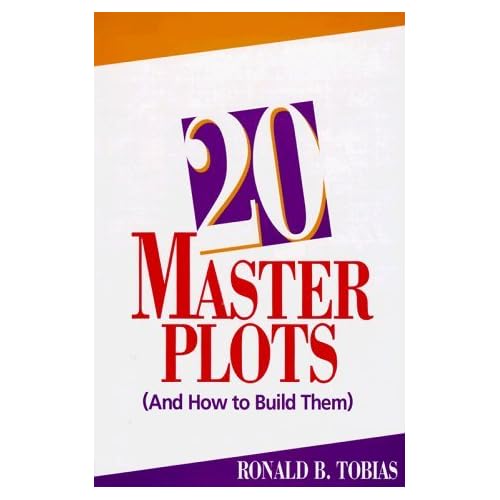
Now I am reading, as Pam suggested in her lecture, 20 Master Plots (And How to Build Them). They include variations on the two essential plots that have been described over the years: a stranger comes to town, a journey is taken. But I'm finding it helpful to break down books I know and love into their mechanical parts, using this book as guide. Next, I will apply it to my own fiction; it's hard to admit that I am still a beginner at all this, but I'm never going to be a better writer unless I acknowledge my current limitations.

Monday, October 1, 2012

The saddest songs ever (Melancholy music redux)


In the midst of my seasonal melancholy a couple of years ago, I wrote a few blog posts about the music I use to heighten my misery, which concluded with a short list of sad songs.

Now Adam Brent Houghtaling has taken the list many steps further, cataloging the saddest songs of all time in his book This Will End in Tears: The Miserabilist Guide to Music (Samuel Barber's "Adagio for Strings" is number one on his list of top 100 sad songs, which is why the video is embedded above). Houghtaling said he began writing the book after he realized that the soundtrack of his life was composed of artists with a defining attribute, of "having an uncommon understanding of the varying shades of sorrow."

As the days grow shorter and darker, my soundtrack gets a little gloomier each day, until it reaches a delicious dismalness just before the Winter Solstice. So, of course, I am putting Houghtaling's book on my Christmas Wish List.

Thursday, September 13, 2012

A moment of serendipity in the laundromat


Due to our ongoing septic problems, I've been going to the laundromat a lot this summer. I like watching families doing their laundry together and women looking after each other's children and, especially, visiting the adjacent Mexican food truck. It is a far less lonely pursuit than running up and down the stairs to my laundry room, where I've stood alone many evenings folding warm laundry straight from the dryer.

The other benefit is that the laundromat offers me one of the few occasions these days to just sit and guiltlessly read. Unless I've gone out to the food truck for cilantro- and radish-filled tacos, I must sit and wait 43 minutes until the final spin. It was with this aim that I went to the laundromat yesterday morning after rushing to drop E-girl off at school. To my dismay, I found I was without either a book to read or a pad of paper to write on. The three flatscreen TVs on the laundromat walls were all tuned to Spanish-speaking stations, with captions also in Spanish; no free newspapers were scattered on tables there, as they had been on weekend afternoons. It was going to be a wasted hour, with nothing to do, and no one else to watch. But then, fumbling through my purse, I found the two most recent copies of One Story magazine. So the next half-hour was spent reading His Other Fathers—the words like a snack for a ravenous child.

Yes, I could have had a Kindle with me and, therefore, potential access to hundreds of books. But I am still resisting the lure of the eReader partly because I think I would miss those occasional serendipitous moments where you read whatever you have on hand.  My resistance is also because having an array of books always at my fingertips might give me that anxious feeling I used to get in bookstores: all those books calling out to me at once. Given too many choices, like when I receive a stack of books for Christmas or have a pile of New Yorkers to read, I often don't read at all, going outside to garden or walk—or I'll read what is quick and easily accessible, like that day's newspapers. I feel the weight of words, and (now, more and more) the limits of time pressing against me.

Friday, August 24, 2012

A crappy summer

My summer has been crappy—literally. Our septic tank backed up into our basement at the beginning of the summer. Then did it twice more, even after it was pumped out three times. Since then I've spent most of my free time with plumbers, backhoe people, septic pump guys, home renovators and tree cutters, trying to resolve the problem and correct the consequences. (It will supposedly get resolved next week, when huge trenches are dug in the front yard). Unbelievably, though we live in a metropolitan county, public sewer hookups are not available in our neighborhood.

All this to explain why I haven't written a blog post—or anything for fun—in weeks. Owning a home seems to suck up what would be free time if we lived in an apartment (with only a tiny lawn or a community garden plot to attend to). Creativity feels like a luxury right now.

It has been an alien experience, going this long without any means of creative expression, and yet I realize some people who are too busy with work or other obligations must live like this all the time. Maybe they sing in the shower or keep up long-distance correspondences... or maybe they have no need for self-expression? Maybe, for them, walking and conversing and doing is enough? I really don't know, this is so alien to me.

I've still got an itch to say something. Phrases form in my head and, though I haven't had the time to write them down, I know they are still there, needing me to free them and let them run across the page.