Showing posts with label creativity. Show all posts

Tuesday, September 22, 2015

A life in patterns


Cleaning out my mom's house this past summer, it surprised me how unsentimental I felt, even though it was the last time I was going to be there. Instead, it was a hurried effort in efficiency--quilts and coverlets in one pile, pillows in another, kitchenware stacked into boxes.

In the closets and cabinets in all her rooms, I found nothing that bore witness to her life beyond what she had purchased and placed there. Yet I wanted to find something that was uniquely hers, and/or that reminded me of my childhood with her.

And then I came across the patterns for dresses she had sewn for me when I was a little girl.  I imagined the hours she had spent at her Singer sewing machine, adding bric-a-brac to the edges of sleeves, embellishing fresh-pressed collars with machine-stitched embroidery. It was an act of love, unseen by me as I played in the woods near our home, unrecognized as I wore out the products of her labor.

I realized this had been how she had expressed herself and began to sob. Nothing else in that house affected me this way--not being back in the bedroom where she had died in February, not the photo albums showing our family as it once was, not my grandmother's frayed tablecloths my mom had saved because, according to a note in the box, she "couldn't bear to throw them away."

Among the patterns, I found the first outfit she had sewn for me. Sadly, it is the only one she saved.

Often I go with my daughter to the store or spend hours on the Internet trying to find a dress or outfit that I am too impatient to make myself. I don't want to stay at a sewing machine, yet I spend hours trying to find something that fits her and doesn't look awful, made by a worker in China or India who has cranked them out, piece by piece. I tell myself that American women have the freedom to be more creative now than they did in the 1950s, when they were mere housewives, without recognizing that I am often a mere consumer, wearing or buying outfits worn by hundreds of others.

Sewing was my mother's craft. The stitches were her story.

The note reads: "First dress I made for Beth after Bret bought my sewing machine."


Friday, July 3, 2015

The unexpected flower

For the last couple of years, I've pulled a weed that kept creeping up in my front yard bed. Why was it a weed? Because (ask any gardener) I hadn't remembered planting it.

It was an unremarkable dark green plant that didn't seem to have any purpose. I ripped it from the soil and into the compost bin it went.

But this spring I wasn't so fanatical about weeding. Rainy weather and some out-of-town trips kept me from my yard. It gave the weed sufficient time away from my prying hands, so that it came to bloom.


I think it is a tiger lily I planted in another part of the yard years ago, which never came back. How it came to be in this particular planting bed is a question best taken up with the squirrels or the birds.

Is it not a particularly spectacular plant--it is low to the ground, as if trying to hide from my annual culling. Yet I applaud its determination to survive and put out its small show of pink blossoms.

Now I wonder if there are weeds in my notebooks and writing scraps that might also bloom if I would allow it. Given safe haven from my rigorous inner critic/weeder, a poem might emerge, or even an essay.

It's hard sometimes to know when to be vicious and when to nurture, whether it is plants or words.

Thursday, March 19, 2015

In the absence of leisure, where is art?


In the second installment of its series on the shrinking middle class (The Devalued American Worker, December 15, 2014), the Washington Post tells the story of Ed Green of Winston-Salem, NC, who works more than 12 hours a day, 60 hours a week, to make ends meet and so that his kids might go to college.

I have met many people like Green in recent months, particularly young people who are working multiple jobs to pay off student loan debt or to eventually, or slowly, go to college. For example, a cashier at a big box hardware store last summer apologized for her slowness, telling me that me that she had been on her feet for eight hours already and she still had another job to go to. She looked to be 18 or 19, and said that she was working three jobs in order to afford college. Even then, she said she only had time and money to take one class at a time and didn't know when she was going to finish her degree.

What does this have to do with "writing and creativity"—the stated intent of this blog?

Without at least some leisure, people are less likely to engage in creative activities or to enjoy the arts. That should concern any writer at this point—the potential audience is shrinking.

Perhaps working class folks have never really been big subscribers of The New Yorker or the symphony, but the chance of that becomes less likely if their free time is only used for sleep. And why would they spend their money on magazines or concerts if any remaining salary can be targeted for their children's tuition?

Why do I care? I was one of the poorest students at the California colleges I went to, there with the help of VA and SS benefits, in addition to summer jobs and a small amount of financial aid. I didn't go skiing or to arena rock concerts or on European adventures, as other students did. Yet I still had time (and money) to go to poetry readings, art museums, and concerts in small venues and to take long bike rides and walks along the beach. I would never have thought that I was privileged by doing any of these things, nor did I feel any guilt at having free time while carrying a full load of classes.

A student rushing to class from work and back to work again is less likely to enjoy the cultural activities offered by her university, or even to go to the library. I am sad if such moments are going to be a luxury except for the rich.

I once went to hear Robert Duncan read his poetry at UC-Santa Cruz. It was a warm enough night, so afterwards my companion and I walked the long path down to the bottom of campus, through the redwoods and the bay laurel trees, past the organic farm. We weren't rushing home to get on to the next thing, but just enjoyed the moment, walking to the rhythm of the poetry we had just heard and savored.

Without those moments of savoring, what chance is there for art?

Tuesday, February 11, 2014

The Artist's Way


A few weeks ago, I began to dip into the book, The Artist's Way. In case you don't know it, it's a 12-week workbook for creative people to get their creative lives back on track. (I'd never heard of it until someone recommended it to me, despite its having sold over a million copies).

One of the things that its creator, Julia Cameron, recommends is doing "morning pages"—three pages a day of stream-of-consciousness babbling, preferably as soon as you wake up. That's all I had been doing so far. That  explains my absence here because my morning pages (which I confess I often write in the early afternoon or even at dusk, or whatever is the soonest I have time to sit down and go at them) have replaced my attempts at blogging. I suppose that's because they serve a similar purpose for me—sharing my thoughts in the moment. Cameron recommends that people starting out with the program not look back at the morning pages for a while, so I can't dig through them looking for blog post fodder.

Today I began the first week of the program more or less in earnest. One of the things she suggests for this week is to work on affirmations and to listen for how your inner-censor will try to negate them. She calls these negative whispers "blurts." Listening for blurts is the real work here. She also offers a list of 20 common negatively held beliefs about being an artist. And there, at number 20, is mine: "20. It's too late. If I haven't become a fully functioning artist yet, I never will." The funny thing is that I said this to myself at the age of 30. It follows that if I haven't been published widely, it is too late; I am obviously not any good—never mind that I have been busy working jobs, rearing children, keeping house and pulling weeds in the garden, too busy to research markets, write cover letters and polish prose as much as I think it needs.

(I have always tried to assuage such negative talk with a reminder that Helen Hooven Santmyer published And Ladies of the Club at the age of 88; but looking at her entry in Wikipedia just now I see that she published a book when she was young, and continued to write and publish poetry while working as an English professor at Wellesley College. So that HHS story will no longer serve to soothe me.)

Does it matter when we create or how much we create as long as the desire to make something is not diminished? That is what I hope to teach myself this week. To stop whining and to just keep writing.

Tuesday, April 23, 2013

Is beauty really all that?


Like many other women, I, too, loved the Dove "Real Beauty Sketches" video on first viewing. My eyes even moistened as I watched the women describe themselves to a forensic artist  in harsh, negative terms. (Is it self-hatred or a culturally inflicted modesty?)

And then the fallout on the Internet began. It was pointed out (on friends' Facebook pages and in online essays) that:

• Unilever, which manufactures Dove also makes Axe, which (you probably already know) offers a stringent ideal of female beauty in its television ads (visualize Tom Wolfe's description in A Man in Full of the female ideal as "boys with breasts").

• That the video is racist because all of the women who talk about the results in the end are white and blonde; the black women shown being drawn early on don't speak about the results.

• That it's sexist because the artist is a man, and their appearance is drawn through a male filter.

• That some women look like the "before" drawings—so how should they feel about themselves? 

At the conclusion of the video, a woman with long blonde hair, who has looked at her before and after portraits, concludes that natural beauty "impacts the choices we make, the jobs we apply for, how we treat our children—it couldn't be more critical to our happiness."

Self-esteem is, of course, important. But the phrasing is ambiguous. Is she saying that not being beautiful can limit our choices in life? This is where I personally must take issue.

I think my horizons widened and my life became more interesting because I was told, sometimes vulgarly, that I was not beautiful when I was a teenager. It became abundantly clear, by the continued harassment/advice offered to me, that I was not meeting the criteria of beauty in the South at the time, which was voluptuous, clear-skinned and submissive (or for those that naturally lacked those attributes, required a daily drag-queen-like artistry I was unwilling to attempt).

Instead I fled a place that seemed to have no place for me, heading to California. I embraced experience. I could walk, mostly unnoticed, through city streets without the burden of "beauty," without being constantly noticed and assessed. I was able to carry myself with an ongoing feeling of liking myself that was not tied to my physical appearance.

Where did I get this feeling of liking myself? It had nothing to do with the soap I washed my face with or the lip gloss I sometimes remembered to wear. I think it came from books, from creativity itself. When I was submerged in a book, or a creative project, I had no awareness of appearance. The important thing was the work, the connection with ideas. I was walking around in my thoughts as much as in a female body, certainly not a female body I was constantly aware of being put on display.

There was still the occasional derisive advice on the West Coast that I'd been met with in the South, but it became more and more inconsequential to me. I realized I really didn't care about the opinion of men who were so focused on superficial appearances and who were mean or stupid enough to share it. I got to the point where I would talk back to them, not in anger, but to ask why they had said what they did. And then I walked on, unflustered, feeling a certain victory in my step.

There is a wonderful beauty in that kind of clear-eyed perseverance. It is the beauty I wish for all young women and girls. God help them—the definition of what is physically beautiful for young females has gotten more restrictive since I was young, and the Internet has amplified what used to be only shout-outs on the street or rude remarks in the school hallway. A campaign for real beauty might work to educate men and women on how ugly/unworthy someone is who engages in such behavior (in an attempt to change them, as well), rather than ultimately just working to sell more beauty products.


Tuesday, July 17, 2012

Life as art: Joan Papert Preiss


Years ago, via one of those serendipitous moments the universe occasionally hands you, I met a woman who influenced the rest of my life. I was sitting in a library in San Miguel de Allende, Mexico, reading that month’s issue of Ms. Magazine. A short letter to the Editor caught my eye: You write about child labor as though it is a thing of the past, the writer said, when farm labor currently uses children in the fields. Signed, Joan Papert Preiss, Triangle Friends of the UFW. She must have given her address (this is before things could be looked up on the Internet) because I wrote her and asked if she needed help. “Yes,” she replied, and a few months later I was on a bus to Durham, NC, ready to volunteer in her office, which happened to be in the guest bedroom of her home.

Joan, as I learned at her memorial service last Saturday, almost single-handedly brought farmworker activism (and attention to the plight of farmworkers) to North Carolina. And she did so with a playful, creative style. She became known as the lady with the tiaras, including a Mt. Olive pickle jar headpiece that she wore to picket lines during the Mt. Olive boycott. She made her own boycott lapel pins out of bake-able clay, and painted colorful signs and posters. She also was known for wearing a grape costume that, I think, consisted mostly of purple balloons during the UFW grape boycott.

She spoke fervently and persuasively about farm conditions to gatherings large and small, even though she admitted that she had once dreaded public speaking and still considered herself a shy person. Even in the face of circling policeman, angry store managers and apathetic shoppers, she continued on with an unmitigated enthusiasm. I have never known anyone who so exuded a persistent sense of purpose. After raising three sons, she committed herself to the cause of farmworker rights. But she also found time to cook gourmet meals, keep up an herb garden, hold girlfriend get-togethers, go sailing, host sleepovers and playdates for her grandchildren, volunteer at the local hospital, keep a materials/news file (now archived at Duke Library), and seriously compete at badminton. And she found time to have fun with me when I was working with her. On one of my last days there, before I left to go back to school, we decided spontaneously to have a “milkshake orgy”—and so set about making shots of cranberry milkshakes, followed by pumpkin, peanut butter, etc., in her kitchen. Too full, we went for a walk in Duke Forest, chatting and laughing together.

She offered me a blueprint for an active and happy life. More importantly, she offered a level of acceptance and confidence in my abilities that I’d never experienced before, at least from someone older than me. What a gift knowing someone like that.

I often told her that I should write an article for Ms. about how we’d met, which would segue into an article about her amazing life. Some of what I would have said is in this blog post now.

In another bit of serendipity, a bookend to the first, I was updating my list of cell phone contacts recently and I saw her phone number, realizing I hadn’t heard from her in a long while; the handmade holiday cards had stopped coming a few years ago. With a sense of dread, I googled her name and found her obituary. Without that bit of discovery I would have missed her memorial service and a chance to say good-bye. We sang “Union Maid” and “De Colores” and other songs, were reminded of how much she had meant to so many, and then dispersed out into the hot afternoon.

Tuesday, June 5, 2012

The absent blogger


My recent absence from this blog coincides with the new "look" that Blogger rolled out for Blogger Dashboard (its blog editor) a few weeks ago. Now I must type my posts into a tiny box on a blank screen (click on pic above to see it better). It feels like I am floating in space, and my words are barely hanging in the ether (which, I suppose, they are). It doesn't seem as compelling an exercise any more. No matter how many words I write, I cannot fill all the blank, uninterested space surrounding the box.

I suppose I can write an essay elsewhere and simply upload it here, but no matter how quickly I accomplish that, I'll still have to confront this white screen. There is something terrifying about such blankness. It is like shouting into the infinite, and hoping some of my words will stick.

It is a visual representation, then, of what writing or any type of creativity really is. Each is, in its own small or big way, is a prayer or courageous wish.

Wednesday, October 19, 2011

The economics of the creative life


Occupy Wall Street resonates with me because I was once young, out of college, and unable to find work. Even then,  it was hard to find gainful employment with a humanities (Western Civilization) degree.

But, in retrospect, things were easier three decades ago.  I moved from California to Idaho and soon found work at a local bookstore. My top salary there was $4.65/hour, which allowed me to pay my rent ($160/month including utilities for a one-bedroom apartment), buy food from the local food co-op, buy clothes and shoes, and go to movies and eat out occasionally.

I had no health insurance so, of course, I was one accident or serious illness away from debt. Still, I was able to go to the doctor for check-ups on my meager salary. The cost of my last doctor's visit in Coeur d'Alene, at a specialist's office, was $20—my insurance co-pay is more than that now.

Most importantly, I graduated from UC-Santa Cruz virtually debt-free. At that time, there was no tuition charge for state residents, only a quarterly fee of $300. My rent—in houses ranging from shabby beach cottages to elegant Victorians downtown—was never more than $160/month. My total debt after I graduated was around $1,500.

Now UC-Santa Cruz costs $26,000/year for room and board—just tuition and fees is around $13K. The average rent in Santa Cruz is around $800 for a studio apartment and $2,500 for a three-bedroom house. There used to be students living in makeshift tree houses and teepees in the woods—I imagine the woods are getting pretty crowded now.

And local bookstores are virtually gone, as are all the other former fall-backs for the well-read and over-educated—video stores, comic book stores,  etc. But even if they were around, and still paying a buck or two above minimum wage, I can't imagine how a graduate would be able to work there and live independently while paying off thousands and thousands of dollars of student loan debt.

Perhaps it is cruel to allow students of small means to continue to graduate with English and other types of humanities degrees, especially to take on massive debt in doing so. It was short-sighted when I graduated with no marketable skills—but the world was more welcoming then. I could make and live on a small salary without the despair of being indebted and stuck in my indebtedness. I went on to graduate school specifically to get a better paying job.

But I also don't want to imagine a world where only the rich can study literature and brilliant students with limited incomes must go directly to fast food or retail or whatever jobs will still be left in this country for non-math majors (or skilled laborers) in the near future.

I'm not sure that drumming and singing on the sidewalk is really helping. Yet, at least, it is giving voice to the discontent that has been welling up for years—a frustration that could, still, turn to rage.


Photo above: Lake Coeur d'Alene, circa 1984. Back then, the lake was just a few blocks from my cheap digs. Now houses along the lake go for more than a million bucks—so this is no longer an easy visage for the poor.

Sunday, July 31, 2011

A mostly lazy, lollygagging summer

My daughter wanted a mostly camp-free summer and I have granted her that wish—one week of art camp (which she requested) will be her only camp this year. This means that I am the default activities director for what has become our two-person camp.

I can grant her that wish because I work from home as a part-time editor. I know most parents can’t afford this luxury of time and must put their kids in a long string of camps to cover their time at work. But I’ve observed kids getting camp fatigue after a few weeks of it, begging and whining busy, stressed parents to give them some kind of reprieve, and the parents left to cajole or threaten them into going back.

I tell myself that kids need time to lollygag around and find ways to entertain themselves, that over-structured activity time suppresses creativity, and that sometimes it’s best to focus on one thing at a time. But I’m not sure that I’m really good at this—or that a real camp director couldn’t do a better job.

In an effort to help her earn the Junior Girl Scout Sew Simple badge, we spent nearly a full day cutting out and sewing a Butterick “See and Sew” dress pattern—which I soon renamed “Scream and Sew” after ripping out many wrong seams. I’m sure a crafts teacher at a real camp would have shown more patience, would have made it a more fun activity (since she would have hopefully known what she was doing).

And our little camp comes at a price. I have mostly quit writing; any free time has been spent on paid editing work. I find myself sometimes secretly counting the days until summer’s end.

Then I remember how wearying and over-scheduled the school year was last year. And I see E-girl happily writing books and drawing in homemade sketchbooks, without any prompting on my part. She also reads books, makes videos, and hangs out at the pool (and, yes, she plays computer and video games when it's too hot to go outside). Earlier in the summer, before it got so hot, we gardened together in the mornings and managed to re-landscape the side yard.

I’m not sure we’ll do this again. Next year, I’m already eyeing away camps and more structured activities. But this year, we have this temporary luxury of time and, sometimes, it seems like we aren't entirely wasting it.

(Photograph Copyright 2011, Beth Blevins)

Thursday, March 3, 2011

The challenge (and joy) of writing picture books


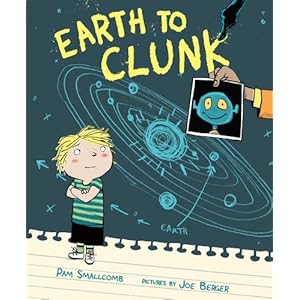
I’d never thought about writing a children’s picture book until I heard Pam Smallcomb speak at a SCBWI-sponsored ABC (Author Book Club) event this week. (I’d assumed that children’s picture book authors do their own art and I knew that my own doodle-y art would never sell.) But Pam has sparked my interest in writing within this concise and often humor-filled form.

Not that she made it seem easy—writing a 250- to 600-words book is like writing a really good poem. You can’t just sit down and write something brilliant; you have to pare it down, then be willing to revise and/or rewrite it again and again until it says only what needs to be said and says it as perfectly as possible.

Pam compared picture book writing with advertising: you have to be aware of your target audience, know your message, and work on deadline. Like a TV commercial or ad campaign, she said, a good picture book crams a lot of story into a short amount of time and space. And you have to make it fresh, figure out a new way to say something that’s probably already been written about before.

As ad people do, Pam suggested using brainstorming techniques to come up with story ideas. (When brainstorming, don’t self-edit but let the ideas flow). Some of her suggestions included:

• Blend two unlike things: Make a column of nouns, a column of verbs, then a column of nouns (or just two columns of nouns). Then crisscross them for incongruous combinations that can be used for titles and/or to spark story ideas.

• Ask yourself the question: What was a bad/good day in my childhood?

• Recycle. Revise and retool old ideas with new characters, settings or messages.

My friend, Mary, and I tried the first technique the next morning and came up with: "tomato-ottoman" (a garden that grows furniture instead of vegetables?) and "Beethoven-shoes" (the shoes of famous people through history? putting yourself into Beethoven’s shoes—too tragic?). I’m not sure these are books that will ever get written, but it was a fun way to get the (collaborative) creative juices flowing.

Thursday, August 19, 2010

Sew long summer

E-girl wanted to learn to sew this morning . We sewed a skirt for her and a doll out of scrap fabric, then an elegant skirt for her out of an old chintz curtain (Scarlett O'Hara redux).

I am too busy and impatient to sew these days, and usually only get out the machine to mend things that are too valuable to toss. And, since fabric is so expensive now, there's really no financial incentive anymore. I'd rather express my creativity in some other fashion.

But when I was in high school, fabric was cheaper than clothes (since they were still being made here and not in Third World countries), so the creative and/or poor girls sewed many of their own outfits. There were three or four of us in my group who would sew at night and then compare outfits at school. Even the girls who went on to college and graduate degrees sewed at home. How else could I have been able to afford an outfit designed by Betsy Johnson? I used Betsy Johnson Butterick patterns.

Sewing also provided an economic leveling—the poorest girl I knew, who lived up on the mountains in a two-room cabin (with eight siblings) still managed to look elegant, modeling at least a new outfit every week.

Maybe teenage girls now have some kind of shared, creative experience, but observation tells me that crafts have been replaced by texting and IM-ing. Of course, it's still a shared experience but I'm not sure there's any valuable skills being honed that way, beyond typing. Texting doesn't repair a curtain—or make a skirt out it either.

Friday, May 28, 2010

Memorable endings on TV

Since the "Lost" finale, I've been thinking about memorable TV show finales. Apparently I'm not alone. I googled "memorable TV show endings" and found links to lots of critics and bloggers weighing in on the same topic.

The freshest commentary on memorable endings that I found was on the NPR "Day to Day" web site and its related blog—that's probably because the show ends today and for the last few days they've been discussing endings there. One segment, A Critic's Favorite Final Episodes, discusses three memorable endings: from "Six Feet Under," "The Sopranos," and "Seinfeld." A related blog post, Final Episodes by Jason DeRose, provides footage to the last moments of the shows discussed. Again, "Six Feet Under" is listed among the favorites.

I also would list "Six Feet Under" among my favorite TV show endings—those brilliant last six minutes helped me forgive the screenwriters for the preposterous/maudlin storylines from its last two seasons. (However, if you watch it via the link above, you're probably not going to find it very affecting unless you've watched the show and are familiar with the characters and the fact that each one of the 63 shows in the series began with a death). After I saw it the first time, I rewound it and watched it over and over—the daughter driving through the California desert while each of the main characters lives' are summed up in moments of film was wrenchingly beautiful to me.

I applaud those writers/screenwriters who can create an ending that's innovative, especially when it offers a fitting conclusion and isn't just there to shock or dismay its viewers. Among the latter, I'd include "Twin Peaks," when Agent Cooper becomes Bob; the "Colbys," where Fallon is stranded on a highway and abducted by aliens; and "The Prisoner," where he lifts a mask off a man's face to find himself, and then he drives away... unless he's driving towards the same fate over and over.

In the fresh, creatively appropriate category I'd include "Seinfeld," "St. Elsewhere," and "Newhart" (which I admit I never watched except for those much-acclaimed last few minutes).

Of course, perhaps my list would be longer if I had premium cable—I've never watched "The Sopranos" and am currently, slowly making my way through "The Wire" on DVD via Netflix—and if I watched any kind of TV on a regular basis.

In a future post, I hope to look at both cliched and memorable endings—and beginnings—of fictional works.

Thursday, May 27, 2010

Lost ending

Back in October, I wrote a post about how the TV show "Lost" would end. I had no predictions, given that I was not a steadfast fan (I mostly quit watching after the second season), but I was excited about how the writers were going to finish the tangled mess it had become. I fiercely hoped the writers wouldn't pull a dumb, soap opera-ish deus ex machina ending, or use one of those moldy old "then they woke up" hat tricks overused by desperate writers in the past.

I watched the last hour of the final show the other night and to be perfectly honest, I'm not sure how it ended or what it meant. My spouse, who has watched every show, sometimes twice, wasn't exactly sure either, so I can't attribute my ignorance entirely to my lack of "Lost" knowledge.

Of course the writers wanted to leave viewers talking and wondering, I'll give them that. But I'm not even sure that they knew what it meant or that the multiple conclusions were consistent with each person's island story line and alternative reality. Were they in purgatory all along or only in their alternative realities, or was the last couple of seasons Jack's fantasy as he lay dying?

Yet I must say I admire the nested framework they succeeded in creating, how the final shot of Jack dying in the bamboo forest is a near-perfect reversal of Jack waking up in the bamboo forest after the plane crash from the first episode. Someone has posted a video comparing the two endings, the final running forward and the first running in reverse, which I'll embed below.

The writers have said that they meant to finish the show in this way all along. It's a neat trick, whether it really means anything or rightly concludes the show.

Wednesday, May 12, 2010

Suppressing my inner-Andy Rooney

In my last post, I tried to get all philosophical about the ridiculous cost of private colleges, and how this is going to push out more creative poor kids. Or something like that.

But what I really wanted to do was to launch into an Andy Rooney-esque kvetch about the high cost of things these days, which would have sequed into a "back in the good old days" essay on how I only paid $5000 for a year at Johnston College in the late 1970s (and thought that was way too much back then).

The constraints of this blog, physically and thematically, kept me from veering in that direction. I generally keep my writing to under 8 inches of text onscreen, and I try to incorporate some idea about writing or creativity in each post since that's what my blog's description says I do. (How do kids pay for college these days? Not really on topic.)

Sometimes those constraints work to my benefit, much like how the particular form of a poem—a sonnet, a sestina—can free a poet to dig into a stockpile of memories in response to the metrics or rhyme.

Yet at the same time I often leave out tales from my personal life, or details of my thoughts at a particular time—which I suppose is what a typical blog is supposed to be.

To be honest, much of my life these days has nothing to do with writing or creativity. I am too-busy being a mother, an editor, a volunteer. I am driving a lot on narrow/winding or busy roads getting somewhere and then, later, somewhere else. So it's ironic that I focus here on creativity when many recent days have passed in which I didn't get to do a single creative thing or write anything more than an email or a check.

I could say more here about my frustration at not getting to write, but the world really doesn't need another Andy Rooney and I don't want to waste my precious free time on writing about not writing.

I'll write about Johnston College in another post...

Friday, May 7, 2010

In which I riff on college costs and creativity

Just finished the Smithsonian magazine article on Wayne B. Wheeler, the forgotten man behind Prohibition. Though the story was full of interesting facts—like the strange political alliances that formed between progressives and southern racists—the fact that grabbed me most was this:

Wheeler had put himself through Oberlin College by working as a waiter, janitor, teacher and salesman.

There’s no way that someone could pay their way through Oberlin on a janitor’s salary anymore. I’m keenly aware of this since my teenage son just finished going through the college admissions process. He was accepted at several prestigious private colleges but decided in the end that he couldn’t take on $60-70K of student loan debt (this with $20k/year scholarships and his dad and I chipping in and/or borrowing several thousand dollars ourselves), so he’s going to an in-state university.

That’s because the tuition at Oberlin and similar-sized private colleges is $40K/year; throw in room and board and you’re looking at more than 50 grand a year—$200,000 for an undergraduate education.

I don’t see how anyone who wants to be a writer or an artist—and doesn’t come from a wealthy family—could ever consider going to a private college these days. Which means that lower-income would-be writers are probably flooding larger state universities, and that small colleges are probably going to be depleted of the artsy, middle-class refugees I hung out with in college.

What’s the problem with this scenario? It’s not just the idea that the rich will be rubbing elbows with the rich only at the smaller colleges—I imagine it’s always been like that in the Ivies. But some of the smaller colleges were noted for their quirky, idealistic student bodies and I imagine that with more homogeneity of class, the quirkiness will be smoothed over, the idealism will give way to pragmatism. Last year, Reed College started to reject worthy students simply for economic reasons.

If you are going into massive student loan debt, I bet it's less likely you'll be studying classical Greek or even (the old standby of the indecisive) English Literature. And Creative Writing? Forget about it.

Maybe the state universities will become creatively richer as a result, but I really doubt it. Most of my son's friends are planning to major in Engineering. Thank goodness he's going in Undecided, wanting to study Psychology or English or something, just wanting to read and talk with people and absorb everything, doodling and writing jokes on the side. Maybe he'll end up in a major that's also the name of a job, but for now he has the luxury of creating and learning whatever strikes his fancy.

Tuesday, November 24, 2009

My other kid

My teenage son, Isaac, came up to me a couple of days ago with a funny look on his face; after pausing for a few moments, he finally asked, "Why don't you ever write about me on your blog?"

While this isn't entirely true—he was mentioned in the posts Mea Culpa, Dinnertime conversations in an eccentric household, and Urban legends and bad poetry—they're all from last year.

The simple answer is that I didn't think he'd want me to mention him, especially in my recent posts about children's books. Yes, he sometimes listens to children's books in the car with me and his eight-year-old sister (usually as a captive audience), but I didn't think he'd want me to broadcast it. And, because he is gearing up to go to college next year, I guess I was granting him more independence, in my mind, than he would have as fodder for one of my blog posts.

The more complex answer is that I view his comics and short stories and doodles as his own creative/intellectual property, not something I can distribute without permission or that I should even ask permission to distribute.* They are his to do with as he wishes.

This begs the question, though—why do I feel that I can upload Emily's drawing and ideas but not his?

I suppose the main reason is that she doesn't have access to the Internet or other forms of distribution that he does, should he choose to share his stuff. I made that decision for her, then, when I shared samples of her Smiley Book Club and I'm not sure I entirely have that right. But I know, from past experience, that the titles from the Smiley Book Club are likely to disappear or rip or disintegrate in the next few years and be forgotten, and it was a way to preserve a sample of them electronically. And it was so perfect, to see the Smiley Book Club suddenly appear out of her backpack right after I wrote about listening to Andrew Clements' books. I hadn't known that his books (particularly Lunch Money) had had that much effect on her.

If blogs had been around when Isaac was young, I imagine I would have at least occasionally posted samples of some of his political cartoons and comics, particularly if they had been inspired by something he/we were reading. But the time has passed when I can post his childhood drawings—I don't want to embarrass him retroactively. And eventually, I suppose, Emily will want me to keep her drawings and books off my blog. I wouldn't want her to fear that showing them to me would risk their appearance on the world wide web.

So I have mentioned my son in my blog now. Perhaps this will be the last time he'll want me to mention him again, at least for awhile. But I'll certainly link to anything he chooses to put on the Internet in the future, proud mom that I am.

(* Addendum: Shortly after I initially posted this, Isaac suggested I add a picture of him as an illustration; he chose the digital self-portrait that now appears at the top of the post, which he drew this summer).

Saturday, November 21, 2009

The Smiley Book Club

A few days after I wrote my post on children's books, my eight-year-old daughter cleaned out her desk at school and brought home a collection of little books she has been writing whenever she finishes a test or task early. She calls them the "Smiley Book Club" and checks them out to her friends if they sign a take-out slip or promise to write a review on the back page, e.g., "This is a good book!"

Except for the fact that she is lending them out for free, her book club is reminiscent of Andrew Clements' Lunch Money, which we listened to in the car this summer. In the book, Greg Kenton creates the Chunky Comics book club and sells the comics to all his friends. His initial desire is to make money, not to be an author, but he discovers his creativity along the way.

She said her inspiration for "Chuckie Cheader" came from a combination of Chuckie Cheese and The Tale of Despereaux, which her dad was reading to her at night. I asked her why the mouse in the picture on the second page of her book repeats the text and she said, "Mom, that's a caption." I didn't know she knew what a caption was.

The inspiration for another book, "The Kings Wonderful Singing Dumplings," came from her love of Chinese dumplings and a fairy tale book that's in her classroom. "I tried to follow the fairy tale style," she says. In the book, the king finds his favorite dumplings sitting on the counter singing:

He picked one up and put it to his ear. Laaaaaaa!! He droped it with surprise. La La La La Laaa. The king was astoded. The dumplings were singing the most beautiful sound. He picked up the bowl and ran to the prime minister. "Listen to this!"...

How cool that is, to be inspired and then just go and draw or write something without worrying whether it is good or where it will be seen or what its purpose is. Children have a natural license to be creative. How do we lose it when we grow up? The only adults I know who have that capability are artists and writers—and maybe bloggers. I think that is why I choose to blog these days rather than writing pieces for publication. I'm inspired, I write, I put it on the computer and walk away. It is the process of getting something down, transforming a thought into words that matters. It is a form of elation.

(Note: The books were drawn with pencil on notebook paper and are hard to see unless you click on the picture and see them enlarged.)

Monday, November 2, 2009

The illustrated journal as art/the blog post as illustrated journal


A short article in this month's Smithsonian magazine has inspired me to look at blogging (and also, perhaps, journal keeping) in a new way.

The article, Drawn From Life, describes how the museum's Archives of American Art has acquired artist Janice Lowery's lifetime collection of illustrated journals (a page from one of them has been inserted above; click on the photo to see it whole).

I read the article shortly after a friend of mine commented that "I always seem to read your blog when you're talking about writing." I didn't know how to respond to her comment—I've tried to restrain the discussion here to creativity/writing ever since a workshop speaker told me I was doing this all wrong because my previous blog couldn't be described in five words or less. (Writing and creativity is still a wide net, though, compared to such blogs as The Brian Williams Tie Report or The Truth About Cars, et al.).

But seeing pages from Lowry's journals has inspired me to incorporate more visual aspects to this blog and to my irregularly updated, offline journal. I've taken photographs that will never go in a gallery, so why not post them here? I'm not saying the blog will be entirely visual, or necessarily go beyond the usual small illustration at the top of each post. But I now have the inspiration to do with the page and the blog post box what I will.

(For more pages from Lowry's journals, see the Smithsonian page, Journal 101.)

Thursday, October 1, 2009

Talking to myself

I usually write more when I am alone. That's when I need it more.

I crave some kind of a dialogue, no matter what circumstance I am in. And I have those dialogues on a daily basis—with my daughter as she gets ready for school, with my family at the dinner table as we share the events of our days, with my husband whispering at night when we are going to sleep.

But when I lived alone or with housemates in and out, I had only my notebook at night. And so I spoke there. I took time to write down my dreams or to explain my romantic preoccupations, trying to figure out all possible outcomes, even with men who hardly noticed me. I luxuriously wrote friends long letters by hand.

When I was even younger, living at home, I wrote towards my projected future, to my future self. I spoke to myself as my own confidant since no one around me seemed like me. I thought I had deeper thoughts than anyone else because I wrote them down—or that I had to write because my thoughts were so deep they couldn’t stay buried within me. It was a sacred sharing, which also kept me from feeling so alone and scared.

My writing now is less from immediate loneliness. I have the luxury of having a place in the world, even if my belonging is confined to the half-acre of our home. In cities and even out in this neighborhood, I’m not so sure that I really belong there, though it’s not as important to me now as it was when I was young and unanchored.

So, the question emerges, why do I still need to write? Do all writers have a soul loneliness that only writing, for some reason, can appease? Is ego always a factor, as it was when I was a teenager sitting in my room writing crappy poetry I thought the world needed to hear?

Perhaps my writing cannot evolve into fiction or publishable non-fiction until I get over the idea that I am sitting here talking to myself, until I can go beyond recording my immediate preoccupations and actions (she wrote, in her journal, an entry I'm now putting on my blog a day later). I'm not sure when something needs to be shown, when I am writing for something or someone beyond myself past, present, or future.

If I feel pressed to show this here, now, it's only because it's been a week since I've put something on this blog. The difference between a blog post and an entry in my journal, though, is that the journal entry can stop whenever—whenever the tea kettle whistles or the phone rings or someone knocks at the door. [The original journal entry ended with the paragraph above, left on an open laptop when the phone rang.] I need an ending here, and an ending is not making itself apparent. The cat is meowing to be let out and I'm starting to crave breakfast. Is that enough?

(Photograph: Self portrait, Santa Cruz, 1983. Copyright Beth Blevins)

Tuesday, September 8, 2009

Facebook as fodder for fiction

[This is the second in what may be an ongoing series on Facebook for writers].

"It's complicated."

When someone's relationship status on Facebook changes from "In a relationship"(or, perhaps more tragically, "Married"), there is a short story there, both obvious and hidden. I'm surprised that friends bare themselves so nakedly in this way, even more surprised when strangers do.

I'm sure I'm not the only person who has gone through Facebook looking for the open-to-the-universe pages of people I barely know or don't know at all. The excuse I have at-ready is that I am a writer—I am plumbing the depths and superficialities of modern life and romance, as well as seeing:
  • what people do in their spare time;
  • what they believe in or don't believe in, who they voted for;
  • what books or concerts they consider the most important;
  • what old TV shows people are watching on DVD.
And to display some of my own honesty, of course, I'm also seeing what old boyfriends and classmates have done with themselves and/or what they look like now.

But the thought occurred to me the other day: Facebook is a fabulous tool for fiction writers because there are a million names there with pictures attached to them, and sometimes there are life summaries, freely available to all.

For instance, if you were writing a short story set in Oklahoma City and you wanted to name your main character "Chris Palmer," you can search for Chris Palmer of Oklahoma City (as I did just now), and there he is. I suppose you could still name your character "Chris Palmer" but you might want to switch cities, or you might at least make him look different than the young man with a crewcut I happened to find in FB just now.

Or, what if you want to include in your story a 30ish woman with black hair and blue eyes. By hyperlinking through friends' or random Facebook pages, you should be able to find someone who looks like what you imagine who is telling the world her taste in music, movies, etc. She could enter your short story, with some of her real-life personality intact (but don't use her real name), or mixed in with aspects of other people, perhaps also randomly chosen.

But—and there is almost always a but on the Internet—FB is both a potential idea-generating wonderland, and a labyrinth of links, updates and invitations. On one's Home page, especially when you have more than 100 friends or your friends frequently update, a cacophony of voices rises daily, which a writer might drown in. Writing is lonely work and it's seductive to have so many "friends" trying to talk to you, making themselves available to read what you write without fear of rejection, or having to wait months for a response. And, like other web sites, accessing FB on the same computer you use to write means that it is sometimes hard to pull away, to make the transition from absorbing text to producing it.

So, I offer a cautious endorsement of FB as a tool for writers. Like wine, it can be beneficial in small doses, but detrimental if you drink too much.

CREATIVE EXERCISES:

1. Choose a day at random; write down, or cut and paste, the descriptions in the status lines of all of your friends. Rearrange and use to compose a poem, or make each status line the start of a paragraph in a short-short story.

2. Random FB short story: Take 3 friends. Hyperlink 3 times away from their FB pages (click on the third friend on their FB page; then click on their third friend; then click on their third friend). Use the first and/or last names of the people you find as characters in a short story. Use real life personalities or descriptions of their appearance (but mix up so the first person's description matches the second person's name, etc., and no real person's name is linked with a real person's looks or hobbies).

3. Write a short story titled "It's Complicated." Base it on any non-friend's FB page you find with that in the status line, or just make up something. Write it in the form of reverse chronological FB status lines.


P.S. If there are writers already producing FB-based work that has gotten the attention of serious publications, please let me know by writing me at: thebethblevinsATgmailDOTcom. I might mention/examine it in a future post.