I am reminded of the impermanence of life as I go through the agonizing process of cleaning out my old iPhone. Its text messages--sometimes the only written communication I've had with people in the last five years--did not transfer to my new phone. And so, before handing the old phone off to the child whose even older phone is dying, I am reading through old texts to see if there is anything worth keeping.
Based on these communications with my husband, our marriage seems composed of an endless quest for grocery items. Lists are sent every few days (eggs, bananas, milk, coconut oil, rice) without any voicing of affection. From these you would never know that ours is a happy marriage. Occasionally there is the exceptional day where not-good things are noted, like this text: "At pediatricians. E-girl has a fever and pink eye. I-guy is in the bathroom throwing up." Is it worth remembering that moment at the pediatrician's, on that particular date, or would it be better to forget the specifics and move forward? To ponder this is to ponder what composes a life--is it a series of days/events or is it the intelligence and feeling that evolve from all these experiences?
I couldn't ponder this question or this particular day too deeply since there were so many other messages to get through. Overall, most of the messages between my husband and me were mundane and not worth remembering. I took a deep breath, put my finger on our last message there and, with a flick, all of them were gone, as if they had never been. Then it was on to the next cache of texts.
Erasing our messages was a fairly easy decision. He is here with me and texting composes only a small fraction of our communication. Not so with my son, who moved 3,000 miles away more than a year ago. Sometimes a text once a week is the only time we communicate directly. It's not surprising, then, that I have saved his texts for last. Less mundane than the texts with my husband (at least, there are no grocery lists), there's still probably not much worth keeping here either, at least in what we've expressed or how we've expressed it. But still. If I wipe them out, those moments will be gone--just like all the moments of his childhood, which get further away every year.
My memory for specifics fades a little each year as my brain refuses to take on too much more information. Without these texts, how else will I remember what day he wrote about the fire a mile from his house, which almost triggered an evacuation? Or the July day this year that he successfully cooked his first full meal?
Yet, if I keep the texts from this phone, they will probably take on just another impermanent form, compiled into Word files or inserted into long email messages. And then--where will they really be? Of course, there is always paper. The messages could be copied and printed out, stapled together, and shoved into a file. But having cleaned out my mother's home after her death a couple of years ago and throwing out most of the greeting cards she had saved over the course of a lifetime (along with her correspondences with people I didn't know), I know that eventually, even that will be lost.
Those last few messages need to be gone through. My daughter's phone is dying. Let me just jot down a few of these first. Let me not have to let it all go, at least not yet.
Showing posts with label memories. Show all posts
Showing posts with label memories. Show all posts
Monday, October 23, 2017

Tuesday, July 17, 2012
Life as art: Joan Papert Preiss
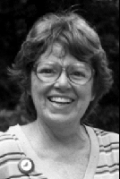
Years ago, via one of those serendipitous moments the
universe occasionally hands you, I met a woman who influenced the rest of my
life. I was sitting in a library in San Miguel de Allende, Mexico, reading that
month’s issue of Ms. Magazine. A short letter to the Editor caught my eye: You
write about child labor as though it is a thing of the past, the writer said,
when farm labor currently uses children in the fields. Signed, Joan Papert
Preiss, Triangle Friends of the UFW. She must have given her address (this is
before things could be looked up on the Internet) because I wrote her and asked
if she needed help. “Yes,” she replied, and a few months later I was on a bus
to Durham, NC, ready to volunteer in her office, which happened to be in the guest
bedroom of her home.
Joan, as I learned at her memorial service last Saturday,
almost single-handedly brought farmworker activism (and attention to the plight
of farmworkers) to North Carolina. And she did so with a playful, creative
style. She became known as the lady with the tiaras, including a Mt. Olive
pickle jar headpiece that she wore to picket lines during the Mt. Olive boycott.
She made her own boycott lapel pins out of bake-able clay, and painted colorful signs and posters.
She also was known for wearing a grape costume that, I think, consisted mostly
of purple balloons during the UFW grape boycott.
She spoke fervently and persuasively about farm conditions to gatherings large and small, even though she admitted that she had once dreaded public speaking and still considered herself a shy person. Even in the face of circling policeman, angry store managers and apathetic
shoppers, she continued on with an unmitigated enthusiasm. I have never known
anyone who so exuded a persistent sense of purpose. After raising three sons,
she committed herself to the cause of farmworker rights. But she also
found time to cook gourmet meals, keep up an herb garden, hold girlfriend
get-togethers, go sailing, host sleepovers and playdates for her grandchildren,
volunteer at the local hospital, keep a materials/news file (now archived at Duke Library), and seriously
compete at badminton. And she found time to have fun with me when I was working with her. On one of my last days there, before I left to go back to
school, we decided spontaneously to have a “milkshake orgy”—and
so set about making shots of cranberry milkshakes, followed by pumpkin, peanut butter, etc., in her kitchen. Too full, we went
for a walk in Duke Forest, chatting and laughing together.
She offered me a blueprint for an active and happy life.
More importantly, she offered a level of acceptance and confidence in my
abilities that I’d never experienced before, at least from someone older than
me. What a gift knowing someone like that.
I often told her that I should write an article for Ms. about how we’d met, which would segue into an article about her
amazing life. Some of what I would have said is in this blog post now.
In another bit of serendipity, a bookend to the first, I was updating my list of
cell phone contacts recently and I saw her phone number, realizing I
hadn’t heard from her in a long while; the handmade holiday cards had stopped
coming a few years ago. With a sense of dread, I googled her name and found her
obituary. Without that bit of discovery I would have missed her memorial
service and a chance to say good-bye. We sang “Union Maid” and “De Colores” and
other songs, were reminded of how much she had meant to so many, and then dispersed
out into the hot afternoon.
Monday, January 17, 2011
High school time machine

People from my past are popping up with more rapidity lately, due mostly to Facebook’s cheerful but insistent suggestions that I friend people with whom I have or have had the slightest bit of connection.
Like thousands of other people are also, surely, doing, I’ve pulled down my high school yearbook to search for clues as to who these now-gray-headed people are.
Last night I opened my high school yearbook from my sophomore year to find a name I no longer recognized and it was like an instant time machine. I was once again in the classrooms of Wilkes Central High School, pushing my long, straight hair behind one ear, hoping to be noticed and somehow, and in some way, acclaimed, though most of my actions then didn’t warrant any attention whatsoever. I was pulled back into my adolescent angst and unassuredness, feelings I didn’t especially want to revisit.
I know there are people who remember their high school years with fondness, but my hunch is that not many of them are writers, or at least fiction writers. I began to write in those years out of a loneliness that could not be appeased, no matter how many people I sat with at lunchtime, no matter how long I talked to friends on the phone at night. There was still something I needed to say, some part of myself that needed to be explored and recognized and voiced.
I looked at these teenagers and was amazed at how they all evolved, in different ways, into adults with solidified identities, careers, and beliefs, predictable and surprising. (Who would have guessed that my friend, Rhonda, the only girl on the debate team, would end up a cross-country truck driver?)
There was so much social stratification in my high school that it amazes me now, flipping through the yearbook’s pages, how we were able to tell the difference between the townies and the people, like me, who were bused to the town school—we’re all dressed pretty much the same shabby way, in cheap blue jeans or short-shorts. There were no Abercrombie t-shirts to helpfully mark the rich, no $200 sneakers. One clue was that the popular kids appeared on the pages for the Greek service clubs, the homecoming courts, the teams of country club sports like golf—more frequently on the very pages of the yearbook itself.
Everyone tried so hard in my high school to fit in, to not be on the perimeter or, worse, the fringes of the perimeter. Maybe it’s always been like that in high school, in all times and all places, but the urgency of at my high school was constant and intense. I once forgot to put my belt through one of the loops on my pants and was stopped and chastised throughout the day, even by people I didn’t know. From then on, I tried to wear mismatched socks, my belts half-looped, rebelling in my own quiet way.
All this seemed so important then, and so suffocating, yet I hadn’t thought much about it for years. So it was with relief and gladness that I closed the book, took a deep breath, and reentered my present, unfettered life. But the feeling of teenage angst remained with me for hours. That’s pretty powerful—time machine, mood changer, museum, and history book all in one.
(The picture above is photo of an actual page from my sophomore yearbook—the staff of the Talon, our student newspaper, sitting in the portable classroom where we put it together. I am in the top left.)
Thursday, October 14, 2010
Digging through journal pages, sometimes surprising artifacts are found

Last spring, a writing teacher had asked me to describe Aunt Stella's house in greater detail in an essay I'd written about her, but I couldn't remember its layout, especially beyond the front rooms most often seen by visitors. I thought maybe the guest room was in an isolated back corner of her house.
And there was the evidence in the photo—next to the guest bed is a door that leads to the hall. It added another piece to the jigsaw puzzle her house has become in my mind, almost all the rooms filled in now except for the mysterious bathroom that I can't visualize at all, save for the white enamel, claw-footed tub.
This is the only copy I have of that photo, the negative lost as far as I know. I know it is probably of little importance to anyone else—who else would care if there was a door there? There are only a few of us who can still conjure up the memory of her house as it was this point in time.
The photo is a document of a place I can no longer visit, as the house was sold years ago to people I don't know. Looking at it makes me feel a little more whole, like a missing piece of myself has been found. In that moment I feel like I am back home.
The boyfriend? Long gone, his head folded down in the collage (as seen above) so I could get a better scan of the other photos. And yet he is what I thought was important the moment I glued them in; I thought he would be important to me forever.
A journal can provide accidental but valuable artifacts of your life, even when you don't realize you're placing them in there, the years like layers between the moment you write something and the moment you read it.
Perhaps it's best not to censor or edit yourself too much as you compile a journal. The future-you sometimes knows best what to look for, what has value that lasts.
Tuesday, March 23, 2010
Back in the old days...
 So, I became a reporter for a daily newspaper in North Carolina in the mid-1980s, before there were cell phones, digital cameras, high-speed modems or the Internet. Lacking such technology wouldn't have been so bad if I had been in the Winston-Salem Journal's main office—reporters there had computer monitors on their desks hooked into a mainframe computer. They could send stories with a push of a button.
But I was in a bureau office in the northwest corner of the state, 90 minutes from the main office. I was given a portable Radio Shack computer to type my stories on. It wasn't a laptop exactly since it only held three medium-sized stories at a time and its screen held only a few rows of type, yet the field reporters were wowed by its portability; it was the best thing we could use at the time.
I could slowly send a story from my bureau office via a modem, but out in the field, if I needed to get a story in before I could get back to the office, I would have to pull up to a pay phone, dial the paper's toll-free number, then attach a cup to the phone receiver to transmit the story from the laptop. The story would make long chirping noises as it went over the wire, like a fax machine on valium.
I was lucky. I saw reporters for other newspapers still calling in their stories, slowly reading them out for the intern on the other end to transcribe.
If none of the paper's photographers was available, I took pictures on my cheap, automatic 35mm camera, popping out the film when I was done. If there was no rush, I mailed it back to the Winston-Salem office. But if the story was going to run the next day, I'd drive over to the bus station in Boone (actually, it was just a local motel) and put my film on the bus; someone in Winston would pick it up.
I would check in with the main office at least once a day. But without a cell phone, I wasn't immediately available to anyone. While I was in Asheville one August day to write a feature on a New Age-y organization there, a plane packed full of cocaine landed near Boone, and became one of the largest drug busts in that part of the state. My editor frantically tried to reach me, but I was out of earshot, not knowing why everyone was so upset when I called in late that afternoon. I think they went with a wire story that day, supplemented by one of our reporters in a nearby bureau. It should have been my story. Still, my story on the New Age-y people got me my only above-the-fold front page, in that Sunday's paper.
Things are faster, easier, more accessible now, yet I'm not sure they're better or that stories are better written. My old bureau office, which covered two counties (with others, occasionally, as needed), has closed, folded into another bureau to become the Northwest Bureau office. I think that reporter must cover at least four counties now. Spread thin, is how I'd describe it. I'm not sure how you'd get to know all the people in local government or be in so many places at once. Maybe the reporter makes his rounds electronically, reading local blogs for gossip, chatting up people on Facebook, emailing interview questions. It's the only way I can imagine that he or she can be in 10 places at once—unlike when I used to walk around Boone, even in the deep snow, to visit the sheriff, the mayor's office, the Registrar, hoping to catch wind of something, to hear something I wasn't supposed to hear.
(The picture at the top of this post is one of the pictures I took with my cheap camera, which ran in the paper; it was for my favorite story I ever got to write for the WSJ.)
Monday, March 15, 2010
Why I really became a reporter
 I’d like to say that the reason I became a reporter at a daily newspaper in North Carolina was because I had a burning desire to investigate injustice, to promote knowledge, or even to see my name in print. But that’s not exactly true. I mostly became a reporter at the Winston-Salem Journal because I was sick of being a waitress at the Pizza Inn in North Wilkesboro, N.C.
It was the only job I could find after I moved back home in January 1985. Actually, there was first a one-day stint as a waitress at the Dodge House restaurant, where patrons blew smoke in my face all evening and hardly tipped me. It wouldn’t have been so bad except that I was only making two dollars an hour and, even worse, it turned out that the job also required me to clean the restaurant toilets once every shift. I balked at this and the manager, who was originally from India, said, “You think I didn’t have dreams, too?” I had no idea how he’d gotten from India to this deep-fried/fine dining restaurant in a nowhere corner of North Carolina, but I never got a chance to ask him. I quit at the end of my first shift.
Before the Pizza Inn, I also cleaned a movie theater for a few mornings with one of my mom’s co-workers, a secretary who came there before work for some extra income. It was taxing, disgusting work. We always spent the first few minutes trying to get hardened gum off the floor.
It turns out that a lot of people in Wilkes County worked extra jobs. Two of the waitresses I worked with at Pizza Inn came straight from the Tyson’s chicken factory. Legs tired, feet aching, they stood for another four hours. And yet, amazingly, they didn’t complain about it. They seemed to accept it as their lot. Or they were happy for the extra money because they were trying to build their savings or pay off debt. Most were young and energetic, but there was one woman whose feet swelled so much from standing all day that her doctor told her that she was going to have a stroke if she didn't get off of them. The grim reality is that she didn't have health insurance and her son had needed life-saving surgery, which she was still paying off, she said, when their house burned down.
We were paid the standard waitress minimum wage of $2.13 an hour, with the expectation that patrons would tip our way past the real minimum wage of $3.35 an hour. That hardly ever happened. The management pushed us to promote the buffet table, which was cheaper for them than individual orders, and most patrons took us up on the offer. That meant, however, that the waitresses were only serving them their drinks and handing them an empty plate to fill and most people didn’t think of that as service. In fact, they found it annoying when we came back to check on them once or twice after they had their plates and drinks. Begrudgingly, we’d get an occasional quarter or two when they left.
Unlike the other waitresses there, I had a way out. I started sending my resume to small town newspapers all over North Carolina, along with photocopies of my few precious clips from the Spokane Chronicle, pretending I knew what I was doing. I also started to study for the GRE, with the new thinking that school would not be a place to study whatever I wanted and to find myself, but instead a place where I would train for a career (surprisingly, this had never occurred to me in all my years as an undergraduate).
And so, when I got the call from the Winston-Salem Journal, I trotted out of there with hardly a day’s notice.
The Pizza Inn is gone. It’s been a Mexican restaurant for years. I bet the waitresses there are still paid the waitress minimum wage, which remains at $2.13 an hour. I just hope that people in my hometown have gotten a little more generous with their tipping. And that the lady with swollen feet finally paid off debts before the job killed her.
Wednesday, August 26, 2009
Facebook: Time-wasting guilty pleasure, or writer’s oasis?

Do you ever sneak onto Facebook, guilty that the tiny amount of time you linger there might have been better spent composing haikus or writing postcards?
I’m here to tell you that such guilt is unnecessary if you can view Facebook as a potential writer’s resource. Not only can you use FB without guilt, you can even feel justified in using it on a regular basis.
I’m not saying that you should go on and spend hours each day taking every FB quiz or playing every FB game that comes along. (Although, occasionally, you'll need to know such valuable information as your Gilligan's Island character.)
There are several uses I’ve found for Facebook. The first, and the most compelling for me is:
Facebook as an electronic diary
A few weeks ago, I was feeling glum that I hadn’t written a journal entry in months, not even in the pocket-size calendar I’d bought to record the occasional minutiae of daily life. (I always miss this stuff when I don’t write it down, months down the road. I find it comforting, in retrospect, to see what I was doing or thinking on a given day. Such info is also handy for writers who want to write about a real and particular day in the past.)
Then I realized I’ve been keeping an ongoing, electronic journal on FB through postings on the status line (aka the “What’s on your mind?” box). Of course, some of the time, I’ve attempted to be clever, but, more often, I’ve written down what I’m doing, much as I would in a regular journal, although, of course, more succinctly. Status lines, when taken as a cumulative whole, can reflect natural and cyclical patterns, from hot, humid days to snowed-in January afternoons.
And keeping a FB-based electronic journal doesn't require a lot of time. Most days, I go in, do my two minutes in FB to update my status and to see who/what else pops up on my Home page, and then I go off.
Here are some recent entries/comments. I’m posting them here mostly to show that none of these is especially profound. If I tried to be profound, I’d never post anything:
likes this cool, cloud-covered, humid morning.
August 14 at 9:08am
watched as a long black snake slowly slithered down the window ledge this morning.
July 30 at 4:44pm
lingering by the window, waiting for the sudden red buds on her hibiscus to bloom at any moment.
July 23 at 10:04am
is re-reading the Collected Stories of John Cheever, looking for a happy ending.
July 14 at 12:44pm
is going to D-Day beaches today
June 28
saw the sun for five minutes this morning. Oh well, at least I'm saving money on sunscreen.
May 6 at 11:24am
is watching the clouds roll by (the weather is changing here every five minutes)
April 3 at 2:04pm
spent the afternoon cleaning dead growth out of the herb garden in 70 degree weather—just 4 days after sledding in the backyard
March 7 at 7:35pm
Helpful hint:
If you decide to do this, you might want to download/keep your status lines every 2-3 months. In attempting to go back five months, I had to scroll down through screen after screen, and click on "Older Posts" at the bottom of the page. As the updates got older, FB became less cooperative, often not uploading the older posts the first one or two times I clicked on it.
NEXT POST: Facebook profile pages as fodder for fiction
OPTIONAL EXERCISES:
1. Gather up all your status lines from the last six months. Copy into a word processing program. Put in page breaks between months. Add other things to each page, whether from a paper calendar, an email or a paper journal, trying to arrange by date. Print and put in a notebook marked "Journal."
2. Gather up your status lines from 2-3 computer screens. Copy them into a word processing program. Add only a sentence between each and try to compose the opening page of a short story, or a poem.
NEXT POST: Facebook profile pages as fodder for fiction
Tuesday, August 11, 2009
The once-a-week writer, more or less
 In my last post, I described feeling crazy unless I write on a regular basis. And then I realized, after I uploaded it to the cyberworld, that it was the only thing I'd written in a week.
It's been like that all summer. Not only have I not gotten to write much, but I haven't even gotten to some of the necessary/piddly stuff on my To Do list from early July. My closet is crammed with things I haven't had time to put away and I've been grabbing whatever shirts and pants are most accessible when I get dressed.
This busyness of adulthood is not something I could have imagined in the humid, lazy summers of my youth, when I could read a book a day, and lay in the grass staring at the clouds rolling by without anyone scheduling me to be somewhere, nor with any trace of guilt about needing to do something else.
Now I look at the clouds through the car window when I go somewhere, or at the pool, while watching my daughter, scanning the sky occasionally for storm clouds.
I don't know why this summer has seemed busier than summers past. I'd hate to think that it's because I spent two weeks in France at the end of June and I'm having to pay for the time lost the rest of the summer. I had editing and volunteer work to attend to, while my daughter was in camp for only a week—which meant that during those five, lovely free hours each day, when I went to the computer it was not my own words I was working on; I had to suppress the flow of thoughts that wanted to come out of me. (Even when I watch TV late at night, it is in short spurts, my mind too tired to do anything creative).
Seeing my busy-ness, my teenage son remarked a few days ago, "It really must suck to be an adult." Realizing this, he seems to be trying to make the most of what is perhaps his last unscheduled, work-free summer. I hear him typing at the computer, late at night, long after the Internet has been turned off for the evening.
I wrote this originally on a notepad, with a gel pen, while sitting at the DMV, waiting for my son to take his test to get his learner's permit. I may be the only person here glad for the wait because it's the first time in a week that I've had spare time and no excuse not to write.
(written August 6, typed into Blogger August 11)
Thursday, July 9, 2009
The recession blues, all over again
 Back in 1982 and 1983, I was making my slow way out of college. I wasn’t in a rush because I couldn’t imagine what I was going to do with myself once I was officially graduated and I didn’t want to leave Santa Cruz. My undergraduate thesis (on the Fourth Book of the Aeneid) was my excuse for lingering in paradise for another year, though I ended up expending more energy on scrounging money for food and rent than I did on research or writing. The thesis itself was written in a flurry, 60 pages on a manual typewriter, typed nearly non-stop the last week of the spring semester, still not totally finished the day I stepped up to the podium on campus in my silver go-go boots and free-box black dress to receive what turned out to be only a roll of paper. The actual degree was mailed to me a few months later, after my advisers had read the thesis and awarded me honors for it.
During those two years of lingering, I worked as a sort-of governess, a housecleaner and a babysitter. I tried to do elder care, which would have garnered me an actual paycheck, but the old lady died the day after I first showed up to her door. (Being Santa Cruz, my sometimes-psychic kundalini yoga teacher unexpectedly came to her house the exact afternoon I did, without my telling him I was going there; it seems he had been her counselor at one time in her life, and he just happened to visit her that day to check on her. He took me aside and whispered to me, “Her aura is black; she will die tonight.” And she did.)
It wasn’t that I hadn’t tried to find meaningful work, or better paying work. But jobs were slim and hard to come by. Paradise had its price. For every job listing, dozens of people showed up. People who were qualified to over-analyze Beckett and Joyce were taking jobs at the campus library or in bookstores—if they were lucky. To get a job at Bookshop Santa Cruz or any of the other independent bookshops around town was a mark of prestige. More likely, those lit majors worked at the bagel bakery or restaurants or, worse, at the cannery or the chewing gum factory. But I couldn’t even get a job as a waitress. I showed up at restaurants, wet from bike rides in winter rainstorms, wearing my thrift store clothing, to receive a firm no. I hadn’t worked as a waitress for a few years, and there were many more people available who wore better clothes and had kept their restaurant resumes active. Or they had connections.
I applied to be a copywriter for a computer software company (turned down immediately when I confessed I’d never used a computer), a waitress at various cafes and restaurants, a bus boy at India Joze (I couldn’t pick up enough weight to manage it), a cook at a tofu burger restaurant. No-no-no. No one wanted me. [That was the year my friend, Chandra, and I made collage postcards that we didn't know how to sell.] At one point, I took a part-time job at the Santa Cruz Boardwalk, operating a spinning, tilting ride that played an 8-track tape of Fleetwood Mac over and over, all day long, but I left it to work as a live-in babysitter for a doctor and his wife out in the woods of Soquel, for $300 a month and a small, kitchen-less cabin to live in. That job was washed away when the 1982 winter floods brought mudslides and impassable roads.
I managed to squeak by, my last few months there, until the end of the spring of 1983, but once I finished my thesis, it grew harder and harder to find reasons to stay, especially with most of my friends going on to graduate school or internships and jobs elsewhere, and a new crop of students rushing in. Not knowing what else to do with myself, I followed a boyfriend to Idaho and was surprised that I found work there as a preschool aide and a bookstore clerk (though I only made $4/hour, and had no insurance.)
Maybe it’s always a little difficult to find meaningful or well-paying jobs in a college town because there are so many other students looking for work, and maybe it was doubly difficult in Santa Cruz because it’s one of the most beautiful places in the world—redwood forests and fields of wildflowers and grasses, blue beaches below. But the recession of the early 1980s also, surely, played a part in my inability to find a job. Yet, I didn’t know this at the time. I thought that’s the way it would always be for me, never having really actively sought work before—that I was unemployable, and back to my elementary-school standing of being the last kid chosen for the team. The lesson I took from the experience was that writers/artists really don’t make money, no matter what they try to do.
I think about those desperate months every time I read a newspaper article these days that discusses the economy and references 1982 as having the worst unemployment rate since the Great Depression, and thereafter. That recession had a long-lasting effect on me. Whenever I apply for a job, I never assume that I will be hired; I lack the presumption of being wanted.
I wonder if there are young people going through similar emotions these days, especially writers and artists who are already wondering what they can do in the marketplace with their skills, maybe not wanting to be in the marketplace, anyway, except by necessity. It's hard enough being a writer anytime, but recessions are hard on creative people. It's hard to face rejection in nearly every facet of your life. So, it's especially amazing to witness the people who keep at it, who plug on, year after year, no market ready to welcome them, still somehow sure that what they are doing needs to be done, what they are writing needs to be said.
(Photo--My graduation day, Cowell College, UCSC, 1983).
Tuesday, March 17, 2009
Words lost inside a machine
The family computer crashed Saturday night. I took it to the Apple Store Monday, hoping they could revive it, but after an hour of working on it, the technician basically called it at 11 a.m.
At the end of his work, he pulled out its non-functioning hard drive and placed it in the palm of my hand. In a soft voice, like a mortician, he told me he would dispose of the shell of my old Mac Mini for me. It's hard to believe that almost all of our family information was contained in the small green, gold-specked rectangle that now fit in the palm of my hand.
I've written a previous post on the danger of relying only on digital storage. And I took my own advice, backing up most of my files on an external hard drive. But there are things I never backed up, like email. Gone are all the messages we've received in the last three years from our children's schools and teachers, from people writing us as a family. There are thank yous and inquiries that I meant to write/send but now I can't remember if I did. Only the small, brain-dead hard disk knows and it is silent, sealed in an envelope.
In the book, Clear Your Clutter with Feng Shui (a book I find sometimes wise and sometimes silly), Karen Kingston says that floods and other unexpected disasters offer people "wonderful heaven-sent opportunities cocreated with their Higher Self, to give them a fresh start in life." (This passage would be wise if it hadn't been so all-encompassing. A small flood in the basement—maybe. A tsunami that wipes out a village—no.) Maybe my hard disk crash was a way to de-clutter my life of all those emails I failed to throw away, until we had over 1,000 messages in the "Sent" folder alone.
I know that email is a temporary communication that shouldn't be held on to and that most emails should be deleted within a certain time frame. But I rarely make the time to wade through and decide what is worth keeping and what should be trashed. It's painful to get rid of traces of one's self and one's emails with friends, especially since there is almost no other kind of written communication these days. I still have a 2002 email from a friend who has since died. I can't bring myself to delete it. If it were a letter, I would place it in a box with all my other letters and it would have a definite boundary and time frame. The email gives me false hope—if I open it, I believe I can hit "reply" and David will write me back.
What is worth keeping? I think we all must ask ourselves this question, through life transitions and moves. It's something writers particularly have to ask themselves. In another passage of her book, Kingston says clutter is "stuck energy" that can "keep you in the past" and "distract you from important things." Are my writing notebooks "stuck energy"? Are my teenage journals keeping me in the past if I rarely pull them out of the filing cabinet? Or are they material for future stories?
Trying to find paper records of things that might have been on the dead hard drive, I sifted through two drawers of old files yesterday and found scraps of paper documenting moments and emotions I had forgotten; a novel I had started that I thought had been lost in the last computer crash (which maybe should have stayed lost); letters from friends in the days before ubiquitous email; files with photocopied research for topics I had wanted to write about; and stuff I now know I no longer need. I threw some of it away but there was such a flood of emotion that came from unearthing my past that I finally had to shut the drawers and walk away.
I am not ready to edit my life. That's probably one reason I'm not sending anything out to publishers now. I find it difficult to decide what to choose and toss. As a person, I want to think that every moment, every thought was valid. As a writer, I need to be vicious, selective. I still haven't figured out how to let the two peacefully co-exist.
Subscribe to:
Posts (Atom)

 Posts


