Showing posts with label writing. Show all posts

Wednesday, August 17, 2016

Should I stay or should I go?


There comes a time in every blog's life where the blogger has to decide whether to keep it going or to abandon it.

Or, in my case, to not make any decision but to simply neglect it, thinking I'll get to it tomorrow.

I was surprised when I realized that my last post here was made in April. I had written a few posts in my head since then, but they somehow didn't get magically transferred to the screen.

The truth is, these days, I'd rather spend my free time taking photographs or working on stories for publication. Or, I have to admit, writing quippy posts on Facebook--a lot of the pull away from blogging, for me, has been the instant gratification offered there. I like being liked (and liked almost instantly), whereas, I rarely get feedback or reaction to a blog post--all I can see are the number of pageviews going up. (Facebook is its own kind of crack for people who, like most writers, crave attention. But that's another topic...)

So, should I stay or should I go?

My biggest worry in abandoning this blog is that Google will delete it, as they have with other artsy blogs (for an example, see Why Did Google Erase Dennis Cooper's Beloved.... ) Of course, I could revive anything worth saving into new essays, but I'd mourn the loss of the Interviews with Creative People feature, especially since some of the writers/artists have linked to those interviews.

It's so easy to write a few funny or even philosophical sentences on Facebook and not sweat over it. Or to share photographs there or on Google Photos.

Maybe that's the answer. To loosen this site up a little, making it not always a posit for "essays and meditations on writing, creativity, reading, books and art" (as originally stated) but also a place to share other modes of creativity, including visuals. Perhaps I also might actually talk about my personal life/experience without the sepia-toned filter of being a "writer/creative person."

I'll try this approach in the next few posts and see if this makes it more fun...

---------
An example of one thing I like doing these days: using apps to transform photographs. Above is a screenshot of the official Clash video for "Should I Stay or Should I Go," transformed by the Prisma App. 

Thursday, January 9, 2014

Winter break

I haven't written much in the last couple of months, what with holiday planning and cooking, and all the concentrated work that was necessary to earn a couple of weeks of free time. Then there was an enjoyable two weeks of traveling, eating, visiting, reading books and sleeping late. (And then the last few days of playing catch-up.)

In the past, such a length of silence might have put me in a panic. To not put down words at least every couple of days used to feel like a kind of death--or, at least, a lost chance to communicate in a deeply rich or lasting way. Instead, this time, I enjoyed eating sushi, swimming, seeing a planetarium show, taking photographs... I was not looking to write anything down or to think a particularly profound thought.

It was vacation, in other words, finally, guiltlessly, spent.

The problem now is how to break a silence that has become so friendly and familiar--how to begin again. I have had time in the last couple of days to write something in this space but I hesitated, wondering what I really needed to say. There was a lingering quiet that I didn't necessarily want to disturb.

Perhaps this is what keeps most people from writing. They have made their peace with the quiet or have no urge to fill it up. Or, the short stretches of quiet stretch into a long period of silence that is hard to break. I am not sure I have fully broken that silence yet, but at least this is a start.

Tuesday, October 9, 2012

The plot thins


For all my good ideas over the years, I have failed to produce more than a handful of short stories, only two or three of them published (in addition to a couple of novels that need heavy revising). Instead, I have dozens of notebooks filled with descriptions of experience and emotion, which I have sometimes turned into essays, but rarely into any kind of cohesive story.

It wasn't until after I attended a lecture by Pam Smallcomb last year, on how to write children's picture books, that I began to realize I don't know how to write a good plot—or any plot, really. Plot is so essential to fiction, I don't know how I missed its absence.

I like poetic prose and deep insight, which is why I tend to read literary fiction rather than genre fiction. But those books rarely keep me up at night—unlike the Harry Potter books, whose pages I continued to turn long after my bedtime, until I had read the whole series. It was those little hooks along the way that kept me interested, which I've mostly ignored in my own fiction.

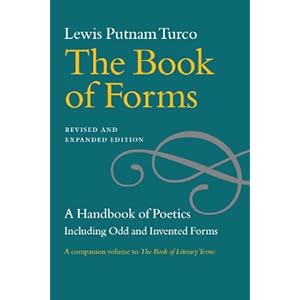
I never felt this way about poetry, perhaps because writing good poetry—especially form poetry—is a learning experience. I didn't assume that I knew what I was doing just because I could put down words and make rhymes. I understood that there is cadence and form, and building toward some kind of epiphany, all within a few lines. A massive, humbling undertaking if done well. And so I felt no embarrassment in consulting guides like The Book of Forms: A Handbook of Poetics as I wrote poems.

But plot? I didn't think I needed to study it. Wasn't the telling of the story the same thing as plot?

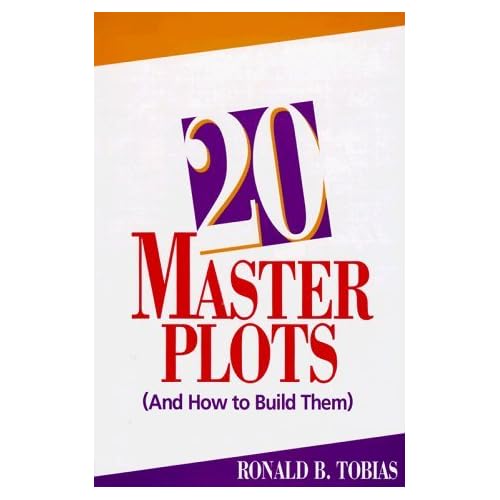
Now I am reading, as Pam suggested in her lecture, 20 Master Plots (And How to Build Them). They include variations on the two essential plots that have been described over the years: a stranger comes to town, a journey is taken. But I'm finding it helpful to break down books I know and love into their mechanical parts, using this book as guide. Next, I will apply it to my own fiction; it's hard to admit that I am still a beginner at all this, but I'm never going to be a better writer unless I acknowledge my current limitations.

Friday, June 3, 2011

The writer plants a garden


I haven't written much in the last couple of weeks because I've been spending all my free time trying to create a garden (or a few reasonable facsimiles of such).

It's been so hot here lately that I race against the impending sun, working steadily from 8:00 until about 11:00 am—and then the sun rushes out of the shadows. Immersed in the heat and humidity (we've had several 100 degree or near-100 degree days), I retreat to the house, busy with necessary work.

Yet the sun is coy—it hides behind tall oaks in the neighbor's yard at key times throughout the day, depriving edible plants of sufficient light to thrive and grow in open spots. So I tore out part of my backyard where the sun lingers longer than anywhere else and put in a tiny garden —and doubled up use of that space by hanging homemade upside-down planters above it (see above—no it doesn't look that pretty). Elsewhere, I've put in shade-loving plants, nurturing them with composted manure, mulch and water.

The urge to do this is greater than the urge to sit at a keyboard right now. I know that July is coming, too late for most planting (though it's already too late to plant most things—any new plant in the ground requires a pledge of sufficient watering).

I suppose I could say at this point how gardening is like writing, in that, you weed out the unnecessary, you focus on one project at a time, you nurture what you've written/planted. Maybe how you garden is comparable to how you write. I hate to weed—specifically, I hate to take out seedlings even in a crowded pot, a Sophie's Choice decision for which plants get to survive. So, sometimes, my plants choke together, all surviving but none thriving exactly, until I finally snip off seedlings to eat or, worse, transplant a select few with a teaspoon, urging them into new ground. I simply cannot tear out a seedling and throw it away.

I've got lots of words in notebooks everywhere. Some have been transplanted and have grown to full size, but most are crowded together, static and puny. They'll have to stay that way for a while longer, I've got thyme to transplant and a blueberry bush to put in.

Saturday, November 13, 2010

"Oh hi!" and other awkward ways to get your characters into a room


A chance encounter with the cult classic, "The Room," reminded me how hard it is to get fiction characters smoothly transitioned into a scene.

"The Room" is celebrated in various compilations and snippets all over YouTube for its poor acting, editing, and writing. In the 30-second edit above, someone has taken some of the most awkward entrance dialog from the movie. [This will probably be taken down from YouTube soon, so if it's blank, that's why.] I'm not sure that I'm not guilty of some of this in my current project, a hastily written novel for NaNoWriMo.

Another scene from "The Room" that is also available on YouTube (inserted below) should be Exhibit A for writers wanting to know which scenes to cut from their fiction. The scene—which zips by in 19 seconds!—lacks meaningful dialog and description, doesn't seem to move the story along, and doesn't give each character a distinctive voice.

Thursday, March 4, 2010

Pandora's box of songs: music to write by

Lucky is the person who can write a short story while listening to the Rolling Stones or a Bach fugue. Or who, like my spouse, can write at the computer while listening to rock music and watching TV sports from the corner of his eye.

I've never been able to listen to music and also do anything that involves a computer or a pen. Apparently my brain doesn't multi-task that way. I write best in a quiet house.

Yet sometimes the quiet gets to me. I think of all the songs that I'll never hear because the part of my brain that writes or types is too demanding of my full attention. So, I've been searching for music that would provide a pleasant sonic background my brain won't rebel against.

It was easy to eliminate disco/techno, folk songs, and any music with lyrics. But even slow, sweeping orchestral music was too demanding.

Finally, through trial and error, I've discovered that I can write to piano music. As long as the piano is the main instrument, and there are not a lot of other sounds alongside it, my brain doesn't get distracted. I don't know if this is true for other writers, or just me. Perhaps only the sound of the clarinet will do for someone else, the french horn for another.

Maybe it's because the motion of fingers traveling across a computer keyboard and a piano keyboard are kind-of the same?

I have created a "Piano Music" station on Pandora Radio. When Pandora asked for a "seed" artist or song, I typed "Keith Jarrett" and "Glenn Gould." It has since persuaded me to add Bill Evans and other jazz pianists, as well as Chopin and Erik Satie, and it is still trying to steer me toward Philip Glass. Miraculously, I've mostly heard piano music on this station, having only to occasionally say no to the rare symphony. (I moved Beethoven to his own station, since it hurt to give him a thumbs down).

If you'd like to hear my station, (I think this will work) you can go to: http://www.pandora.com/?ext_lsfi=sf135142619270723600&ref=nf . If this doesn't work, you can create your own station, with similar parameters. Happy listening!

Thursday, October 1, 2009

Talking to myself

I usually write more when I am alone. That's when I need it more.

I crave some kind of a dialogue, no matter what circumstance I am in. And I have those dialogues on a daily basis—with my daughter as she gets ready for school, with my family at the dinner table as we share the events of our days, with my husband whispering at night when we are going to sleep.

But when I lived alone or with housemates in and out, I had only my notebook at night. And so I spoke there. I took time to write down my dreams or to explain my romantic preoccupations, trying to figure out all possible outcomes, even with men who hardly noticed me. I luxuriously wrote friends long letters by hand.

When I was even younger, living at home, I wrote towards my projected future, to my future self. I spoke to myself as my own confidant since no one around me seemed like me. I thought I had deeper thoughts than anyone else because I wrote them down—or that I had to write because my thoughts were so deep they couldn’t stay buried within me. It was a sacred sharing, which also kept me from feeling so alone and scared.

My writing now is less from immediate loneliness. I have the luxury of having a place in the world, even if my belonging is confined to the half-acre of our home. In cities and even out in this neighborhood, I’m not so sure that I really belong there, though it’s not as important to me now as it was when I was young and unanchored.

So, the question emerges, why do I still need to write? Do all writers have a soul loneliness that only writing, for some reason, can appease? Is ego always a factor, as it was when I was a teenager sitting in my room writing crappy poetry I thought the world needed to hear?

Perhaps my writing cannot evolve into fiction or publishable non-fiction until I get over the idea that I am sitting here talking to myself, until I can go beyond recording my immediate preoccupations and actions (she wrote, in her journal, an entry I'm now putting on my blog a day later). I'm not sure when something needs to be shown, when I am writing for something or someone beyond myself past, present, or future.

If I feel pressed to show this here, now, it's only because it's been a week since I've put something on this blog. The difference between a blog post and an entry in my journal, though, is that the journal entry can stop whenever—whenever the tea kettle whistles or the phone rings or someone knocks at the door. [The original journal entry ended with the paragraph above, left on an open laptop when the phone rang.] I need an ending here, and an ending is not making itself apparent. The cat is meowing to be let out and I'm starting to crave breakfast. Is that enough?

(Photograph: Self portrait, Santa Cruz, 1983. Copyright Beth Blevins)

Thursday, July 23, 2009

Popularity

“Had-i-lay, did-i-lay, had-i-lay, pood-i-lay.”

These words don’t seem significant, yet nearly five million people have tuned in on youtube to see a young man utter this gibberish.

This is not the kind of video I normally seek out and I wouldn’t have known about it unless the young man in it, Brandon Hardesty, was featured on a recent cover of the Washington Post Magazine.

The same week the article came out about the popularity of Hardesty’s “Strange Faces and Noises I Can Make” video, my blog counter registered 1,200 hits. That’s 1,200 hits in 13 months; 1,200 hits for 66 posts, sometimes made with thought and great care, vs. millions of hits for one video made in a matter of minutes.

I have never assumed I can win over the eyeballs that watch videos of cute cats or naked sportscasters or goofy teenagers. The difference, of course, is between readers and audience. Reading requires thought, perhaps even a delayed gratification. Watching a video just requires a couple of minutes of your time. And it’s hard to imagine an essay going viral.

In other words, I am trying to console myself with the idea that I am seeking quality of readership vs. quantity. But it’s not entirely true. I still expected that more people would have read my blog by now—it’s been around for almost 15 months.

Yet, truth be told, I’ve done little to promote it, other than having it listed on a couple of web sites for writers’ organizations. I’d rather spend my small amount of free time each week writing it rather than advertising it. And I don’t know how to advertise it anyway, or how to help people find it other than sometimes posting links to it on my Facebook status line.

It goes to a deeper problem I’ve always faced as a writer—do I write for myself, or for an audience? I feel a deep satisfaction when I’m able to complete a story or essay/blog post; it feels like an accomplishment in and of itself. But there’s always another feeling there alongside it, a tiny discontent that can only be appeased if I know that the thing I have created has been seen.

So, I am looking for validation, no matter how happy the process of writing itself makes me. Not fame, but a recognition, a visibility. Without that validation, there’s always a little bit of melancholy, perhaps even a small amount of bitterness, in everything I write.

I don’t think my lack of popularity in high school can be blamed for this, though perhaps it feeds into it a tiny bit, like so many other slights in the whole history of my life, all these things feeding into what it is that makes me a writer. Without that urge for validity, maybe most writers wouldn’t write in the first place. Without that urge, I would write, but the things that I write would be entirely tucked in my drawers and never seen, not even here.

Friday, July 3, 2009

Solitude vs. the beautiful, chaotic hum

I’ve just returned from being out of the country for two weeks. During that time, I didn’t write anything but a postcard to my mom, assuring her that I was still alive. I attempted to write a couple of short emails to business contacts, when I had a few stolen moments on someone’s computer, but the French keyboard was so frustrating to use that I gave up (or, rather, gqvĆ© up) after a couple of sentences. [A blog post appeared here last week through the miracle of Blogger’s post-dating feature—I’d written it before I left on my trip and it automatically uploaded while I was gone.]

The weird thing was that I didn’t feel a desire or need to write. This is an unusual feeling for me. Since I have known how to use a pencil to shape letters and words, I’ve had a persistent urge to write my thoughts down, though in recent years that urge has been satisfied by writing weekly essays rather than the daily journal updates of my youth.

I wasn’t experiencing any kind of creative constipation, but felt like some other, more visual/experiential part of my brain had been activated. I only wanted to take photos and make short movies of Parisian scenes, and to walk and take it all in—to eat luxurious meals, feel the breeze on my face, listen to street music, smell the pastries and chocolates—without attempting to describe any of it.


Perhaps in order to write about something, a writer must step back, set herself apart from things in order to filter and describe them. But in France, especially on the streets of Paris, I wanted to be a part of the beautiful, chaotic hum. Maybe if I’d spent a few weeks there I would have grown tired of it, or would feel a need to step back and return to the deep solitude I seem to only achieve during the writing process.

Now I am back in my quieter neighborhood, looking out to a narrow forest of oak trees from my bedroom window. My cat purrs on my bed, birds are speaking urgently to their kin outside. It is calm and maybe a little dull, but somehow it is stimulating for me—or is stimulating another part of my brain that was inactive during my European adventure. Thoughts and ideas for essays I could write began pouring out of me the day after I got home, especially after this morning’s walk on the sleepy streets around my house. I am suddenly a homebody, wanting to hang around the house, eat simple salads, pull weeds in my yard, and write. I am no longer yearning for pastries and people-watching on the Metro. I want to belong right now to a large but invisible community that is quiet and shaped by words, to seek immersion in ideas not crowds. I need both things—noise/conversation and quiet/thoughts. Finding the balance is an ongoing event in this writer’s life.


(Photos by Beth Blevins)

Tuesday, March 10, 2009

Look elsewhere, writer

I was reminded of Thomas Wolfe—specifically, Look Homeward, Angel—while reading the short story "Bible" by Tobias Wolff the other day.

[Do people read Thomas Wolfe anymore, or are they too impatient to wade through his excessive prose? Look Homeward, Angel is 522 pages in very small type, and it's one of Wolfe's heavily edited works. And yet I loved it when I was a teenager, so much so that I went to live in Asheville for a year and often sat on the porch of the Thomas Wolfe house there.]

Surprisingly, it had nothing to do with the similarity in last names, or the biblical/angelic reference. I was reminded of the passage in Look Homeward, Angel when Wolfe describes his father's intense desire to carve an angel's head as beautiful as the one he saw in a Baltimore stone mason shop:

"He felt that he wanted, more than anything in the world, to carve delicately with a chisel. He wanted to wreak something dark and unspeakable in him into cold stone. He wanted to carve an angel's head." (LHA, p. 4)

And the eventual revelation that he would never be able to master it:

"He never found it. He never learned to carve an angel's head. The dove, the lamb, the smooth joined marble hands of death, and letters fair and fine — but not the angel." (p. 4)

Wolff's short story, which appears in The Best American Short Stories 2008, is not about stone cutters or angels, but a school teacher. In the opening paragraph, he sets the scene and sets up the action to come with a few simple sentences:

"IT WAS DARK when Maureen left the Hundred Club. She stopped just outside the door, a little thrown by the sudden cold, the change from daylight to night. A gusting breeze chilled her face. Lights burned over the storefronts, gleaming in patches of ice along the sidewalk. She reached in: her pockets for her gloves, then hopelessly searched her purse. She'd left them in the club. If she went back for them, she knew she'd end up staying - and so much for all her good intentions...." (p. 312)

I could immediately picture this scene, painted without the use of color or verbose description. I was standing on the sidewalk with Maureen, freezing cold.

I'm not sure I've ever been able to do this in any of the fiction I've written; I'm not sure I will ever do it this well. I felt a similar recognition when I first read The Onion. Until then, I had considered myself a competent writer of humor, but my parodies seemed clunky in comparison.

I don't want to give up writing fiction because it's always been so pleasurable for me to immerse myself into someone else's life and to try to figure it out for them. So, I'll continue to chisel away at prose, seeking (in Wolfe's words) "the great forgotten language, the lost lane-end into heaven, a stone, a leaf, a door...."; hoping something—a novel, a short story, an essay—might somehow, successfully, emerge.

Friday, February 13, 2009

Maybe all writers need pen names now, given our Googlubiquity

It just so happens that the same day I was invited to participate in yet another list exercise on Facebook (this one called “The Name Game”), I  discovered that there are several other Beth Blevinses in the United States who write blogs.

The Name Game asks you to combine your and your family's names to create new names that are sometimes silly, sometimes distinct. For example, combine your grandfathers' first names to create your Nascar name (mine would be "Parks Monroe"), or your mother’s and father’s middle names to create your Witness protection name ("Rose Bret"). 

Despite my list-burn-out (25 Random Things being the main culprit), I probably would have been drawn to the Name Game since my southern family has such great first names: Guy, Bertha, Stella, Lola Belle, Maxie, Collie, Monroe, Hobson, Mattie. But realizing my lack of uniqueness, even in the blogosphere, spurred me on. I was in search of a new name.

I already knew there were other Beth Blevinses in the world. I started running vanity searches as soon as Google became available. There is a golfer Beth Blevins, a doula/nurse Beth Blevins and a realtor Beth Blevins. I long ago corresponded with the writer-editor-intuitive Beth Blevins who lives in California after finding her web site (we both agreed we should hold a "Beth Blevins" convention someday.)

Still, I clung to my name. It has a certain alliteration and, well, it's what I'm used to.

However, to see that I am not the only Beth Blevins in the more limited world of the blogosphere was a blow from which I'm not sure I can recover. 

There is a Beth Blevins who blogs about World of Warcraft in a blog called "The Family Business" (which uses the same template I originally used with “Writing Home”). The writer-editor Beth Blevins in California has a blog called "Sacred Feminine Rising"—the postings appear to be descriptions of meditations.  The realtor Beth Blevins appears to have reserved blog space, but has yet to post.

Here are my options, I think:
  • I could choose some variation of "Beth Blevins": My gmail account is "thebethblevins" since "bethblevins" was already taken. But, as a byline, "The Beth Blevins" is just too pretentious, and most catalogers would drop the "The" anyway. Perhaps I could go by the hybrid single name, "Beblevins," which I have used for several email accounts, or split it into "Be Blevins"—but it reminds me too much of all those placards people put on their kitchen walls, or in their gardens, like "Be Peace" or "Just Be." Just Be Blevins.

  • I could add my middle initial or middle name; but, neither "Beth F. Blevins" nor "Beth Frances Blevins" sound that great and "Elizabeth Frances Blevins" just seems too long.

  • I could use initials, e.g., "E. F. Blevins," but when I mentioned this to someone recently they said it sounded like I was "trying to be 'J.K. Rowling'."

  •  Or, I could add a different/better middle initial in place of the "F.", like "Beth X. Blevins" or "Beth Z. Blevins."
None of these options is really grabbing me now. Taking a cue from the Name Game, perhaps I should henceforth go by my soap opera name (middle name, then place of birth).

Signing off as:
Frances Wilkesboro

Monday, February 9, 2009

And so I begin again...

I have a quiet morning for the first time in weeks. There are no pressing deadlines, nothing to do except a household to-do list that can be checked off gradually over the next couple of days.

It is not the sudden-silence that bothers me, but all the ideas I've been waiting to convey—they are not lined up politely in my head, waiting their turn to be let out, but are crowding at the exits eager to be written down, transformed, made public.

My house is quiet but my mind is chaotic. I have been trying to choose an idea to write about, but with so much noise in my head I can’t hear anything particularly, it’s all static. Not being able to choose, or to simply begin, I feel something akin to panic—that there might be nothing there after all. So, I take the easier, perhaps more cowardly approach by choosing none of them, merely writing about the unquiet.

The thoughts are not appeased. If not written down, they will come out in my dreams. Characters who could-have-been will be dream characters, berating me; unwritten stories may become the themes of dreams repeated over and over and never resolved.

Now I understand why a writer should keep a regular schedule. John Updike was quoted as saying he wrote three hours a day, six days a week. Barbara Kingsolver has described herself as a working mother who writes non-stop eight hours a day. The idea here is that the creative mind is a muscle that needs to be exercised regularly, if not daily.

But I think regular writing also is a conduit for visions, an exorcism even. I sometimes wonder at people who sit in bars, drinking until they are numb, or all the housewives given Valium to calm their nerves. Maybe their heads are brimming with ideas, and they don't know how to let them out, or even acknowledge them.

Being able to write—having to write—is both a blessing and a curse. When I am unhappy it is most often because I haven’t been able to write for a few days. At least I know that I want to write, whether I have made the time to do so or not—the pencil is a cheap and easy cure.

Tuesday, January 27, 2009

Missing in action, trying to get back to words

I normally update this blog at least once a week. So it felt funny last week when Tuesday rolled by, then Friday, and I hadn't posted anything. I walked around with a vague sense that something was missing, there was something I hadn't taken care of—but I didn't have time to attend to it.

A convergence of events kept me from spending any guilt-free time gathering my thoughts. There was the inauguration and fun activities in D.C. leading up to it; family visiting; paid editing work coming in; volunteer work deadlines; and, on top of everything else, the school system offering first a four-day weekend (MLK Jr., and Inaugural Tuesday off) then a three-day-weekend through yesterday—which has turned into another four-day-weekend due to what is, so far this morning, a wimpy dusting of snow.

Often in my adult life I've been swept into a current of activity that keeps me from getting to my desk or laptop for more than a few rushed or exhausted moments. Sometimes the current sweeps me further down shore than I imagined I'd be and I have a hard time getting back to where I had been before, or remembering just what lines or dialogue or ideas I'd been conjuring in my head, burning to set down. Ideas not extinguished, exactly, but no longer the same.

Yet I wouldn't want to be out of the current, sitting on shore observing it all. I chose this life, I know, because I would suffer a deep loneliness if I weren't around people in daily, home-based circumstances. I want to be part of a tribe, however small, rather than merely writing about the tribe.

The biggest problem for me in not writing for a few days is not the lost dialogue or forgotten metaphor but the little bit of unease in starting to write again. I've been waiting this long to say something, so it'd better be good. The long silence, though, has left me a bit tongue-tied. The act of writing feels a little unnatural. I've snatched a few moments to type this up this morning before my family awakes (sleeping in late due to the snow). It's all I'll have today since I really should attend to the edits that are sitting in my Inbox and I'll surely need to entertain a child at some point.

I want this to say more, and I wish it had more craft in it, but at least I've said something now and the white box I type into on Blogger is now filled with words.

Tuesday, December 23, 2008

Call Outs called off—
Culling the unnecessary in order to write

In another of what is proving to be my continuing series of learning to let go of things I don't really need to do, I'm calling off my blog feature, "Call Outs," in which I asked writers to weigh in on various topics like rejection, tracking submissions,  etc.

I liked the idea of reaching out to other writers through this blog, but in order to get people to respond, I had to solicit in places beyond it (e.g., writers' networks), and then weigh the responses and choose the best. And that was with just a few responses. If the feature (and response rate) had grown, I fear I would have found myself in the same situation I found myself in as a little magazine publisher years ago—using my free time to read submissions from other people and, conversely, not having as much time to submit my own things elsewhere.

But it's not just the time factor. Since a blog is essentially a vanity publication, I realized that it's OK if most of the material comes from me. After I posted the Call Out topic on how writers make a living, I also realized I've been waiting to write something about this for years, having collected information on the occupations of well-known writers (which I'll share later).

So far this year I've started three blogs that I've since shut down or put into hiatus:
  • The Electronic Closet of Beth Blevins' Overactive Mind, a blog composed strictly of short essays on any topic that popped in my head, which I shut down after I recognized that some of those posts might actually work as the basis for longer/better essays;
  • Cooking for Four, the food/cooking blog that was supposed to make me money; and
  • Places I Have Lived, which was supposed to be a collaborative blog in which I invited friends and writers to reflect on places they'd lived in the past, but to which no one had the time to respond. (I had envisioned this blog as an updated/electronic version of my earlier zine, particularly its "Neighborhood" issue, in which I asked readers to describe their current living situations.)
I've also started three web sites this year—two as companions to my blogs (cooking and places), and one, How Do Women Write?, which was never quite finished, but which became the impetus for my still-current Quotes About Creative Women blog. 

If these had been started on paper, no one would ever know about them, or find them, and my negligence to them would never have been known. The Internet makes my failings all the more visible.

Yet, I'm not sure it is a failing to stop something that I can't do well, or to learn to set more realistic goals for myself. I am trying to hone down all that I do creatively into activities that will strengthen my writing and my avocation as a writer. If this were a true publication and not just a self-produced blog, of course I would be soliciting ideas and stories from other writers. Or, if I were a well-known writer, I suppose that my ideas might carry enough weight that I could get other people to carry them out for me (Jeff Koons-style).

I wish had enough energy and time to pursue all the ideas I have. I'm hoping that the ideas that I make the time to pursue will prove worthy of their selection.

In the meantime, I intend to continue my Writer Profile feature, since I consider it an apprenticeship, of sorts, which is allowing me to learn from other writers who come from a diversity of genres and fields. I hope to publish at least 10 more writer interviews in the next year. Stay tuned.

Friday, December 19, 2008

Why a raconteur should never fear consulting a dictionary

As a child, I never heard anyone pronounce the word “ennui.” The rural Southern people I grew up with were too busy to be bored and the moments that might have been dull, they sat and talked. So, from the first time I encountered “ennui” in a book until, years later, when my (sometimes French-speaking) spouse gently corrected me, I pronounced it “N-U.”

Maybe I had looked up “ennui” in a dictionary at one point, but somehow my mind could not grasp how anything with two Ns could not have a strong “n” sound in the middle. And though that dictionary might have told me that “ennui” meant weariness and boredom, in my mind “ennui” sounded like sadness. I’m sure I said more than once in college, “I’m feeling a little ‘N-U’ today” and no one corrected me—perhaps they thought I was speaking of some condition or university they had never heard of.

A similar thing happened with “poignant.” Though I correctly understood its meaning, I pronounced it like someone’s poor attempt at saying “pregnant” with a Jersey accent. This, too, my husband corrected me on, not so gently this time. After years of hearing me mispronouncing it he finally shouted “It’s ‘poi-nyent’ not ‘poigg-nannt’!” Incredulous, I had to have him pronounce it several times before I believed him.

I consider myself somewhat of an autodidact, notwithstanding the efforts of several of my high school teachers who attempted to bring me viewpoints and correct pronunciations from their educated perspectives. But I have been a lazy autodidact because, too often, I forget to consult a dictionary when encountering new words, taking their meaning from their current contexts only.

Consequently, when I arrived at a writing workshop given by my friend, Kim Dana Kupperman, a couple of months ago, I did not heed her advice when she set out a dictionary at the start of a writing exercise and suggested we consult it if we needed clarity on any of the terms she was going to give us. She asked us to write a short description of our first kiss then passed around a paper bag filled with little slips of folded paper and told us to randomly choose a new persona from which to rewrite our descriptions. I pulled out “raconteur.”

“‘Raconteur’ is akin to ‘rake’ and thus is a bawdy retelling of a story,” I told myself, realizing it was another word that I had simply breezed through while reading, on the assumption that I already knew its meaning. But I didn’t want to get up in front of the class and look it up since Kim had introduced me to the class as one of her old college buddies, which in my mind, was someone who should have known what ‘raconteur’ meant. Thus, my innocent and somewhat accidental first kiss became a tale of conquest and bragging.

Kim had us read our revised passages aloud and have the rest of the class guess our persona. “This one will be easy,” I promised my classmates, but no one could guess it and Kim looked puzzled since it didn’t seem to be a persona she had put in the bag. I leaned over and pointed it out on the list of personas on her desk. “It’s that one,” I whispered, thinking she would understand and be able to enlighten the class; when she still looked puzzled, I knew I was in trouble.

In retrospect, it was one of those a-ha moments that everyone needs, both humbling and clarifying. I now intend to consult a dictionary more frequently, especially anytime one is offered to me, and I hope I will not be too arrogant to use it.

Still, I have to admit, I blushed a bit that day, and blush a little now, thinking back to that moment. It all makes me a little poignant with N-U.

Monday, November 10, 2008

Finding a room of one's own

In Sleeping with One Eye Open: Women Writers and the Art of Survival (which I’ve been mining for my blog of quotes about female artists), Judith Ortez Cofer talks about the evening writing class she led with a group of working class Latinas. The women's first assignment was to create their own version of “A Room of One’s Own” in their crowded houses and lives. The women say it is impossible—they have no time or space. Yet they all manage to return to the next week’s class with reports of having cleared tables and corners of their homes to make space for their writing—except for one woman, a single mother, whose children in their cramped apartment had gotten into every space she tried to set aside for herself. So she made a portable “room” via a small notebook, which fit into the back pocket of her jeans.

I think this is a universal difficulty for female writers (or maybe all writers), no matter what race or class. I, too, have carried around a portable room of my own with a series of small notebooks I’ve kept in my pocketbook over the years, in which I’ve jotted down ideas and dreams when I’ve had a few moments of time. In fact, most of the introduction to the Interview with Kim Kupperman for this blog was written in a dining booth at Chuckie Cheese, on a long-promised pilgrimage with my daughter this summer.

When I worked nearly full-time and had a toddler son, the room of my own was the subway ride I took each morning from Maryland to D.C.—if I was lucky enough to get a seat. In a series of spiral notebooks I carried with me, I scribbled ideas for the little magazine I published at the time or, sometimes, the first few paragraphs of short stories, many of which never fully materialized.

Now that my children are back in school, I sometimes have whole mornings free when I could be writing fiction or blog posts. Yet many mornings pass just as this morning has—after exercising and eating breakfast, answering three phone calls, starting two loads of laundry, loading the dishwasher, and writing several necessary and unnecessary emails, it's 12:30 and I've written nothing expressive until this minute...but I'm hungry and craving lunch, and need to start another load of laundry.

So, a room of one's own is not just physical space but time or, rather, well-defined/set-aside time. Taking time away from the everyday demands of life to write can be guilt-inducing for women—or, at least, for this woman, especially writing that is done for the pure joy of setting down words to see what thoughts will come out, like this moment, without worry about market or publication.

Maybe it's not just a gender thing, but a class thing. After I had my first baby, a female relative so much as said that I should give up the nonsense of publishing a little magazine. The magazine wasn't making money, obviously, and was taking time away from free moments when I could have been mopping the floor or washing the dishes. From her perspective, it was unproductive (not producing money or otherwise contributing to the household) and therefore a waste of time.

This class-ism, if that's what it is, plays out in multiple and subtle ways. Give me a deadline, or assign me a topic, and I'm good to go; I am "working," not just piddling around. Offer me money to write about something or edit what someone else has written, and that project goes to the top of the list, even if it's not due right away or it means that I won't finish something I've already been writing on my own.

Whether I want to be or not, I may always be working class; when I write I am working against an ingrained notion that writing is idle time. Maybe that is why I find "serious" writing so exhausting. All those drafts and rewrites, "for what?" a little voice inside asks. "To perhaps appear in a literary journal not many read? And for no money? Why waste the time?" To continue on, the creative voice must also be an arguing voice; often, I'm afraid, creativity gets lost in the argument.

I need to build a room where such thoughts are made small, where there is no guilt in dawdling with words. My room, I realize, must first be constructed in my own head before I can find it anywhere else in the world.

Friday, October 17, 2008

The danger of not writing on paper

From childhood until early adulthood, everything I wrote was on paper. Journals, poems, love letters unsent—I kept them all in boxes and file folders, and managed to take them back and forth across the country, even though my means of transportation was bicycle, bus or plane and I lived in a series of small, rented rooms where storage space was at a minimum.

In the last couple of decades I've written almost everything on the computer and, despite living in houses with attics and closets, I haven't bothered to print most of it out. Except for letters printed once and sent off, and stories printed for submissions, the rest of it sat on a hard drive somewhere. I assumed it would always be accessible if I backed it up.

An article I read in a writer's magazine a couple of years ago warned that writers shouldn't assume their hard drives won't crash or their houses won't burn and suggested the best and cheapest means of backup would be to create an email account just for the archiving of writing. First draft, you send an email to that special account, final draft, another email, with draft status noted in the subject line.

Easy enough, I created a "beblevinsarchive" account on Yahoo and have been sending copies of my pieces to it ever since. Until yesterday, when the email bounced back with the message: "This account has been disabled or discontinued."

I checked online and got this explanation:

Your Yahoo! Mail account is no longer active.
Why is my account inactive?
Yahoo! Mail deactivated your mail account because:
• You have not logged into your mail account during the past four months

It also said "All email messages, folders, attachments and preferences have been deleted and cannot be recovered."

So, just sending messages to a Yahoo email account is not enough to keep it active. I don't even remember what I sent to the account, so some of it may be gone forever.

OK, I'll just back my writing up on some kind of external storage medium. But here's what gives me pause: I have an article I wrote years ago for a graduate journalism class, which I'd like to find again since it included an interview with Sy Syfransky, publisher of The Sun. I can't find a paper copy of it; the only copy I seem to have of it is on a floppy disk—a five-inch floppy disk which I no longer have any means of accessing.

Even if I manage to transfer that disk (via a company that does such things) to a three-inch floppy disk or a flashdrive, I wonder now how long it will be before they are outdated and equally hard to access.

Today I created an "Archive" folder on an Internet email account I check on a regular basis, to which I can send copies of my writing for storage. But I'm also going to get some boxes ready, restock the printer with ink and paper, and get ready to churn out "hard copies" of things I've written in the last decade. Maybe some of it wasn't worth saving anyway, but I'd like to be the one to make that choice, not a machine.

Monday, October 6, 2008

Writers on rejection

These are some of the responses received to the WH Call Out on how writers deal with rejection. Strangely, no men wrote back, only women, which makes me wonder if male writers face less rejection, if they blow it off more easily than women, or they just don't want to talk about it—?


Nan K. Chase
Since I'm writing for money, not for deep self-expression necessarily, I don't take rejection personally. A rejection at the "pitching" stage is due to:
  • poor research about the market
  • poor query (weak lead, errors)
  • weak story idea
  • etc.
Rejection farther along is due to the same things, plus wrong word count and generally poor writing.

Analyse the mistakes, fix them, send it out again. And don't take it personally—it's important to always get over yourself.

Nan K. Chase's books include Asheville: A History (McFarland & Company, 2007) and Bark House Style: Sustainable Designs from Nature (Gibbs Smith, 2008) with co-author Chris McCurry. She lives in western North Carolina.


Kim Dana Kupperman
I file the rejections I receive (I have a thick file that corresponds to my ever-thickening skin). It has long been a dream of mine to wallpaper a bathroom with these rejection letters and notes. I don’t own my own home or bathroom so the project is stalled for the moment. However, the plan would consist of making a collage with the rejection slips for each piece next to the cover of the journal in which they finally appeared.

I’m now at a point where, if I receive a handwritten note from an editor, I consider that a “good” rejection. Only writers could come up with the notion of a “good” rejection! But seriously, those handwritten notes are an invitation to keep going and keep submitting. An editor (who penned such notes to me and then finally accepted my work) told me that authors who received such notes were called “legendary” amongst staff at the journal while writers whose work was accepted were welcomed as “family.” I really liked that distinction.

Rejection is a way of life in this adventure called writing. I use it to remind myself that what passes as “good” writing is a matter of individual taste. Today’s periodical literature is so exciting because it’s not being chosen by one or two editors, but by hundreds, all with a different aesthetic. What doesn’t work for one editor will for another. I learned a long time ago that being rejected doesn’t mean I am being rejected, it means my work—as I submitted it—doesn’t light up the heart of the particular reader or (as is the case at many journals) group of readers.

For more on Kim Dana Kupperman, see the Writing Home Writer Profile about her.


Angela Render
I used to keep the rejections in a file folder until I moved and decided they weren't worth hauling to the new house. Now rejection doesn't bother me at all. I think the key to dealing with it is to remember that the person did not reject YOU. They rejected a piece of writing that might not have been mature yet, or that hit them at an inappropriate time. Two weeks earlier or six months later and it might have been accepted. Since timing is so important to getting published, it's worthwhile to resubmit a piece to a place that's rejected you if:

1) The editor has moved on to another job.
2) A world event has suddenly made your piece timely.

Angela Render is a professional web developer who writes historical fiction, science fiction, fantasy and cross-genre romantica. For more information, visit her website: AngelaRender.com.


Lalita Noronha
I treat rejections the way I do my weight. I go up and down with the process; I may slow down, but I never quit! First I read every word of the rejection letters, even the boiler-plate replies, wipe my tears (it’s true!) and then faithfully file those treasures. Then, I return to some of my favorite quotes:

"Anyone who cannot come to terms with his life while he is alive needs one hand to ward off a little his despair over his fate... but with his other hand he can note down what he sees among the ruins."
--Franz Kafka

"I discovered that rejections are not altogether a bad thing. They teach a writer to rely on his own judgment and to say in his heart of hearts, 'To hell with you.'"
--Saul Bellow

"This girl doesn't, it seems, have a special perception or feeling which would lift that book above the 'curiosity' level."
--From a rejection slip for "The Diary of Anne Frank" (as quoted on http://www.thinkarete.com/quotes/by_teacher/Unknown ).

Born in India, Lalita Noronha is a research scientist, teacher, poet, author and an editor for The Baltimore Review. Her literary work has appeared in over 40 journals, magazines and anthologies. Her short story collection is entitled Where Monsoons Cry (Black Words Press, 2004). Her website is http://www.lalitanoronha.com.

Friday, September 19, 2008

Writer Profile: Kim Dana Kupperman


(An occasional series, in which I'll talk with writers I know—or want to know—about the craft of writing.)

Kim and I met when she and I were both applying to be the Women’s (Womyn’s) Editor at City on a Hill, the college newsweekly at UC-Santa Cruz. (The former women’s editor, Kerry Anna Cobra, I think was departing to join a coven in San Francisco). We ended up sharing the position as co-editors, for a time, coming up with such features as “The Joy of Bundling.” Our section for the April Fool’s issue featured fashion makeovers: from punk to conservative, dyke to earth mother.

Needless to say, we were not universally liked in the university’s and town’s feminist communities. Some wrote the paper complaining of our frivolity in light of such pressing issues as clitorectomy in Africa and the ongoing, chronic subjugation of women in all parts of the world. But we both agreed, without needing to talk about it much, that feminism needed to lighten up sometimes and not always take itself so seriously.

Kim went on to live in Los Angeles, France, NYC (her hometown) and Maine. She taught English by phone to French people, taught English as a Foreign Language, French, and creative writing stateside, worked as a journalist and as a writer and community educator for nonprofit organizations before earning her MFA in creative writing (nonfiction) from the University of Southern Maine’s Stonecoast program. She is the founder of Welcome Table Press, a nonprofit independent publisher whose mission is to publish and celebrate the essay, in all its forms. For her day job, she works as managing editor of The Gettysburg Review.

Through the years and our various addresses, we’ve always managed to keep in touch, sometimes reconnecting after a silence of several years. That’s 25 years of correspondence, longer than I have kept up with most people, though in recent years, admittedly, most of it has been by e-mail. I miss our pages-long, handwritten and typed missives, where we used to plan out our futures and analyze our presents. Hard to imagine anymore putting so much intent into something that only one person will read, gone forever into that sealed envelope. When I write a letter now, on my laptop, I can just as easily send it to a thousand as I can send it to one, and I can archive it in a variety of ways, where it might sit silent but searchable for many years.

Kim has published extensively in the last several years. Her essays have appeared in Agni online, Brevity, Hotel Amerika, River Teeth, and elsewhere. Her essay “Relief” (Hotel Amerika, Spring 2005) was chosen for the anthology Best American Essays, 2006. For more, see Kim Dana Kupperman.


WH: Why do you write? And, why did you choose writing instead of some other form of creativity?

About ten years ago, someone told me that writers weren’t listened to as children. While I’m sure this assessment is not universal to all writers, for me it made sense. One of my mother’s favorite admonishments was “children should be seen and not heard,” and while my parents certainly paid attention to me and did listen to me in many ways, in many other ways they didn’t. I’m sure everyone could claim their parents didn’t listen to them in some fashion. The point is that writing is all about finding a voice, not necessarily the one with which you speak to your family, loved ones, friends, co-workers, or acquaintances, but a voice that expresses what is really happening in the interior self. That’s the first part of my answer: I started writing to satisfy the need to speak out and up, to raise my voice with the authority I didn’t necessarily have as a child.

The second part of the answer is that crafting language into art seemed to fit me as a form of creativity (I’m thinking of Rumi’s delightful line, “Wine gets drunk on us, not the other way around”). I did dabble with visual and performing arts as a young person, but writing complemented my sensibility in deeper ways. I have half brothers, but because they had a different mother and were quite a bit older, in essence I grew up as an only child. My mother, when I lived with her, left me alone to the point of neglect. And so I learned to amuse myself, seeking refuge in my imagination, which was a territory of unending possibility and joy. It was also a place where I resolved my fears and this is very much akin to what writing is all about, especially writing personal essays that seek to examine the unexamined life.

The third part of the answer is that I am both a storyteller and a very visual/aural person. Writing allows me to use all those capacities. Plus, when I was in my twenties, I thought it important to learn everything associated with writing, even the act of writing. I became a calligrapher. I tried my hand at translation, journalism, grant writing, and, as you know, I was a great fan of the epistolary tradition. For many years, my best writing happened in letters I wrote. Later, I learned to make books, which satisfies my desire to fashion things with my hands. I still like making books. I like it so much that I founded a press that will incorporate letterpress printing and traditional book arts into many of its projects.

WH: What was the first piece of writing you ever had published?

An article called “Journey out of Silence,” about women artists and the indecent lack of exposure for women who paint or sculpt. It was published in 1980, in Matrix, A Women’s Newsmagazine, a monthly tabloid produced by a collective in Santa Cruz. It was a very exciting experience to publish that article, especially because it combined my love of visual arts with my proficiency as a young writer (not to mention the hope it gave me to be able to voice my opinion in a public forum about inequity in the arts). I even made the collage that was published on the cover.

WH: What are you working on now?

A second collection of essays. I’m hesitant to say what it’s about because I don’t want to jinx the project.

WH: What are you reading now?

Truth in Nonfiction, essays edited by David Lazar; The Unequal Hours, essays by Linda Underhill; Walking the Wrack Line. On Tidal Shifts and What Remains, essays by Barbara Hurd. I also read the New Yorker and the Sun. I just recently finished reading the entire February 2008 issue of the Sun, which has some remarkable essays in it, most notably the one by Derrick Jensen on zoos (he compares zoos to pornography, a brilliant and all-too-true notion).

WH: Are you exclusively writing nonfiction or do you work in other genres as well?

I have been writing nonfiction pretty exclusively for the past four years, but I’ve also written quite a bit of (bad) poetry and some fiction (one piece was published some years ago). I’ve been working on a project for some time that uses all three genres.

WH: What does a managing editor at a literary journal do?

The primary and most pressing task consists of shepherding the journal through production. This involves readying manuscripts for the typesetter; copyediting, proofreading, and communicating and/or negotiating with authors about edits; coordinating and communicating with the designer, typesetter and printer; ensuring that graphics (we run an eight-page art feature and ads from other journals or presses) meet our print-quality specifications; and basically making sure everyone involved in the process meets deadlines in the production schedule (which I also set in advance of each publishing cycle). Other responsibilities include supervising student interns, writing grant proposals and managing grant contracts, processing contributor and vendor payments, overseeing the annual budget, managing single-issue distribution, dealing with distributors, and attending conferences and book fairs. I used to also be in charge of marketing, but because of my responsibilities as coordinator of our summer writing conference, I no longer coordinate marketing activities. Managing editors at other journals have assorted other responsibilities, including setting editorial policy and selecting work. I’m lucky as I get to work with authors once they’re accepted (i.e., I never reject anyone!)

As coordinator of the Review’s summer conference for writers, I make sure everything that needs to be in place—i.e., advertising, publicity, contracts, scheduling, housing, transportation, catering, etc.—is in place. I make sure people will have the information they need to get from one event to another; it’s a details job. Once faculty and students arrive, I spend a great deal of time solving problems and making sure everyone feels welcome and satisfied. It’s a customer-service job more than anything. When the conference ends, I supervise the compilation of evaluations.

WH: What do you hope to write (or accomplish) in the next five years?

I hope to get my first collection of essays published, a scary proposition considering how essay-phobic the publishing world is (the other reason I founded Welcome Table Press was to address the need for a publisher to focus on the essay). I’m working now to get the press up and running, and to bring the idea of the essay to the fore in terms of contemporary letters. And I want to finish more reading! Always more reading, including rereading. In prose, Woolf, Sontag, Pamuk, Didion, Baldwin, Jeff Porter, bell hooks, Winona LaDuke, June Jordan, and that’s just for starters; the list is endless actually. In poetry, everything!

--Interviewed (and introduction written) by Beth Blevins.

Friday, September 12, 2008

WH's first call-out to writers: How do you deal with rejection?

(This is a question for writers who have successfully published at least two pieces of writing in any type of publication.)

How do you deal with rejection? Do you have any special rituals, drinks or treats that help numb the pain of reading a rejection slip (especially one that goes into detail about why your piece didn't work)?

Or, does rejection not bother you anymore? If so, how do you think you've managed to make peace with it—do you see it as constructive criticism?

If you have any other words of wisdom to share about the response stage of the submissions process, please do so. 

Please send a short response (less than 300 words) to this blog c/o thebethblevins -at-gmail.com by Sept. 30th. Also include a short biographical paragraph and/or link to your web site.